OM Quillio – Thanks for Asking!
Written by Staff on September 3, 2025
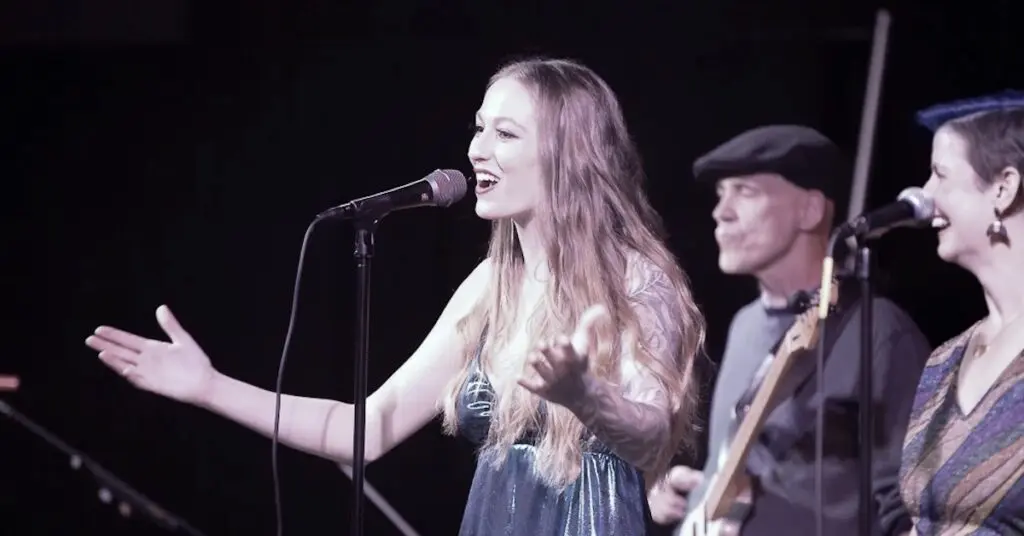
OM Quillio – Thanks for Asking! – by Liam Sweeny.
RRX: When did you start playing? And can you describe the moment when you first realized you were a capital-M musician? Did it evolve, or was there a moment?
OMQ: I began piano instruction under my grandmother around age 6/7. I quit taking piano lessons at 8, following written music felt cantankerous when there was so much in my head I wanted to figure out how to play. I think I was born a musician. The capital m part was a decision I made when I decided to drop out of school (college) and forego the illusive safety of the bachelors degree. Pursuing music had always been my goal and I realized that anybody I really respected that had been doing it decided it for themselves and never went back. That was the summer of 2010 for me.
RRX: What projects are you a.) promoting, and b.) working on? And are you playing anywhere in the near future?
I have one date booked right now – November 12th at no fun in Troy. Caitlin Barker, a true friend of mine, will also be on the bill with some ful local acts.
I’ve been weaving in and around three different records at the same time over the past 10 years..
Meaning, three records of mine have been being written and recorded over the past decade. They are mostly starting to come together. One of them I’m recording solo on my own. Another is a shorter EP that I do anticipate to have a late fall or winter release. The third is my lifes work in one record.
My backlog of songs has been rather full. So I do see a random set of singles being released from now until the holidays. I’m just still deciding what songs those are going to be. My recording woes have mostly been about lack of resources, time and money. I’m moving into calm waters & now can release these messages freely into the world.
I’m still promoting my most recent EP, Evergreen, which was released in 2022. These are my least romantic songs to date. They continue to be ever current to our troubling world circumstances and I’m very proud of them.
RRX: When I hear you sing, I feel folk and jazz, even heard a little scat. What, within yourself, do you find your groove? Does it predominate between those two, or is there a wider spectrum?
OMQ: I think of my voice as having four female pillars. Patsy Cline, Joni Mitchell, Ella Fitzgerald and Aretha Franklin. There have been so many voices that have influenced me throughout my life, but those four women in particular really guided me in song and spirit. Folk, country and jazz always made the most sense to me. They all felt like different parts of the same world of transmuting pain.. I spent a lot of time in front of big receiver speakers as a kid trying to match the vibration of my voice to all four of those. I think I created that groove then. It was a solo practice. I had a lot of grief around me as a kid so this kind of self-soothing was sort of par for the course and thus built my voice, or gave way for it.
RRX: Folk, as I heard you describe it, is a music for the people. And when you look at the history of it, it’s obvious. What do you think folk brings in a modern world when we’re isolating through our technology and people are losing touch with themselves?
OMQ: I believe that entirely depends on folks’ definition of folk music. I believe jazz, folk, country and hip hop are all different kinds of folk music. Different music of different kinds of folks. Music created by the people for the people. On the streets. This early 2010’s sort of neo-folk Colorado wide brim hat sweetheart easy listening folk song energy has felt like a whitewash. Somewhere there became an internet “street” for this kind of folk. If you had enough likes that meant you were doing it ..I think that that kind of folk (because it’s called folk) has actually drawn a lot of attention away from true folk music. A distraction. It sort of made it a commodity or easy to consume I guess. I always think about folks like Bob Dylan when I think about folk music and how he focused on the poetry of it all and the true storytelling of folks whose voices weren’t able to be that loud. I really do believe folk music has the opportunity to continue to change the world as it has in the past. But I do think that this more recent variety of folk music has sort of made us able to pretend we’re listening to folk when we’re kind of just swaying along. It’s actually not even that complicated. What I’m referencing is a more social media aligned form of folk music. Nice folk. I really hate that shit. I know it’s contributed to people losing themselves more on social media. I’ve had to directly deal with folks consuming my own music less because it’s directly confronting for them. Song has always been about transmuting pain. To live in an age where that is less attractive or likable has been interesting to witness, but understandable. Societally – We really live for these individual wins. We love the likes. Authentic hasn’t been ‘in’ for a while. I do think that the tide is turning right now. I do think folks are craving what we’ve forgotten as a collective about music. It brings us together. Not just in pleasure but in pain. Not just in collective Joy but collective sadness. In truth.
RRX: As a musician, I have a ‘happy place’ where I imagine myself being when I’m playing my best stuff. It’s a clearing in the Adirondacks where I used to camp with my best friend. Where is your place? Can you describe it to us?
OMQ: I love a clearing in the woods. Glad you have that for yourself.
I’m just now getting to my happy place. My place has always been within me though it’s less happy and more the place of Peace where the music happens. Very eye of the storm. I’ve done most of my writing on the road or in my bed. And throughout my life both of those places were often quite busy ones. My mind, too. Lots to look at. Lots to work through. Really I’ve just had a pretty challenging, very challenging life and playing and writing music was where I could find peace among true terror.
I found this place within when I first went to college at SUNY Potsdam. I finally had the room to write music. Previously in my life I didn’t even have my own bedroom most of the time. So anytime I was writing I was being listened to. Privacy was rare. Potsdam was lonely and small. Beyond the Adirondacks. Desolate. No one was listening. I could lock myself away and really just wail. That was all the freedom that I needed. And I continued to be able to channel that space for myself once I left school.. It was like a portal that I opened that I continued to clear out and make my own.
This is where happy can now enter. The songs can be happy now – if they want to.
They can be happy and thoughtful and full and real beyond a lot of the pain that I felt in this life. Everything all at once. I find it more and more hilarious that my parents chose OM as my initials.
RRX: What I like about folk is that to me it sounds rustic, and it goes back to a time that was more connected to struggle, but also to the joy in the breaks of the struggle, where the joy was earnest. What is it that draws you to folk, or to any music you’re into?
OMQ: I wrote primarily on piano, banjo and ukulele until my mid twenties. Those first few years of writing were based much more around jazz structure because I had more access to it. It’s also what I knew at the time.
Owning my first guitar really unlocked folk in me just because folk was easy to write with that instrument. It was also portable! I can take a guitar anywhere. I can’t take a keyboard anywhere or a piano. People love the guitar. I don’t know if I was drawn so much to folk or if folk chose me. In 2013, a friend moved to Colorado, ironically to pursue more of their folk writing career. When that friend left he handed me his unofficial music therapist job at a nursing home. Most of the folks that lived at this home were wards of the state. Folks that hadn’t gotten to experience much joy in their lives at all. They needed the folk songs. They needed their ballads. I already had doo-wop, Motown and jazz covered for them. This is where I really took on folk music. Country music too. I was the only one singing in that building and everybody needed their song. I’m forever grateful for that opportunity. It opened up and changed so much for me. Face first into folk.
So much of the rustic that I find in folk is about the Earth. Most of the folks that were playing music in earlier times were doing so when they finally got off the fields. For relief. This was true for slaves in America’s South as well as folks living off their own land. Laboring with the earth is hard. The relief of getting to sing and move some of it along is still what I believe music is about. They live in rich relationship. I’m not interested in hearing music from folks who aren’t interested in knowing their pain. I don’t know how you can make music without feeling your own pain.
Face first into feeling is a good way to describe my life. Music has always been apt for feeling. A friend in feeling. I don’t think a lot of the joy we see nowadays is earnest. It’s curated. Postered joy. It makes it hard to recognize.
I think that earnest joy only comes with feeling the struggle. I’m so glad you chose those words. I’m interested in music that knows its intelligence. It’s alchemy. It’s ability to heal. I’m drawn to music that holds the wild possibilities of what true feeling can open us to.
It’s Magic.
Continue reading


 RadioRadioX