Spring is in the air of the newsroom, and as the wind blows our articles two and fro, we’ve bound them together for your digital enjoyment. Interviews with performers Kaitee Page and So Brown, and Metroland founder Peter Iselin.

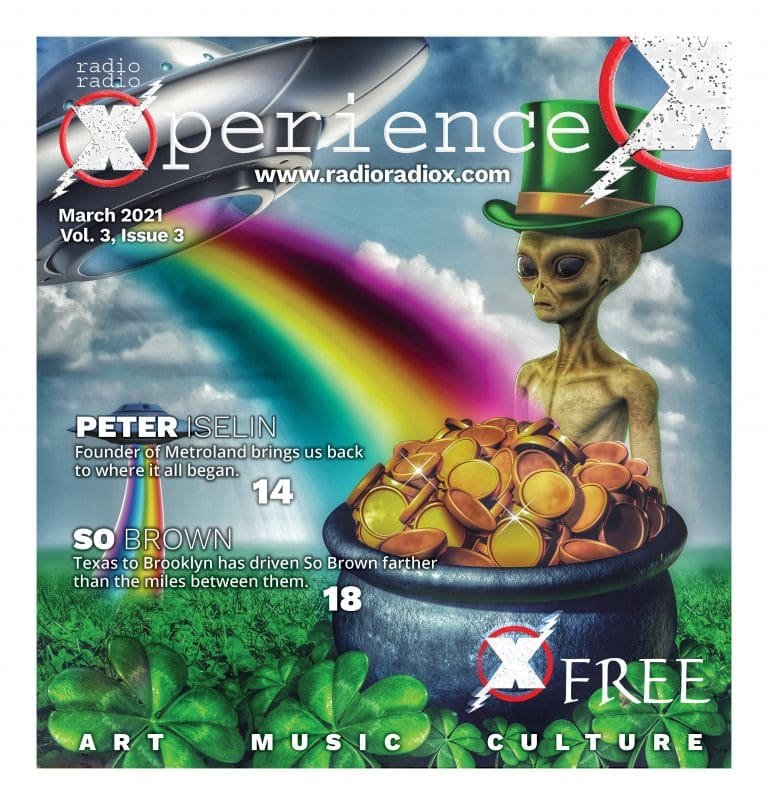
Spring is in the air of the newsroom, and as the wind blows our articles two and fro, we’ve bound them together for your digital enjoyment. Interviews with performers Kaitee Page and So Brown, and Metroland founder Peter Iselin.

Ahh, March. It is the month for the beginning of spring! Longer days, warmer temperatures, melting snow (we hope) and of course St. Patrick’s Day! This is known to many as the holiday for drinking and celebrating whether we are Irish or not. I’ll throw down the standard disclaimer that says please drink responsibly, do not drink and drive, don’t drink if you are under 21 and the standard “don’t be a dick.” But the Irish know their liquors and certainly know how to mix them up. I know a little bit about the Irish drinking habits and know they have some great recipes. Let me give you some suggestions if you are going out (ha!) or just enjoying the day at home. Grab a glass, a spoon and some of these ingredients and become a mix-master on this traditional day of green. Ready to cook, you mucker? Here we go:
Whiskey – To be honest, nothing else needs to be said. March whiskey sales are probably higher than any other month. Jameson, Ireland’s most famous whiskey, has been around since 1780. Created by John Jameson for the first time, we honor his legacy as still being the most popular Irish whiskey even 200 years later. Now there are even more Jameson varieties than just the standard. For a sipping beverage, don’t forget to try Jameson Black Barrel for a remarkably smooth, triple distilled whiskey that still is distinctly Jameson. Other solid Irish whiskeys include Tullamore D.E.W., Kilbeggan, and The Irishman.
Classic Irish Coffee Recipe:
1-2 tsp brown sugar
4 oz. strong coffee
1 ½ oz. Irish whiskey
1 oz. heavy cream
** Warm a coffee glass. Add the brown sugar to the glass. Add coffee and whiskey. Stir till sugar is dissolved. Lightly whip the heavy cream and slowly add on top (pouring it over the back of a spoon helps.) Do not stir. Enjoy!**
Beer – When most people think of St. Patrick’s Day, they think of beer and lots of it. But March tends to highlight dark, rich beers more often than the rest of the year. When you think of Irish beers, the common go-to beverage is Guinness. Do not be blind to the others, however. There are other tasty beers such as Harp Lager (also made by Guinness), Smithwicks Red Ale and Kilkenny Cream Ale. All these options are now available in stores due to the new canning system to give you that off-the-tap taste.
Quick and Easy Beer Bratwurst
2 tsp olive oil
6 bratwursts
1 large sweet onion (sliced into ¼” rings)
6 oz. Irish Beer (stouts taste best)
**In a large Dutch oven, heat 1 tsp of the olive oil. Brown the bratwurst until they are a rich, golden brown. (Do NOT puncture the sausages or they will get dry.) Remove to a platter. To the drippings, add the rest of the olive oil, and the cut sweet onion. Toss the rings to coat them with the oil. Cook, stirring often until the onions are limp and golden. (Do not overcook them–dark brown is too much!) Return the brats to the onions then add the beer. Cook over medium heat for 12-15 minutes until the beer has cooked down to a syrup. Turn the bratwurst over about halfway through the cooking time. Remove and place on buns with the onions or serve as a meal with the onions as a side and some soda bread.**
Irish Cream Liquor – This tasty, sweet beverage was created based on the classic Irish whiskey. Although it is not a traditional Irish beverage, it was created by an International Distillers agency in Dublin in 1973. Within the European Union, it is a protected product that must be produced in Ireland. Its largest markets, however, are the UK, Canada, and the United States. Of course, Bailey’s is the best known and most used Irish Cream, but some other brands worth trying are Saint Brendan’s, Carolans and Whistler’s. Check the info on the different Irish Creams out there since some now are infused with flavors such as honey, cocoa, caramel, and spice.
Irish Cream Chocolate Mousse
4 oz dark chocolate, chopped
3 eggs separated
1 tbsp Irish Cream liquor
1 cup whipped cream
chocolate shavings
**Melt the dark chocolate in a small saucepan over low heat. (You can melt the chocolate in the microwave on very low power, 1 minute at a time while stirring in between.) Remove from heat and allow to cool at room temperature but not harden. In a bowl, beat the egg yolks and stir in the melted chocolate and Irish cream. Fold in ½ of the whipped cream. In a separate bowl, beat the egg whites until stiff. Fold the egg whites into the chocolate mixture. Pour the mousse into serving glasses and garnish with remaining whipped cream and chocolate shavings before serving.**
It really is not fair that before I finished writing this, my mouth was watering for some of these great recipes. And I had to pathetically settle for a hot dog and a pudding cup because I had none of these items in my fridge. But you will find that the ingredients needed to create these simple creations are at your local supermarket… and liquor store of course. Although I am not Irish (I am actually Scottish, so my kilt gives me a bit of a pass), these great dishes will be made throughout the month. Let’s welcome in Spring with some tasty Irish favorites. I can guarantee, when I whip up these dishes at home it will be done COVID style: Erin go Bra-less!

A couple issues back I did a “Hail and Farewell” to WGY’s Chuck Custer, upon retiring after thirty-six-years with the company.
Bye Chuck, and hi Doug Goudie, who partners with Kelly Lynch on News Radio 810/103.21 WGY.
Doug’s not Chuck, Chuck’s not Doug, Kelly is Kelly. I suggest you give them a try.
The partnership of radio co-hosts doesn’t succeed every time, it takes patience, trust, the comfort the other person has your back.
There are times, however, when if at first you don’t succeed, fire the weak one and bring in another patsy.
Many of us know Bob Mason and Bill Sheehan…
What about Bob Mason and Cliff Nash?
How many Morning Show changes at WGNA?
And don’t get me started on the revolving wheel at FLY 92. Of course, I’m jaded and think things went downhill after the end of Todd Pettengill and the Wake-Up Service.
Let me share the number of “co-hosts” I’ve had over the years, most times I was lucky.
The first (and you never forget your first right) was (and still is) Roger Price. I was working nights at what was called a “Full Service” radio station (i.e. not a clue what the format is) in Mansfield, Ohio. Roger became my partner in crime for two hours every Thursday night doing a trivia show (we’re both major geeks). I knew Roger from our previous station, as Roger says we REALLY are “brothers from a different mother.” In time we both moved on but stayed in touch for decades, saw him a couple years ago for my 40th college homecoming, this past year he strengthened our friendship with his support after my heart attack and bypass procedure.
My next “official” co-host was in (I think) 2004-2005 in Pittsfield, MA.
Her name was Sharon Steele, who worked for the company before, and was very popular.
Not to be insulting but Sharon had a “rough” personality, and a potty mouth. A steady stream of F-Bombs was quite normal, she was also playing the dominant one, if she didn’t like you, you knew immediately.
In other words, I was in love, she could have been my wife.
Joking, I was married, as was she, with a child on the way.
So, the time came for Sharon to go on maternity leave.
After a week, on a Friday morning, the boss called us together with horrible news.
There was an emergency with Sharon at the hospital, she died. So did the unborn child.
Sharon Brophy-Forst, aka Sharon Steele, was only 38.
That was Friday, over the weekend we decided to start the morning show with the announcement of her death, I was joined by Sharon’s best friend Dee Myers Scace, we shared stories and took phone calls
It was the most difficult show I ever had to do and have since done in my career.
After a while I was given a couple more co-hosts to work with in Pittsfield. The first a lovely girl named Kelly (Kellie? Kell-E?) I just call her useless, I could say more but I don’t want to risk lawsuits.
Briefly afterward I worked with a very talented woman named Jess Lesure, our time together didn’t last long, I was being forced, I mean it was suggested I go solo in the afternoons, so we brought in young buck and hot stud Bob Heck (extremely talented on his own), both had great success in Pittsfield, they clicked, made me proud.
My last “official” co-host, Kate Sullivan, we were doing the County thing in the Glens Falls/Queensbury area.
We worked just over two years, she reminded me SO much of Sharon, she had that same roughness but great caring for the community, she was also a local AND a Hillbilly woman.
Love the girl but she scared me, piss her off and it’s a solo Morning Show, and NOT hosted by me.
Things ended in 2010 after I two crashes on the Northway. If I could still deal with the live in Schenectady round trip to Queensbury routine five days a week I might have been there still.
Before I leave, plugs for two talented women at my current employer, Diane Donato and Rachel Davis, on occasion I’ve shared the microphone with each, and being a News Talk station, we can’t fall back on music. I’d work with them at the drop of a hat.
Reminder, check out Doug and Kelly!
Be hearing you.

RRX: So Brown, as I’ve mentioned I am a huge fan of yours, so I know a bit about you and who you are as an artist but for our audience who may not have heard you yet please tell us about yourself and how you became the musician you are today. I know this can be a book but you know, the abridged version.

SB: I was born in Houston, Texas; my mom was a piano teacher so I was playing before I could speak. My teachers would try to steer me towards classical pieces which were fine and all, but I really loved rock n’ roll. I thought I was John Lennon reincarnated and dressed like him in 3rd grade. I was also gender non-conforming, which got me shunned by most of Texas society, so I spent a lot of time in nature by myself.
Decades later, with forays into punk rock in South Florida as a drummer, and rural Alabama playing old delta blues, I now live in Brooklyn NY as a multi-instrumentalist singer/songwriter.
RRX: So, I know you’ve worked with multi-Grammy winner Norah Jones and from my recollection I believe you two are pretty good friends. With that being said she was lucky enough to work with you and certainly the other way around too.
SB: I remember the day she and I recorded my song August from my album Point Legere. We were together in Trout studios in Brooklyn. That song has two “characters” so to say in it, me the narrator, and a siren-like embodiment of Mother Nature, which was her. She was singing these stacks of vocal harmonies, layers, so totally precise in her pitch and melodic ideas, while also being free and sultry with the delivery. She’s brilliant, like a ninja master of singing, and it was definitely humbling but also lots of fun, to work with her.
RRX: Your music styling is diverse but certainly you are not known to be a rapper, however as I’ve told you before the first song that really pulled me in was a (rap) song entitled “The United States of Deprivation.” The song as I understood it, told a story around your life. From not being accepted for who you are to addiction and how the BP oil spill effected your home. Thank you for writing such a powerful song and I know you’ve got some new material on the way but if you could for a moment please tell us a bit about this song.
SB: Sure thing. I’ve always tried to be a servant of the music and to go wherever the songs lead, even when it is out of my comfort zone. This time the idea that came was a very raw rap song. I’d walk through the neighborhood speaking it out loud, working out the phrasing. I think I was listening to a lot of Lil Wayne at the time. And yes, to everything you said. Clearly, we are living in a very sick and troubled world- we are products of that world. I think it’s easy to point a finger at others and blame them, but in this song, I wanted to point the finger at myself and say, “yes, here I am, I am a part of this, here is my darkness”. Thanks for saying it resonated with you; it was painful for some of the people that care about me to hear it. I think there’s always this tendency in people, or at least in me, to gloss over the rough stuff and try to paint a pretty facade, but there’s a quote I’ve always really liked: the truth does not change according to my ability to stomach it. So here was my contribution.
As far as the oil spill, I don’t know if you have like a happy place/memory from childhood of a place in nature that you were totally in love with? The Gulf Coast is that for me. Now, it’s eerily quiet. No fish jumping. Barely any birds. People will say the beach is clean, but where is all the life? The life is the magic. The life is what interests me.
RRX: You’ve lived in various parts of the country. Have you found your surroundings alter what you think and write about? As a songwriter myself I imagine it would.
SB: My answer is: yes, totally! All of my favorite artists have a strong sense of place in their work, their landscape or setting if you will. Bjork- Iceland. William Faulkner- American South. Frida- Mexico. I do live in Brooklyn now, and recently bought a little place on a mountain in the Catskills. All of this “winter stuff” is new to me coming from the South.
I think all places have an energy to them, that can include why certain people are drawn to them. New York for example is super-charged, amped-up; a person can get rich and famous here but can also fail terribly. There’s also this incredible community that happens here. During the pandemic, all these street shows started popping up. I’d call my neighbors and we’d do a show on the corner, maybe with the upright bass player from downstairs, an accordion player from a couple blocks over…and all of a sudden, we had these new combinations of people who wouldn’t usually play together. With the whole block dancing and running around, uplifted in what was a very stressful time. For me, that is the magic of Brooklyn.
On a side note this makes me remember when I visited a “ghost town” in Arizona, like where they turn an old mining town into a tourist attraction. There was a fiddler, an old guy like out of a Western with a beard to his belly, busking. And I said, do you know the song Faded Love which Patsy Cline and Willie have covered but is by Bob Willis. And we had this magic moment in an abandoned ghost town. That’s the stuff I live for. And if I wasn’t telling you now, no one would have ever known!
RRX: So, the big question. What are you working on? I feel honored that you let me listen to a few unreleased tunes and I love the direction you are going in.
SB: With these new tracks, I was at a place where I was ready to step away from everything I thought I knew, both as a person and as an artist. To let go of all my old ideas and wander into the great unknown. Whereas before Ihad worked in a studio with live musicians to tape, now it was just me and producer Jack Mason, holed up for hours in Electric Lady Studios. The songs range in subject matter from, reaching a point of absolute defeat and therefore offering oneself to a kind of Goddess figure (Any Way You Please) (and BTW Rob I welcome your take on these), to the newest release, Attention, that echoes back to those lost Texas trails I spent so many hours biking, but the now, the grownup is lost and can’t get their bearings, their truth…It might not end well. But then again, maybe there are no bad endings, maybe we are all heading to the same place?
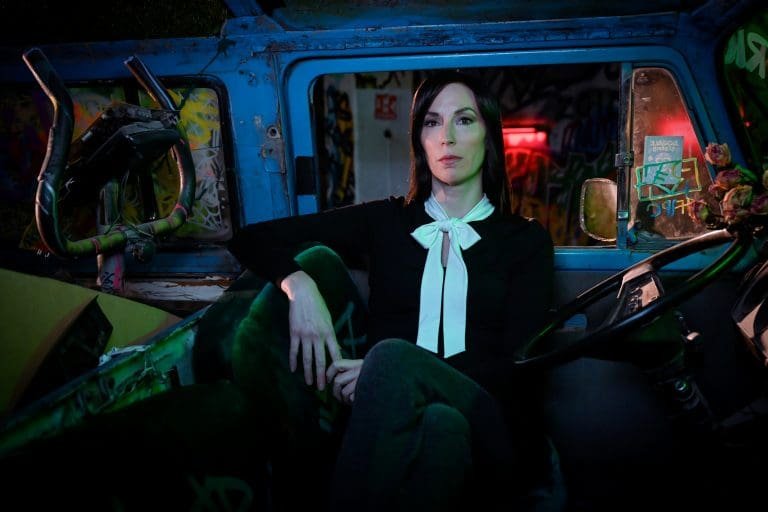
We all have different views of ourselves. A.k.as, stage names, nom de plumes and alter egos. I have “4AM Sween,” a writing and designing beast with a four-legged sidekick with the ability to screw up the laptop in a single pounce. Normally, I’m just boring old Liam. But I live for my alter ego, and it lives for me.
Kaitee Page is a not-so-mild mannered artist who keeps close to her vest the alter ego of Lunic, an electropop, electric violin bearing guardian of the beat. She’s striking out new with a new song as Kaitee, but could Lunic ever truly take a back seat. We shall see.
I sit with Kaitee and we discuss chrome-plated Art Deco rocketry.
RRX: Your music has made you a world-traveler, with at last count twenty-five countries under your belt. That’s a metric (and imperial) ton of diversity. Most people do a world tour, and they don’t break six. Was there any one of those countries where the sound or the scene became something of a driving force with your music, or your approach?

KP: The UK for sure! I spent a few years in London and found that the UK as a whole is one of the most receptive countries to new music. There seems to be a general appreciation of and support for artists coming on the scene who think outside the box and don’t sound like everybody else. New artists can really thrive in places like London and Manchester more so than in any of the other cities in which I’ve lived. The Brits love their music and they really seem to have an ear for what’s new and good. I miss London!
RRX: You play many things, but you were classically trained in violin and viola. Was that all? And going to electric violin, and electronica in general, have you found that it’s allowed you to pull sounds out of those instruments that wouldn’t translate acoustically? And aside from simple amplification, where are you on the acoustic/electric “battle.”?
KP: That’s right, I was immersed in the classical world from about age 8-20, primarily on viola, but I always gravitated toward the piano although I never had any formal piano lessons. When I moved to LA after university, I began playing acoustic viola & violin in a lot of different bands. That’s when I decided to just combine the two instruments and start playing a 5-string electric violin/viola. By default, I ended up teaching myself to play keyboards and guitar, as well. Pop music is pretty simple in terms of chords and structure compared to classical music, so it was a natural progression. Depending on whichever band I was playing in at the moment, I would add different pedals to my 5-string electric violin or I’d just unplug altogether. Personally, I love electronic music and electronic production, but I will always have an affinity for the sound of my acoustic viola… my baby!
RRX: You spent a lot of time in L.A, in the pop-rock scene. You were in the band Porcelain, signed by Universal Records. Being from Loudonville, going to Shaker High, do you think any part of the statement “you can never go home again” is true? How do you adjust to visits home when you spend so much time in iconic scenes?
KP: I definitely love going home to Loudonville and seeing everybody! I would go at least once or twice a year before COVID hit. The reason I don’t think the statement, “you can never go home again,” is true is because after being on tour buses and traveling to so many cities and countries and feeling so uprooted, all you really crave in the end is to get back to your roots. Also, logistically speaking, now that all tours are grounded due to pandemic regulations, I can pretty much work (paint and write songs) remotely from any city! There’s really no “adjustment” when I visit Albany. I feel safe there (emotionally) and lucky to be surrounded by my family, friends & supportive fellow Shaker grads!
RRX: So now, the turning of the tide, so-to-speak. You went from Lunic, a multitalented sensation, going all over the map, and you had enough. You refocused, found new ground, particularly with visual art. And in my opinion, your artwork alone would make me want to listen to your music. So, can you take us through this turnaround?
KP: It’s very rare in music that one person does everything: songwriting, singing, playing every instrument, arranging, producing, engineering, mixing, mastering, promoting, managing, music video production, touring, etc. But in fine art and painting in particular, you can really be fully in control of how a project turns out. For me, painting abstract art, indeed, comes from the same creative headspace as songwriting, but with painting I get to finish the work completely alone with complete creative control. It’s an outlet that I definitely need and appreciate in my life.
With music, one of the biggest lessons I learned is that it’s important to work with likeminded people who you trust wholeheartedly with your art and who are on the same page as you conceptually. For example, all of my songs start with me alone on piano or guitar and singing. To morph the work into the form I hear in my head, which is oftentimes, if not always, some sort of electronic or dance version of the demo, I need to delegate various responsibilities to various people. Admittedly, this is something I have never been very good at and I made a lot of mistakes with this in the past.
That’s why I was so lucky last year to have finally found my team, my people, in Mexico City! And I think that’s part of what my eight-year recording hiatus was about – waiting for the right team. I wasn’t going to move forward with music another inch until I found the right people, even if it meant never recording a song again. I think this is exactly how discerning one has to be in the music world.
RRX: Now there’s Kaitee. But there’s also Lunic. I wouldn’t think you could just hop from one aspect of you to another without sharing and borrowing here and there. But Kaitee is you, and being you, there’s gotta be more vulnerability, right? Is it easier to have a moniker when you’re putting yourself out there?

KP: Well, there’s definitely less privacy now that I’m using my real name haha! I’ve already begun getting all the Instagram video phone calls from fans around the world as well as cute little fan voice memos in my inbox lol. I think the fans feel more connected to me now that I’m using my real name rather than a moniker. Truth be told, part of the reason I opted to ditch the moniker was because a few other musicians have actually violated my trademark and gone ahead and released music using the same moniker. Not cool, and entirely illegal, but not a battle I’m keen to fight right now. But also, I knew I’d be doing things differently now, making different choices, establishing different goals for my music. The shift is not so much an artistic shift; I still write songs in solitude, from the heart, at the piano or acoustic guitar, the same way I’ve done for the past 15 years. It’s more of a structural shift – where to take the songs once they’re done and what to do with them. That’s going to be the main difference between Lunic and Kaitee Page.
RRX: Your resurgence as a singer/songwriter came during the pandemic, fueled by the protests. And from our perspective, the pandemic might as well have a byline, it’s mentioned in so many articles. But this is history, all of it. Do you feel any weight of history, like “this is what Kaitee (or Lunic) did while al this was going down”?
KP: Yes, I definitely feel the weight of history happening right now, but more so on a grand scale rather than on an individual level. It’s a great time to be creating, maybe one of the greatest. There is so much energy in the air, flowing in all different directions at different speeds and different levels of intensity – I feel it, daily. Sometimes I feel like it’s going to blow me right over. But the key with any creator, regardless of which art form is used, is to acquiesce or submit to that energy and let it flow through you and back out of you in its new form with your own personal ingredients added in. All art really is, in the end, is recycled energy.
RRX: This is where you answer the question I didn’t ask. Memories, recollections, sayings… Educate, enlighten, emote – the floor is yours.
KP: I know a lot of people are feeling lonely and perhaps hopeless right now with everything that is going on. I just want to encourage whoever is reading this to go start writing that novel you’ve been contemplating; go take the piano lessons or guitar lessons you’ve been curious about; start painting, sewing, sculpting, building, writing, cooking, singing, drawing, inventing! Now is the time to create!
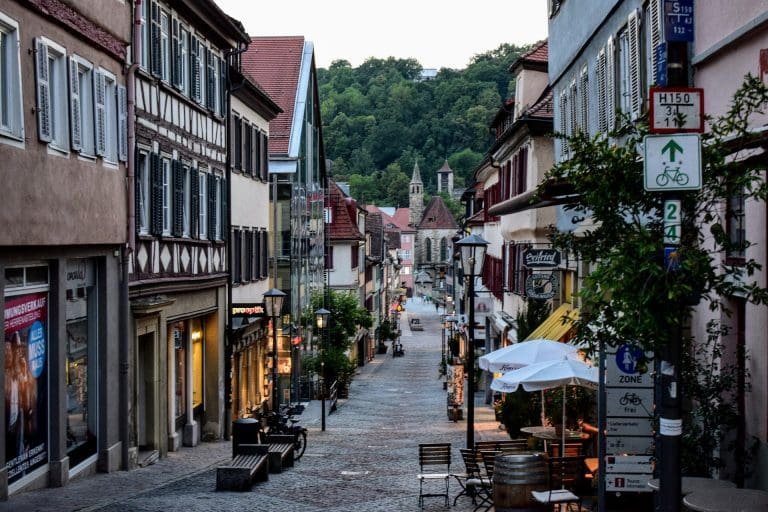
As I walk the streets of this town I am often taken unaware by a memory associated with a past incarnation a particular block had been. I’ve seen buildings come down and buildings go up in the spaces created like the filling of gaps in an adolescent’s mouth. A few weeks ago, walking past the steps that lead to a basement bar where I worked I recalled champagne-tripping down the stairs in high heels, panty hose shredded. To this day I remember overhearing a friend telling someone, “Kit thinks she can fly whenever she drinks champagne.” Too many glasses of champagne and the six inches from sidewalk to road can feel like a runway or a landing strip. It could go either way.
My apartment is a little more than 650 steps to an ex-lover’s apartment. I’m not a stalker – he no longer lives there but we had some good times in that place. I enjoy remembering them. Like a lot of folks, I walked a good deal during the first months of COVID. It helped combat the tedious restlessness that accompanied the seclusion of quarantine. After a while I extended my walks to include other parts of my past. The stoop where I had my first kiss is, according to Google maps, 12 walking minutes away from my current address. That three-story tenement no longer exists, it’s now an entrance to a parking area. The traffic on that block used to head south now it goes in the opposite direction. But the shadow memories are still there.
I still frequent the bars I was going to 35 plus years ago. When you’re a years-plus regular the bartender already begins to pour my drink before I sit down. It’s hard to say no to the beer even though I was in the mood for, say, a bloody Mary. The trials of being a regular. Some of these bars have changed ownership and with it, the name. But they are still populated with many lively people. Many are the same people from those past years and some strangers yet to become friends.
Part of my reason for wanting to create this column is to give a tip of the hat to a fine journalist who wrote a column for the Troy Record many years ago, John Scanlon. A lot of you may know or have heard of him. He made the rounds in Troy. Generally, John’s gig was to write about the goings-on about town. He accomplished this by making his rounds through Troy. Stopping for drinks, chatting up the bartender and patrons, telling horribly lame jokes, moving on to the next bar until it was time for a ham sandwich and a nap. He’d wake and resume his loop around the city. He was one of many colorful people who inhabited my life. Here’s a few off the top of my bean.
Whether you’re still living in your home town or have adopted a new city as your home you’ll make or recall memories, create stories, meet people, kvetch about what the mayor is doing, you’ll applaud or bitch about how the city workers plowed (or didn’t) your street. You’ll meet friends at your local watering hole or that little diner just up the road. Tell us a story about your local drinkery or the funny guy at the bodega that sells the best subs in town. We want to hear these stories. Xperience is a 518-local paper and we’re hoping you’ll take the opportunity to send us those stories and make the other readers want to tell their local town stories. We’re calling out for stories from your neighborhoods. Albany has so many diverse neighborhoods with cool stuff happening all the time. I spent a lot of time there in the 80’s – heard some great bands at JB Scotts, The Chateau (would love a piece about the bathrooms in that place) and QE2, Rocky from the Palais. Cohoes you’ve had some great shows at the Music Hall. Tell us about them. And I know you’ve got some great little bars of your own with your own group of scintillating regulars. And Waterford, with the farmer’s market and there’s some little diner I went to years ago that was great. To all the waitresses and bartenders reading this – you must have some great stories. Let’s hear them. And this isn’t only city-minded. Is there a favorite fishing hole somewhere in Ravena? City, suburb, rural-roll it out for us. Tell Xperience readers about your quirky, seedy, funny, experiences in your neck of the woods. It is now more important than ever to express our love for LOCAL.
The rules for submission. Your article must be 500-800 words. It will be proofread and edited for grammatical errors. Please submit your article to liam.sweeny@gmail.com.

It’s important to know where you came from to establish where you should be aiming to go. We here at Xperience like to think that we’re charting a new course and doing our own thing. And in large part, we are. But it was not creatio ex nihilo. There were publications and zines before us. And there was one, free, that simply by its delivery there made a place “cool.” This was Metroland.
Peter Iselin was the founder, owner, editor and publisher of this slice of Americana. And though he moved on from it, he by no means withered. He’s currently a talent manager and music rights consultant. I am honored to bend his ear.
I sit down with Peter and we discuss the aerodynamics of newsprint airplanes.
RRX: I wanted to interview you for being the founder of Metroland, which, from my perch would be a fantastic read. But in looking for you online, I found your bio as a talent manager. Not knowing for sure if it was you, I decided I was also going to interview that guy too. Kismet. So maybe I should just ask you what you’re up to at the current minute?
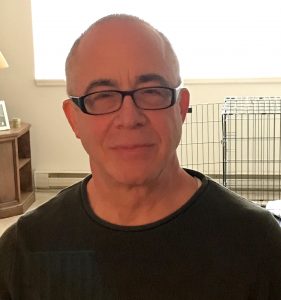
PI: The talent manager sobriquet is a bit misleading. I did manage musical talent, I really managed composers and music supervisors and I lived in LA for 13 years, from ’95 to 2008. In the process, I also learned the music publishing business. What I do now, from my humble home in Brunswick, is work for a company in LA, and we license music and sound design for movie trailers and television promos, if that makes any sense; a music library. I basically run the business end of it.
It gets complicated; there’s a local angle to this, in that the founder of this company, called Q-Factory, is a guy by the name of Robert Etoll. And you may recognize Etoll from Ted Etoll, as in Upstate Concert Hall. Ted is Robert’s brother. But Robert founded and built this company. He has since sold much of his interest in it, but he continues to be the creative director. So there’s a Troy connection, cause he and Ted are both from Lansingburgh. He and I were roommates at Berklee College of Music, talking about Robert now. And we subsequently played in a band together for a few years. So we’re old friends.
So after doing various gigs in the music business in LA, I ultimately started working for him about seven years ago and I’ve been doing that ever since. My title is Vice President, Finance and Business Affairs. Although at this point, I’m basically chief operating officer, and I report to the owners.
RRX: When I think “talent management,” I think actors and Hollywood over musicians, and I don’t know why. Maybe it’s that our culture takes musical talent at some unmentionable “given.” But managing musical talent brings to mind ridiculous riders and hotel party sin-eating. Where’s the reality of music and talent management?
PI: Well, I knew enough never to try to manage a band, or even a solo artist, having been a musician myself. I’m a keyboard player by training. I instead gravitated toward people who write music for film and television – this is twenty-something years ago – the only guy I had a hand in managing his talent, if you want to put it that way (I wouldn’t) … I was kind of responsible for bringing Jimmy Fallon up out of obscurity into the LA comics’ scene, and I, in fact, introduced him to his first manager. First real manager – not anymore, but – So, that’s a whole other story…
RRX: It’s a story we’d love to hear.
PI: It’s interesting. So I sold Metroland in ’95. In 1994, some of my staff decided that putting out a weekly newspaper wasn’t difficult enough. They wanted to try to do a sketch comedy show. We got a sponsor, and we got a deal with Channel 23, which was independent at that point, Fox 23, and we put together a half-hour comedy show. Which was terrible, but the upshot was that one of the people cast in it was a sophomore at Saint Rose named Jimmy Fallon, who was very impressive at the audition. And he ended up writing or co-writing some of the sketches and performing in them. And, you know, clearly a talented kid.
We ended up hiring him at Metroland. Back then, you know, everything that was in classifieds, you took them over the phone. And he was a receptionist, classified ads, personal ads, all that kind of stuff. He was still there when I sold it, still working there. He was also going to Saint Rose at the same time, you know. Right before I left for LA, having sold the paper, Jimmy came up to me kind of shyly with a VHS tape and said, “I do stand-up, I don’t know if you know that. I do local clubs. So here’s my tape, if there’s anybody you can play it for when you get out there, you know, maybe you can help me.” I said “Sure, sure.”
That was August. It sat in my desk until November of that year, in my new office in LA. I was working for a talent management company. I was there to handle musicians. And one day, opening the bottom drawer of my office, I saw the tape, and was like “aw jeez, I never even watched this myself.” So it was a Friday afternoon, and I assembled the small team we had in the office – they were former agents turned managers, but they were all very young – and I assembled these people in the conference room. It was a Friday afternoon, before everybody left for the weekend.
I said “Guys, do me a favor. I promised this kid back home I’d play his tape for people. So give me a couple minutes, let’s take a look at it.” And remember, I had never watched it. So we put the VHS *ka-chunk* into the player, and up comes Jimmy Fallon doing stand-up, and within about two-and-a-half minutes, the whole room went crazy.
They were screaming at me, “Why haven’t you shown us this guy before? Who is he? What is he?” Cause like, here was this good-looking young kid, doing dead-on impressions of people, musical impressions of people; it was beyond good, it was great. And I was like, wow, I had no idea.
So eventually they said, “Get him on the phone. We want him out here for pilot season” which is the beginning of January, a couple of months away.
So I talked to him, and told him, “Well, you’ll have to move to LA.” And he said, “Let me talk to my parents. I still have another semester at Saint Rose, so let me see what they think.” A couple of days later he got back to me and told me his parents said, “You can always finish your degree later. If this is an opportunity, go for it.” So he ended up moving to LA on January 2nd, 1996. And I had been wearing out my welcome at a friend’s place, so Jimmy and I ended up getting a place, and were roommates for like two-and-a-half years.
He started to make a name for himself as an up-and-coming stand-up comedian based in LA. In the summer of 1998, he auditioned for Saturday Night Live, and the rest is history. And we’re still good friends. Greatest guy in the world. What you see is exactly how he is.
RRX: I can say that we stand on the shoulders of a giant you birthed – Metroland. You really set the bar for alternative publications in the Capital Region. I wasn’t *ahem* allowed to look at Metrolands when they first came out – I was wee. But it was just so exotic. Can you take us through the moment you knew you had something enduring?
PI: I guess, to be quite honest, it was various points along the way. Let’s just give a little history in that I founded Metroland; the first issue was June of 1978. I founded it as a monthly disco magazine. The only way I can put it. It was nothing like the Metroland that you came to know, or like the paper that you’re currently editing. You couldn’t even call it journalism. I had no background in journalism, or marketing or anything. I was a musician. But I thought this would be a fun way to make a couple of bucks, and meet girls, you know, be like a big shot. I’m not kidding you; that was my motivation. I figured like I could be the Hugh Hefner of Albany or something.
We would go around, my photographer and I, and we would just take pictures of people dancing in nightclubs, bartenders and waitresses and so on. If you bought an ad, we’d run these pictures too, as the “editorial.” And I would write some silly “dot-dot-dot” articles, what was happening. The idea was to capitalize on this whole disco phenomena at the time. It’s funny, because recently I watched the incredible Bee Gees documentary on HBO Max. I related to it, because of what happened, just as they depict the world turning against disco, that crazy record-burning thing and all that. That was the handwriting on the wall for me; I had to shift out of being a monthly disco magazine. That’s when it turned into being a weekly newspaper. So we’re talking ’79-’80.
The irony all along was that I had made a living, sort of, playing live music, and when I abandoned that to do a magazine, it was the antithesis of live music; it was disco.
But with the weekly, we came back to being, I guess you could call us an arts and entertainment paper. But I was still doing “Buy an ad, get a story.” It still had that pennysaver mentality. But we started to attract some decent writers about music and the arts. We covered the whole JB Scott’s scene. We chronicled that, and it turned into a kind of popular entertainment bible if you will, because in those days, there was a lot of live music, clubs and concerts – everything.
Then, in 1987, for the first time I went to a conference of the Association of Alternative Newsweeklies (AAN). We applied for membership, and they said, “C’mon, we’re not going to accept you as a member, you’re fluff. It’s all arts writing. Where’s the political stuff? And obviously you’re beholden to your advertisers.” And everything else.
That was over the summer, in beautiful Victoria, British Columbia, Canada. And I came back from that all fired up, like, “You know what? We’re going to do this right.” At that time, we had had a columnist from western Massachusetts by the name of Stephen Leon. Young kid back then, was writing freelance, concert reviews for the TU and writing a column for Metroland. Anyway, I decided, since I respected him, and he was a real journalist with a master’s degree and everything; I made him managing editor, and we remade Metroland into a real newspaper. All of the sudden, you couldn’t just get a story with an ad; we lost a lot of ad revenue, at first. But, you know, I found religion, and I wanted this thing to be respectable. And that is the point at which it became what most people now recall as Metroland, where we still continued the arts coverage and music and everything else, but we brought in the political and cultural angles. And we had some really good writers. And we started doing real restaurant reviews, even if they were negative; we ran them and lost advertisers.
To answer your question, a couple of years into this new format, probably in the late ’80s, I realized that we had, in fact, created a serious journalistic enterprise that would endure. I had no idea of the technological revolution that was coming, but that would best answer your question.
RRX: One more Metroland question. I haven’t been to the point yet of seeing what I’ve been a part of creating here in other hands. I’ve not yet taken even a month off. But you created this great thing, enhanced the cultural vibrancy of this whole region, and you’ve seen it go beyond you. I’m sure you have many things to say about this. Say one of them.
PI: I’ll be quite honest with you, I have a lot of respect for Stephen Leon, who ended up buying the paper in 1995 with a group of investors. A great writer and a great editor, and if you follow him on Facebook, you’ll know in a minute that the guy’s a brilliant writer. From a creative standpoint, he took it to another level. It got even better with him totally at the helm. Unfortunately really for both of us, I don’t think he would disagree that neither he nor I were exceptionally great businessmen. Whatever success it had under me was in spite of myself, and I think he had a hard time grappling with the business aspect of it as well, especially as the world started to change.
After 17 years doing Metroland, I was more than ready to change careers. And change climates. Literally. And I was inspired to move to California, and I wanted to get into the entertainment business. And I did, more or less. So I had no compunctions about Stephen taking over because I had a lot of respect for him. And again, his tenure was longer than mine. He went 20 more years. And went down with the ship, and through, really, not too much fault of his own; it was inevitable. When you see papers like the Boston Phoenix and the Village Voice, the big ones, go down, how are you going to keep a small one alive?
By ’95 I was so ready to get out of that publishing grind, week after week after week after week. And these winters.
RRX: This is where you answer the question I didn’t ask. Editorial, commentary, valediction. Educate, enlighten, emote – the floor is yours.
PI: I never really contemplate this kind of thing, but I guess I do consider it, at this point in my life, an accomplishment that I was — even if I didn’t necessarily do it for the right reasons — somehow I was able to birth a publication that became very valuable to the community for a good long run, and went 20 years beyond me. If there’s anything I can take from the experience, it’s that. I have a sense of pride about that.
General Eclectic played a lot of incredible gigs including clubs, colleges, outdoor venues, private parties, live radio and television. We even played as a duo at a campfire at the Petrified Sea Gardens in Saratoga Springs, New York. We were also scheduled to play at a warehouse in Troy that was located by the river, but it got raided before we went on. We played as a full band and in different configurations with as few as two and as many as six members. Most of these were wonderful, and some of them were nightmares. There are often memes on social media about the different crazy places or gigs that musicians play. We were forever having to fit into a small space or reconfigure something. People who don’t do gigs often don’t understand what you need. They sometimes have ridiculous expectations also. Most of the gigs are great, some better than others, but mostly they’re fun and hopefully rewarding. But as a musician, I rarely if ever say no to an offer. Just like getting through life, I’ve always figured it out. I’ve only felt ripped off a few times. I know I’ve been lucky in that regard, but I’ve played some really bizarre gigs.
 We played as often as a duo with lots of fun gigs and unusual ones. We wanted to be able to play for all ages, so we learned a bunch of children’s music. It wasn’t hard since we had our own kids and sang to them all the time. We heard that Chuck E. Cheese was hiring live music. This was one of the most unique gigs I’ve done. We’d heard that they didn’t pay much and didn’t even give the musicians pizza and drinks. Radicals that we were, we decided to stage a protest with our music. They had us set up near the life-sized animated Chuck E. Cheese Elvis. Every once in a while, someone would put in a coin. Then we’d have to stop and wait for it to finish singing and gyrating, and the management refused to let us unplug it. Even without this, the whole place reverberated with the sounds of video games and screaming kids. Even the adults had to yell just to be heard. The sensory overload was intense. We sang a bunch of folk and rock songs that were appropriate for kids then did a couple of protest songs including some originals like “No Free Lunch” which was directed at the Reagan administration. The crowd was mostly into it, but a few folks didn’t like our politics and complained. Needless to say, we weren’t invited back. Very soon afterwards, they stopped hiring musicians altogether. A friend and fellow musician who specialized in kids complained to us. When we described our event and admitted that it may have influenced the decision, he laughed and thanked us. He hated that gig but didn’t really want to have to turn it down. Now he didn’t have to worry about it.
Sometimes we were invited to play at biker parties because we did a lot of Grateful Dead, Rolling Stones and covered other rock favorites. At every one of them, as soon as we arrived, I would be assigned a bodyguard. I’m a small person and was very shy back then. These parties were wild, and I was usually glad to have a security detail, though I only felt like I needed them once or twice. Bikers always liked our music and treated us well. One place we played with the band was at a biker bar with the best pizza in the area. However, the stage was full of holes and tilted backwards, making you feel totally off balance. It was about four feet off the ground in the front and maybe a foot in the back. We were constantly worried that someone would fall through. Another time, we played in a barn where the stage we played was barely wide enough for the drum kit. We ended up in a straight line across the front and were unable to really see each other.
We even tried working with a booking agent for a little while, but he was a disaster. He booked us into a lounge in Colonie that was looking for sixties’ music. They weren’t looking for our brand of the sixties, that’s for sure. They wanted lounge music like Frank Sinatra and Tony Bennett. We knew a few songs that worked, but the owner finally just paid us for the night and asked us to stop after one set. Another place had us in their narrow bar crammed in next to the juke box. I had to sit on one of the PA speakers. Another place put our four-piece band in the back corner of a small room opposite the juke box that folks kept wanting to put money into. One drunk guy constantly screamed at us to play Willie Nelson. We played a couple of popular Willie songs, and he didn’t recognize any of them. We finally had to agree to alternate with the juke box fifteen minutes on then fifteen minutes off. We couldn’t wait to get out of there. And there were plenty more nightmares. One of the most disappointing was at El Loco in Albany, New York, when they briefly had live music.
They were hiring well known musicians like Hot Tuna and David Bromberg. We were asked to open for Country Joe MacDonald. Paul was in awe of Country Joe. He was more excited than I’d ever seen him before about this opportunity to meet him. The day of the gig, Paul decided to roll up a big fat joint of the best stuff he could find to share with his idol. We got there early and, by start time, Country Joe still hadn’t arrived. We did our set filled with mostly our own songs and walked in the back. We didn’t realize that Country Joe had arrived just as we went on. He told us how much he liked our set, cited a couple of specific songs then offered to share the good news with us. Uh-oh, I was wary. I’d heard about this good news before from the Good News Club in Oregon. But Paul didn’t realize where this was going. He pulled out the joint and offered to smoke it with Country Joe who refused and instead handed Paul a pamphlet about the teachings of Jesus. Paul was speechless. Country Joe went on about the pitfalls of drugs and the downfall of his former band members who hadn’t yet found God. Then he did his set of all heavy-duty Christian music, pausing between songs to try to convert the crowd. Poor Paul was crestfallen. We packed up and went back home, riding in silence.
 In addition to different venues, we played at a lot of parties. Paul and I hosted at least one huge party a year, often two. There were usually over a hundred people that came. I liked to count heads the next day with the help of everyone who camped. Now, I try to remember to put out a guest book. In Stephentown, we had a slightly raised stage in the back yard facing, but set back from, the firepit. Everyone was welcome as long as they followed the rules which were few and for safety reasons only. I love that I always meet at least one new person at every party I throw. Some of them end up being close friends, and some of our friends met each other at those parties and became fast friends or even lovers. They were always potluck with an amazing assortment of food. One woman from Tanzania brought a small carrot salad to a party and labeled it “HOT.” She wasn’t kidding either. I like spicy foods and could only take a tiny taste. It was delicious, though. She was the person who gave me a San Pedro cactus to grow. It is said to be the South American cousin to peyote, which I loved. I still have it but have never tried it yet. Another friend always brought and still does bring pizza. He arrives late after most of the other food is gone, sometimes even the next day, and is always a welcome sight.
Because there were so many people from so many walks of life, there was usually some kind of drama. There was always at least one fight between neighbors and, even though the electric music was turned off by eleven pm, usually the police were called. One time, I had to physically restrain one young man who was so drunk, it was a miracle he could even stand up. He kept walking over to the blazing bonfire, swaying and stumbling. One of our neighbors had recently had a party where someone fell into the fire and was severely burned, and I was determined that wouldn’t happen at mine. After warning him too many times, I finally put a chair behind him, pushed him into it and threatened to tie him to it, if he didn’t stay put. Then, I assigned someone to watch. I’ve often said, “I may be little and quiet, but you don’t want to mess with me.”
Justin and his friends loved to torment the drunks. It was even more fun for them if someone was tripping. Unfortunately, some of the men egged them on. I guess they were reliving their childhoods, but for me it was stressful. At one party, he and his friend Bruce were playing a game of jumping out of the dark bushes brandishing water guns and freaking people out. I was singing on stage at the time when someone ran up and told me that the cops wanted to talk to me right away. When I went out front, they had these two scared looking boys. The other boy was my friend Caroline’s son. These two were constantly making trouble together. Apparently, they had jumped out at the cops with the water guns thinking it would be funny. The cops, having drawn their guns, didn’t find it funny at all, neither did we. They threatened to shut down the party, but once again I was able to talk my way out of it. It wasn’t the first or last time that both Caroline and I screamed at these two. I guess the police saw that the issue was being dealt with appropriately.
I’ve always loved the day after the parties. Often, we’d have campers who woke up early, or never went to bed at all, and stoked up the fire outside. Then, I’d make pancakes and coffee, and we’d sit outside playing more music as everyone eventually wandered off home. I saw many sunrises in those days. It’s always been hard for me to leave a party, especially if there’s jamming going on. I think that jamming is the best way to keep growing musically. I understand the difference between practicing and jamming and know that both are equally important. Nowadays, I make myself visit at parties before launching into the music. I realized that I never socialized, and once I start playing music, that’s usually where I’ll stay.
In the 1980s, there were always Halloween parties with a band jammed into someone’s living room. The costumes at these parties were so creative. One guy came with blown up rubber gloves attached all over his body. He was a “hand job.” Paul and I worked hard on our costumes every year. One year, he decided to be a punk and had me gel his long hair up into a spike. I had to use a cardboard cone to hold it up. It was so tall, he had to lay down in the back of the station wagon to get to the party. Another year, he went as a Pancho Villa character with an ammunition belt across his chest filled with joints. Then, he hit on a theme of being a businessman every year. He dressed as a nun in a business suit and was a “nun of your business.” He even shaved for that costume. That year, I was the night sky. One time, he had me sew a tennis ball encased in layers of nylon stocking onto the outside of his suit pants and went as “E.T. the Extra Testicle (the businessman with more balls). He had a briefcase with an enormous screw inside and threatened to “screw” everyone over. His costumes often involved a pun. Mine were elaborate but a little more sedate, though not always. I was a nuclear family with extra arms and legs and a hideous face attached to my head. I was also a Japanese Beatle. I wore a kimono and put my long hair up in a bun with chopsticks sticking through. I wore an old wire cage without the bottom that rested on my shoulders. Pictures of each of the Beatles were on the four sides. I miss those days of endless parties. It seems as though many of my friends have gotten old before their time while I refuse to let myself be old in that way.
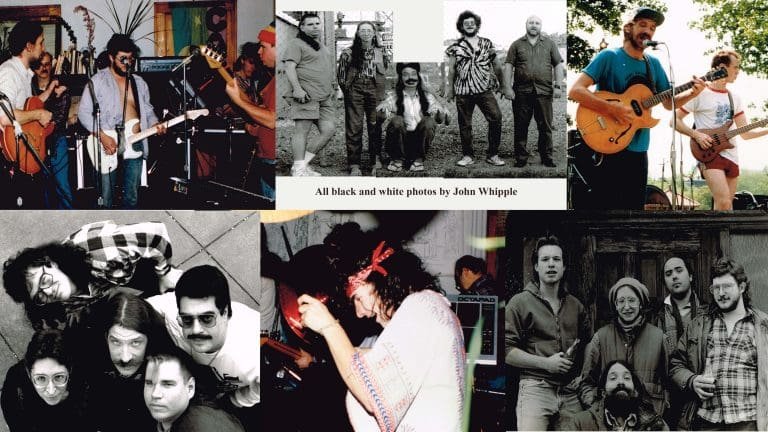
I was incredibly lucky to have played music in the 1980s and early 90s with a wide variety of fine musicians, so I thought I would write about some of them. During our time with the band, Paul and I worked with four different drummers. Charles Ross, who was going by Chuck then, was the first. Chuck was married with three kids. We had two kids around the same age, so it worked well. We had the same sensibilities about being a community, and our families mingled with shared meals and the kids becoming friends. Paula liked being in charge of the kids while we rehearsed in their living room. She was the earth mother type. It was a relief to me that, although I was that same earth mother type, I could now rehearse with my kids around and not have to juggle that with my musician role while I was working. We usually couldn’t afford to hire a babysitter and Mom wasn’t willing to help out in that way, so Jessie and Justin came with us to most places. They even came to many of our gigs. They enjoyed being in the middle of everything. Justin would tire early and always found a comfy out of the way place to go to sleep, often lying on top of our coats under a table where no one would step on him. Like his dad, he loved being on the floor. Jessie was a night owl and stayed wide awake working the crowd and meeting lots of new people. Although they were both pretty self-sufficient, I still needed to be available to them. I became an expert at multitasking. I could be singing and playing my part, while listening to one of my children. They would then patiently wait for an instrumental when they knew I would respond without ever missing a beat. It was a finely honed skill, but with Paula being the “house mom,” I was free to just be immersed in the music.
Chuck brought an old friend of his into the band to play bass. As soon as we had arrived in upstate New York, we’d put an ad in Metroland, the local arts weekly. Although it was a bit of a trek to go to Schenectady so often, it was worth it. We started out with them as Cosmo Rock, though none of us was happy with that name. We soon became General Eclectic after noticing the General Electric neon sign while taking a break during a gig at the Electric Grinch where we explained for the umpteenth time, when asked how we would classify our music, that we were “generally pretty eclectic.” The name stuck, but Chuck and Dave didn’t. A talented and innovative drummer, Chuck eventually had to move on to better paying gigs, which we understood and encouraged. Dave, who was dealing with personal issues, moved out of town.
Paul and I worked as a duo again for a little while. Then, at one gig, we met a handsome young man who kept his cigarettes rolled up in the sleeve of his white t-shirt. This was Andy Culver. He started coming to every show. We always saw him at other shows too when we went out. He might have been the most active fan in Albany. He soon introduced us to Andy Roth. Andy was a Deadhead and played electric guitar in Jerry Garcia’s style. He was also an artist, mostly a potter. Musically, he fit right into our style and wrote his own songs. Now we had a new musical family. We spent tons of time together, playing music and partying. There were lots of parties where Paul I just played music the whole time. We’d play for hours and hours. I took breaks to check in on the kids, making sure they ate and were engaged then returning to the endless jams. We jammed with more people than I can even count. There were always lots of guitars and singers.
I loved the opportunity to sing harmony with so many different voices. Harmony has always come naturally to me. It’s easier for me than singing a lead part. I can even hear multiple parts in my head at once. I can’t remember ever not singing and learned to sing harmony first. I actually had to teach myself to stay on the lead and not automatically harmonize. Singing with Paul was interesting because he struggled with harmony. As soon as he noticed my part, he’d start singing that, then I would quickly veer off into something else. We ended up having a style that wound back and forth between lead and harmony. We got a lot of compliments on our unique vocal style. People surmised that it took a lot of choreography, but it was actually just endless adjustments on my part. It kept me on my toes being both challenging and fun and helped make me a better singer.
Meanwhile our fan Andy, who had introduced us to this crew, kept raving about how we should meet his dad. Andy was younger than us, but not that much younger. We weren’t sure about meeting his dad. We were hippies from the era of “never trust anyone over 30.” Ron was a professor of ecological studies at Hudson Valley Community College. It sounded a little too mainstream for us, but we agreed to go for dinner. It turned out that Ron was a percussionist, playing mostly congas. He also loved the growing music technology and started recording some of our shows and rehearsals both on audio and video. Paul and I were not archivists, except for our piles of sheet music, lyrics, song ideas, set lists and half-filled notebooks. This was a new world for us. Ron soon joined our expanding musical family. This was the core of General Eclectic. Others would come and go, but these guys stuck with us for a long time.
We needed to find a bass player. I met Rudd Young at Hilton Music in Troy when I gave lessons there on Saturdays. He filled in on bass for a while. I forget who the drummer was then. We had different folks drop in here and there who didn’t last long. Not a lot of people understood the whole eclectic vibe we were going for. I find the same thing today. Many musicians have a niche and are quite comfortable in that niche. Maybe I get bored easily. I know that I’ve never seemed to fit into any category whether in my musical life or my personal life. I think Rudd stopped working with us because we couldn’t find a permanent drummer. It all gets a little hazy. We were starting to get into that rut of not being able to book gigs because we didn’t have all of the pieces and not being able to get the pieces together because there weren’t any gigs. Eventually we met John Whipple who filled in on bass. He added to the eclectic nature of the band in a visual way. Paul, Ron, Andy and I all had a definite hippie vibe, but John looked like he was from down on the farm, a clean cut all American boy. He was eighteen years old, with a youthful enthusiasm and full of dreams of grandeur. His musical tastes bisected with ours, while still bringing fresh ideas. He also was a photographer adding another thing that we were lacking back then, photos of the band.
John and I hit it off personally and spent a lot of time going on adventures. Paul wasn’t as interested in spontaneous adventures anymore. He was getting grumpier the longer we stayed in the area. He wasn’t happy with his work, bouncing from restaurant to restaurant. He would start a great job and gradually become disenchanted. I suggested that maybe he wasn’t doing the work that was meant for him. I thought he might enjoy driving a cab. He loved to drive and loved people. His favorite thing was meeting new people and engaging them in conversation, finding a new audience for his bad jokes. But he was committed to being a cook and kept up the struggle. I was not content to give up or give in. John was a willing companion, so we often took off for a day trip to the coast and back. I had already started going to Maine for a weekend once in a while with a friend or two, so I didn’t think anything of it. Apparently, others believed that we were having an affair. It made me sad to realize that I couldn’t have a platonic friend without raising eyebrows. I mean, I love sex as much as anyone else, but not with everyone I know. Some folks are just friends, and John and I were close friends. I still find people to go with me on adventures because my current partner likes to stay at home. The difference is that he doesn’t mind me bringing along a friend. I don’t remember why John stopped working with us.
The next drummer was David Bourgeouis. He was studying electronic music at SUNY, the State University in Albany, and played the electronic drums. We had always struggled with money, never living above the poverty level. David’s economic experience was the opposite. He had a girlfriend who came from a similar background who was also in school at SUNY. I liked them both. They brought a new atmosphere to the group. They were optimistic because their future looked so bright. They had a polish and shine to them that radiated out, bringing us into a new light. We knew David wouldn’t stay long. He had places to go. We knew he would be successful at whatever he decided to do with his life. We met Bob Donald while Dave was still in the band. Although Bob originally joined as the keyboard player, guitar was his first love. Like the rest of us, he liked that psychedelic San Francisco style of music and also loved Hendrix and Zappa. He played a different yet compatible style of guitar. He composed, sang harmony and had similar ideas about being a communal band rather than playing for hire.
After losing Dave, we did gigs without a drum kit, depending on congas for the rhythm but kept looking for the right person. We finally met Jim Sharp. Once again, I can’t recall how or where we met Jim, but he fit right in. He was enthusiastic, and his drumming style reminded us of Chuck Ross, precise while being innovative and fun with the ability to jam. I’ve always depended on that invisible connection with musicians, that thread that weaves through the music. It’s euphoric when you don’t have to think about it, when everyone seems to instinctively know where the music is going. For me, that’s where the magic comes in. I’ve always tried to work hard in rehearsals, being picky about arrangements and tightness so that we can just let go at the gigs and experiment within the structure that we’ve gotten to know inside and out. But that only works when the personal relationships are solid. You can’t always do that with a hired hand. Jim’s friend Maurice let us rehearse in his abandoned building near Menands.
Our last drummer was Mike Nass. I think he may have answered an ad. I often wish Paul were still around to fill in these details. There were so many people, so many gigs and so many years. I just can’t keep track of them all. By the time Mike entered the scene, we were no longer going by General Eclectic because Andy Roth has left the band. He has been such an integral part of the whole scene, we felt like we needed to start over and so for a brief period, unless it was just the two of us, we were One Psy Fits All and added Phil Merens to the mix on bass. We never stopped missing Andy’s contribution to the band, and without his relaxed, devil-may-care attitude, the band became more rigid and Paul, who had the same attitude, had lost his ally. He was increasingly unhappy with the music and sometimes sabotaged the rehearsals in a passive aggressive way. I could see him purposely make the same mistakes or start goofing around during a serious discussion of arrangements knowing that it would aggravate Bob. I think he was trying to add a little excitement back into the band. But I was starting to see the beginning of the end. It was starting to not be fun anymore, and I knew it wouldn’t last long.

We had done a lot of work over the summer trying to make the trailer livable, but there was still a long way to go when Paul moved out. I was also facing being a single mom of two for the first time. Although, I had done most of the caretaking for our children, I was always able to count on Paul for certain things. He was always happy to stay with the kids if I wanted to do something on my own. When they were young, we traded off with baths and the bedtime routine, telling them stories and singing lullabies. The kids loved Paul’s stories about Bluto who got into all kinds of funny misadventures. When our babies were first born, he often got up with them in the middle of the night, changing their diapers and bringing them to me to be nursed as I recuperated from the births. And, at the end of the day, when they were both in bed, he was my companion, my lover and my friend. Now, I was still in love with him but living on my own forty-five minutes from Albany, where all of our friends were still living and where Justin and I were still at The Free School, hoping that he would figure out how to curb his anger so that we could be a happy couple. I knew being separated would be difficult, but I didn’t realize how difficult it would be. I also didn’t expect some of our friends to turn against me.
Shortly after Paul moved out, I started getting calls from some of the men we were friends with accusing me of ruining Paul’s life. They accused me of having an affair with our bass player who lived nearby. John was my only friend in the immediate area. He was much younger than me, and I had no romantic interest in him at all. We just had a lot of fun together. No one seemed to understand this. They also accused me of taking Paul’s family away from him. they only saw him as when a really nice guy. I tried to explain that I didn’t take anything away from him. He was choosing not to see his children, and I would be happy to try to reconcile. None of that seemed to matter to them. They were witnessing him getting drunk every night, sometimes barely able to make it home and felt his pain. I soon found out that he had started doing other drugs like cocaine. There was plenty of money to spend on it, and he seemed to have forgotten about all of the plans we’d made. He wanted to become a lawyer and now had enough money to pay for law school. But he was throwing that all away, and I was being blamed for it. He refused to see his kids, and I was being blamed for that as well. He was miserable, and it was all my fault. No matter how much I tried to reason with these so-called friends, it didn’t make any difference. I had become the bad guy. I didn’t want to air our dirty laundry in public, revealing all of the yelling that the kids and I had to deal with. I didn’t want to tell them about the things that got thrown at the walls in anger, the blaming, the jealousy and more. I didn’t want to tell them about Paul hitting me while I was driving the car. I finally just stopped trying to get through to them. I wasn’t interested in making Paul look bad, but I also didn’t care what anyone thought about me at that point. I was busy just trying to survive.
I’ve always seemed to have unusual experiences. Some of them are funny and fun, some are awesome, and others are horrible. They always seem to come in groups, too. I rarely have one major thing happen at a time. I feel like I was cursed by what is often referred to as the Chinese curse, “May you live in interesting times.” I know it seems innocuous at first glance until you really think about it. Although life has certainly been interesting, it’s also felt unbearable at times. As I look back over the years, I sometimes wonder how I ever survived it all. I do know that adrenaline was often my friend.
It was now 1986. We’d been in Albany for four years and had a successful band. Although we were separated, we were trying to keep the band together with regular band practices in Albany. We always played beautiful music together. Jessie was now old enough to stay home in the evenings with Justin, so once a week after feeding them dinner, I drove back into Albany for band practice. One evening, as I was packing up the car with my equipment, our cat jumped on the snow laden hatchback driving it down onto my head with such an impact that it knocked me on the ground leaving me stunned. I sat in the driveway until my head stopped spinning then got up and started unloading the car, pausing to vomit and finally recruiting the kids to help. When I called to say I wouldn’t make it to practice, Paul was furious. He wanted to arrange for our bass player John, to give me a ride. I was still seeing stars and refused. I also called in sick to work the next day, a Friday, keeping Justin home with me. I went to the doctor then rested through Friday and Saturday, starting to feel much better by Sunday morning. On Sunday evening, our pipes froze leaving us with no water. In addition to the gaps that had been left in the skirting around the bottom of the trailer, there was no easy access except to remove a section, so I pried off one of the pieces of plywood, crawled underneath and tried applying heat to the pipes with my hairdryer. They appeared to be frozen solid despite having left the tap running and wrapping the pipes with heat tape. I made a few phone calls and finally found someone who agreed to come the next day. I knew we could do without water for the rest of the day.
Jessie had started public school in Averill Park that year. Justin and I were still at The Free School. I probably shouldn’t have gone back to work so soon after my concussion, but I didn’t want to keep Justin home from school another day. He was already struggling with being away from his dad and needed to be with his friends and teachers. I knew that I couldn’t drive the forty-five minutes there, another forty-five minutes back home to rest then do it again to pick him up, so the next morning I went in to work. I checked in with the guys who were going to repair the pipes, and they assured me I didn’t need to be there as long as I left the door unlocked or left a key. I was usually home by four in the afternoon except on Mondays. Monday was the day for teachers’ meetings at the school. Attendance was required for all teachers except for an emergency. They always lasted until six pm, and sometimes went even longer but that day, they let me leave early. Jessie got home from school earlier and waited at home for us to arrive.
After a long day at work and a tedious meeting, I made the drive home with my head pounding and feeling slightly nauseous. When I walked in the door, I found Jessie standing ankle deep in water, crying and moving a dripping blanket from one spot to another in a futile attempt to soak up all of this water. Apparently, the tap in the bathroom sink had been left on according to the directions given by the repairmen, but the stopper was in the drain. The pipes had been unthawed in the morning, and the water had been running all day until Jessie came home, waded through the water and turned it off.
In spite of my throbbing head, I leapt into action. Poor Jessie was beside herself, so I first tried to calm her down assuring her that she’d done a great job and apologizing for not being there. At eleven years old, she had done the best she could. She’d used every towel and blanket in the house to try to sop up the flood, throwing them in the dryer when they wouldn’t hold any more. Unfortunately, she hadn’t spun them in the washer first, and the dryer was just sloshing the water around. I wasn’t sure where to start. We hadn’t had any dinner, and it was getting late. I decided to call for help. My mom and dad lived about twenty minutes away and had a shop vac, so I tried them first. When my mother heard the story, her response was, “Well, you got yourself into this mess by marrying Paul. Where is he now?” Once again, I asked if she would please come bring the shop vac and maybe pick up a pizza for the kids. She didn’t have to stay. She could just drop them off. She replied that they were watching their favorite TV show and that I could come get it myself. Then, I asked if the kids could stay there for the night, but it wasn’t a good night for that. She was tired. As I listened to her in disbelief, I saw Justin, standing in the lake that was once our living room, plug in our vacuum cleaner and reach to turn it on. I screamed, “Stop!” and hung up the phone. A minute later, the heat came on with the forced air creating geysers out of the floor vents. This was too much. Now I started to cry. I couldn’t afford to cry for long however and quickly rustled up some food for our late and hasty dinner. I needed to think.
The mobile home we lived in had two bathrooms. The one near the living room was the one that had flooded first. The water had been seeping into the heating ducts that ran under the floor eventually filling up the rest of the trailer. I was still trying to figure out how to deal with all of this water when Jessie screamed from the other bathroom that the toilet was overflowing, pouring sewage into the existing flood. I found out later that now the sewer pipes were frozen causing a backlog. I decided to open the backdoor, directly across from that bathroom and start shoveling water out the door in a frantic effort to contain the problem as quickly as possible. The door wouldn’t budge. I instructed the kids to stay off of the floor and ran outside around the back to see what the problem was. I couldn’t believe what I saw. There was an ice floe about eight inches thick covering the back door almost to the ground. I went at it with a hammer and chisel, trying to break it apart but got nowhere. I went back inside and called Paul.
It took him a while to answer but when he finally did, I explained the situation and told him that I needed his help, trying to keep my volume tempered and the hysteria out of my voice. But I was feeling desperate. I knew he didn’t have a car but also knew that he could get a ride or borrow a car from one of his friends. He kept insisting that he couldn’t come and finally said, “This is what you wanted, to be single. Now you’ll just have to deal with it.” Once again, I couldn’t believe what I was hearing. Who were these people that were supposed to be part of my family? At that point, my voice got quiet and hard. I reminded him that he had helped make our children and was equally responsible for the current situation. I also told him that if he ever had any hope of getting back together, or even remaining friends, he had better figure out how to get himself up here to help as quickly as possible. Everyone in my family knows that tone of voice and always takes me seriously when they hear it. This was no exception. His friend dropped him off in a little over an hour with a shop vac and a torch, helping me clean up this unbelievable mess. Luckily, the kids’ bedrooms had been unaffected by the sewage, and their beds were dry, so they slept while we worked for most of the night. We had bookshelves along one wall with our books and albums on them. We noticed that the walls were sweating due to the humidity causing those items to get wet. Now we were laying these wet things out to dry on whatever dry surfaces we could find. Finally, we were finished and, at around four in the morning, both plopped down on the couch. Sploosh! The couch, an old bedframe with a foam mattress and foam bolsters on the back, had also been pressing against the wall and had acted like a sponge. We looked at each other and laughed until we cried. What else could we do?
These traumatic events defined my life as a mother. They certainly weren’t the only defining moments, but they played an enormous role in my ability to cope unemotionally with disasters and to find the humor in everything. I felt as though, if I didn’t laugh, I might never stop crying. Even today, I recognize that disasters always teach me lessons, often teaching me something about myself, and offer me opportunities. Shortly after Paul and I were separated, Justin started having a tantrum almost every night after dinner. He just wanted to see his dad. He was thrilled when he woke up the next morning, and Paul was there. I wasn’t willing to give in yet, though. I wanted our marriage to work and that meant less fighting. I knew that wouldn’t happen without some profound changes and stood my ground about insisting on marriage counseling, so Paul went back to his apartment in Albany. Then Justin’s tantrums got really bad. I often had to restrain him so that he wouldn’t break windows or punch holes in the walls. These would often go on for well over an hour. One day, I finally had enough.
I told Justin that I was going to let go of him and would bring him to his dad if he promised to calm down. Still sobbing, he agreed. Once again, I called Paul. He explained that he couldn’t have Justin that night because he’d already been drinking and was in no shape to be a parent. I didn’t care. Enough was enough. He was also their parent, and Justin needed him. I told him that he’d better start sobering up because I was coming into town with Justin and would drop him off on the front porch if Paul wasn’t home. Then I hung up, packed a bag for Justin and drove to Albany. Paul was waiting for us on the porch. As soon as the car stopped, Justin raced out of the car and into his dad’s arms. Paul was still trying to convince me that he wasn’t up for having him overnight, but I kissed Justin goodbye, got back in the car and drove home. After that, Justin spent every Monday night with Paul. It wasn’t much, but it was better than nothing. We were separated for about nine months when I finally relented and agreed to try again. We had burned through the inheritance and were running out of money. I didn’t know how we would continue to support two households and also knew that I couldn’t survive on my own with two kids. I could see that Paul also missed us. He’d straightened up, gotten a job and seemed to have mellowed. He promised changes, and I believed him. It was spring, a time of love, and I still loved Paul deeply.

RadioRadioX & The Xperience Monthly
© 2018 - 2026 Imperial Broadcasting. Most Rights Reserved.