It’s the dead of winter, and the spark of love. For us, it’s also the second anniversary of Xperience! Come join us with this extra-special February 2021 Issue, and celebrate with us… from home, you know…. maybe we can Zoom and play drinking games.

It’s the dead of winter, and the spark of love. For us, it’s also the second anniversary of Xperience! Come join us with this extra-special February 2021 Issue, and celebrate with us… from home, you know…. maybe we can Zoom and play drinking games.

When you relocate often, you learn to set roots quickly and those roots are deep. The strongest ones are the ones grown during hard times or just big changes. When I lived in California. I was in my early 20s. I had arrived by hitchhiking across the country, gotten married and had my first child, and all within a year and a half. It’s difficult to navigate those events without friends and associates. Although we depended a lot on our core relationship, we always made those other connections quickly, thanks to Paul’s skill in that area. After another year and a half of living in Connecticut, we moved back to the west coast to Oregon for a few years and had another child, many wonderful adventures and made three more major moves before deciding to move our growing family to upstate New York. We made close friends in every place at life-changing times. I’ve never been particularly good about writing letters or making phone calls. Unfortunately for my friendships, I tend to live in the present, except for looking back these days and chronicling my life. As a result, like so many gypsies of that time, I lost some folks along the way, having no idea where they ended up. But I never forget those important people, and this was an opportunity to see many of the ones we still had contact with.
I often wondered how it was for my children, going back and seeing people that knew you when you were younger, but you may not even recognize them. My son was only two and a half when we left Oregon. He was now more than twice that age. My daughter was older and still remembered a lot. Paul and I remembered. It was wonderful and challenging. I guess it’s true that you can never really go back. Everything had moved on without us. We knew that it would, but we didn’t realize how intense it would feel. Our closest friends were happy to see us and catch up both in Portland and on the Pacific Coast. The community on the coast was small. Some of those friends had moved away and others had come in. The Riverhouse, where we had hosted Open Mics every Friday night, had new people working and the owner had become bitter and had sketchy vibes. We had also arrived at the beginning of July when the Oregon Country Fair was happening.
The Oregon Country Fair (OCF) is an annual event that has been going on since 1969. I have only been to couple of them. It’s my favorite hippie gathering. Today, the attendance is usually about forty-five thousand people. It’s an environmentally friendly extravaganza with live music everywhere and more than nine hundred artisans or food sellers who build large removable structures to live and work in for a couple of weeks. Although the fair itself is only three days, the village is erected earlier and stays up longer. It has been a large part of the counter-culture movement for many decades. The formal part of the fair is pretty wild, pushing at the boundaries, but the after dark scene is indescribable. Anything and everything goes.
Amber had been along on the ride for many of our major events from California on. We had made the effort to stay connected. It was always wonderful and refreshing to see her and her two daughters. She was still living on Mount Adams, taking jobs where she could get them and eventually making tempeh for a man who would later make his fortune with it. We spent a couple of days with her then because she was one of long-term and loyal employees of the tempeh company, she was working the fair. So, when it was time to head back to New York, we decided to go to the fair on our way home. It would be fun, and some of the friends we hadn’t seen yet would be there. Sure enough, we ran into our old neighbors from Portland who had initiated our move to the coast. They were there with their two sons and daughter. The younger son was a couple of years older than Jessie and, when she was five, turned her on to coffee beans as a snack. He was a lovable troublemaker. I have always loved the troublemakers because I understand them. I always know where I stand with them. Some kids are sneaky, leaving you always guessing. Some kids are so sweet you don’t trust them. Baird was genuine, and I could tell that there was mutual appreciation. Late in the afternoon, Baird came running up to me and handed me a beautiful silk scarf. I was so touched. Then, it hit me. “Baird,” I said, “did you steal this?” he gave me a sheepish grin then looked away. I insisted that he return it. I hope that he did. I know that I cherished the thought and effort.
When it was time for the gates to close, Amber managed to sneak us through the dragnet so that we could enjoy the party. Unfortunately, we were exhausted with two kids and no place to crash except in our car. Paul was reaching the end of his rope, Justin was starting to drag, and we were all ready to head home. We said goodbye and started on our journey back home to “the only Stephentown on earth.” The next day, Justin found some dimes and put them into the slots of the tone drum I had bought there. Try as I might, I could never get them out and think of that day every time I play it.
I think that because the drive home was uneventful, maybe even boring, that exhaustion that we started to feel at the fair just grew. It was feeling to not have to worry about money for the first time ever. We ate out and stayed in motels on the way back. It was still a good trip and rare for Paul and me not to argue about anything. We were both feeling good. Then, just outside of Amsterdam, New York, we both started feeling anxious. We later noticed that we often experienced that feeling on that stretch of road. I was driving and was feeling tense, so I turned the volume on the radio down. Paul angrily turned it back up, even louder now. I asked him to turn it down because it was stressing me out while I drove. I don’t remember clearly what happened except that there was a lot of yelling and turning the knob on the radio until suddenly, Paul started hitting me. He had never done anything like that before. I was driving sixty miles an hour down the highway and lost control of the car, spinning once and weaving back and forth across the lanes until I was finally able to pull over onto the shoulder.
I jumped out of the car and went around to the back. Jessie was hysterically crying. Justin had passed out, probably the smartest thing. I dragged them both out of the car and stood there, shaking and wondering what to do next. Paul also immediately got out and apologized explaining that it was all my fault, but he was sorry for the way he had reacted. If I had just left the radio alone, it would have been fine. I didn’t say a word. I didn’t look at him. I just stood there holding my children, shaking and thinking, wondering if I should hitchhike with them back home or maybe to my parents’ home. Crying, he finally convinced me to get back in the car and drive home. I had refused to let him drive us. I didn’t speak to him for three days then told him that unless he was willing to go to marriage counseling or his own counseling, I wanted to separate. He was adamantly against any kind of therapy and chose to move out of our new home, leaving me with two children in a mobile home that we had just moved into that was forty-five minutes from my job and their school. The only person I had any connection to in this town was our young bass player, John.
Paul agreed to wait until fall to move out since we hadn’t really even moved in completely. There was unpacking and repairs to be done. We knew nothing about owning a home, especially a mobile home. We were still working on the driveway. There were soft spots where we didn’t have enough crushed stone. We had put up a rickety front stoop with steps going up to the door and had installed the septic system. We’d bought the place dirt cheap because it needed a lot of work to make it livable. There was no skirting which keeps everything from freezing, so Paul arranged to work with a friend putting that in before he left. Neither of them had ever done any construction work and put the two by fours up with eight feet between them, forgetting that you have to have a place to nail them in. Now there was a gap in each section. I didn’t realize that he also hadn’t gotten enough insulation for the inside. He had read or been told that you needed venting anyway, we put heat tape on all the pipes and hoped for the best.
Paul was angry and bitter and wanted me to just forgive and forget. Things before the trip had been getting worse and worse between us with constant fighting. I still loved him and relied on his friendship. We’d grown up into the adult world together and had these two children and our shared music, but I couldn’t live that way anymore. Sadly, when I told Jessie that Paul was moving out, her response was, “What took you so long?” I was floored. I have no idea if I even responded.
I was like a zombie those days. I was working at The Free School making little money and giving music lessons where and when I could. We had a band together that was playing out at most of the local clubs. I had two children that I was solely responsible for and was scared to death. I’d fallen into that trap that many women fall into. At least for now, I could depend on Paul sharing the money he had inherited. He was always generous in that way with me and everyone. But he refused to see his kids. He moved into a friend’s apartment, started drinking and doing hard drugs, and he didn’t want them to see him like that. Although the kids, especially Justin, didn’t understand, I sort of understood his reasoning but hoped more than ever that he would find his way back to us.
Article first appeared in Litreator.
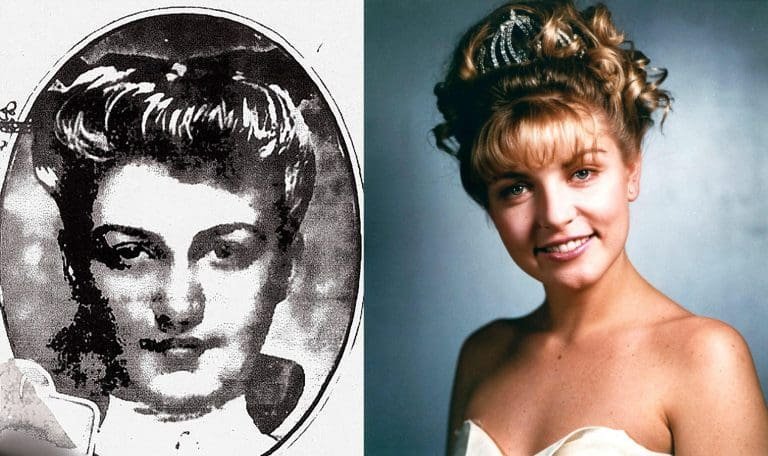
Hazel Drew’s lifeless body was found floating in Teal’s Pond in Sand Lake, NY on July 11th in 1908. She was young, attractive, and mysteriously dead. Over a century later her murder is still unsolved. All that remains of her is her gravestone at the Brookside Cemetery in Barberville, NY, not far from the pond where her body was found. The autopsy reveals cause of death to be repeated blunt trauma to the back of the head.
Hazel Drew had, up until that time, been working as a governess in Troy, NY for a man named Edward Cary, a respected engineering professor at Rensselaer Polytechnic. She looked after his children and lived in his home along with his wife, dining with the family and by all accounts quite beloved by the community of Troy, NY.
What would cause a young woman at her prime, who seemed to be living such an innocuous life to be so brutally murdered? Clearly, there is more to this case than meets the eye. There is currently a documentary in progress shooting in Troy, set to release this fall. The story continues to baffle history and true crime buffs. One writer in particular, immortalized her on the television screen in a cult phenomenon called Twin Peaks.
Twin Peaks was the creation of Mark Frost and David Lynch, airing in 1990 on ABC. It turns out that Mark Frost’s grandmother, Betty Calhoun, who was alive during the time of the murder, would tell her grandson ghost stories about Hazel Drew’s ghost haunting the woods near the site of her murder, which just so happened to be where he would spend his summer vacations in upstate New York. The story stayed with him and when he and David Lynch were brainstorming a TV series he decided it was a fascinating enough premise, brimming with enough loose ends and unanswered questions, to launch the perfect eerie show.
Initially, they meant to set it in upstate New York in the very town she vanished from, but the studio preferred a town with a larger population, so they relocated to Oregon, to the iconic setting we are so familiar with today.
The show begins post death. Laura Palmer is found at the water’s edge, her lips and skin already blue. The entire town is in mourning and reeling from the shock of such a ‘good girl’ ending up naked and dead with no explanation. Her parents, friends, confidants, and lovers are grief stricken beyond comfort. The part of Laura Palmer is played by Sheryl Lee, who’s resemblance to Hazel Drew is beyond striking— almost as if Hazel had cast herself. I can almost see her, hovering over David Lynch, whispering in his ear, “This is the girl.”
Twin Peaks chronicles the process of gradual unearthing of the character and life of Laura Palmer. The show hinges on two jarring images that do not seem to fit— the prom picture on her parent’s mantle— a perfect daughter. The other image is the one we see at the opening, which is of her naked corpse. The audience is forced to reconcile these two images of virginity and something corruptible by sin and decay.
Twin Peaks draws in the audience, and like many David Lynch projects, the way the story is told, makes the viewer an accomplice in the murder and invested in unearthing it. Just as in Blue Velvet, where there is a tension within the protagonist played by Kyle MacLachlan (who also plays Agent Dale Cooper, the man called in to solve the mystery of the death of Laura Palmer) between desiring the ‘good girl’ played by Laura Dern, and the ‘bad or fallen woman’ played by Isabella Rossellini – so are the characters in Twin Peaks torn between their image of Laura as a sweet girl who volunteered for ‘meals on wheels’ and the troubled teen who was doing coke and possibly turning tricks at an open secret brothel catering to the tastes of the rich and powerful men who ran the town.
The characters, settings and situations in Hazel Drew’s life inspired the universe of Twin Peaks. Many records were burned. If you try to find out anything about her or the people in her life, you will run up against a strangely absent body of evidence, almost as if it was purposely destroyed to protect powerful people in the town.
The story is not over. The mystery is still in need of solving. The time is ripe for female voices beyond the grave rising above the din to set the record straight. Hazel Drew was young, beautiful and smart. These are qualities that you would think would give her a leg up in life, and for a time, they certainly did. She knew how to work her angles. It worked for her – until it did not.
What happened by that pond? Was she meeting a man? Why was she so well dressed? Why did she suddenly quit her job working at the Cary place a few days before heading out to Sand Lake? Why did she give multiple cover stories to everyone she talked to?
It could be that she was entangled with forces more powerful than she could handle. In the years leading up to her death she had started living large. Travelling by train to Albany, Boston, NYC, and Providence, RI on a regular basis, wearing tailor made clothes which were beyond her modest governess financial means. Much speculation abounds as to who was her wealthy benefactor. Love letters were found in her abandoned suitcase along with not one but two kimonos. One of the senders of said love letters is one of the main suspects for the current documentary in production, but something tells me she is not at rest.
These loose ends remain unnervingly loose. I recently moved to Troy, NY. I look around these old streets and I see her walking around the town she loved so dear. I see her walking and I hear her talking and I feel her watching. She has a story to tell and I just hope that now people are finally ready to hear what she has to say.
Leza Cantoral is the Editor in Chief or CLASH Books, a local Troy indie press.
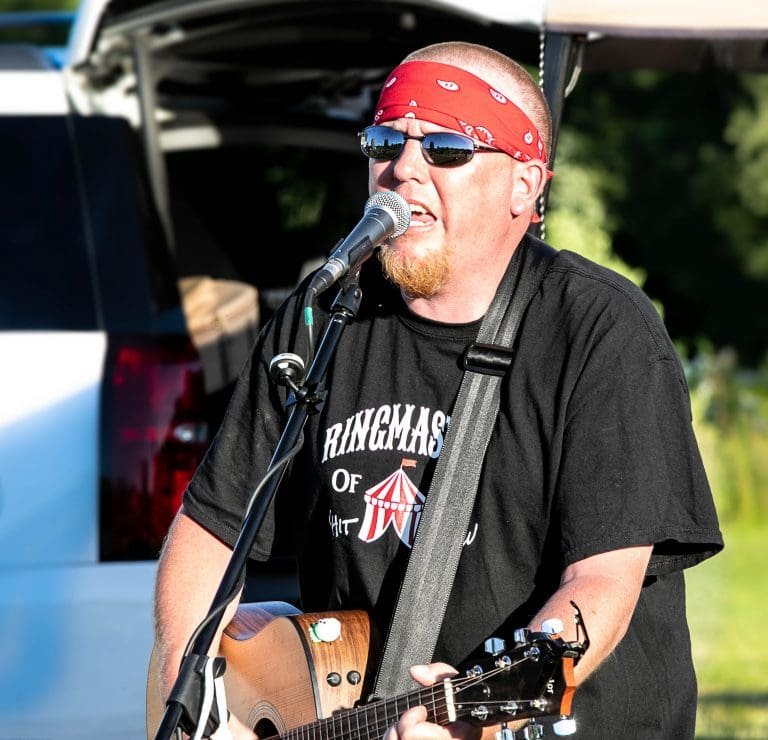
This month, we sit down to find out more about our Local Ringmaster of the Shitshow, Brian Kane. Proudly born and raised, in Lansingburgh, NY.
It seems over the summer, while everyone was lamenting the lack of shows, Brian was popping up more often than new COVID restrictions!
RRX: Who inspired you to make music?

BK: Music has always been a part of my life. While growing up and now, there must be music playing. My parents had music on all the time. Unless dad had the football games on. I would have to say that my parents were my biggest inspiration.
RRX: How would you describe the music that you typically play?
BK: I would describe my song selection as bluesy dirty love songs.
RRX: If you could go open a show for any artist, local or national, who would it be?
BK: Locally it would have to be Emerald City. I grew watching these guys blow the windows out of rooms. Boy, I miss their sound. Nationally, no question Chris Stapleton. His lyrics and vocals are amazing.
RRX: What is your favorite song to perform?
BK: They come and go because there’s always something different coming along. Right now, I enjoy playing Soulshine with Tony Pellegrino. And, playing Thunder Road by Springsteen.
RRX: Which famous musicians do you admire?
BK: Tom Petty, Neil Young, Greg Allman, Elvis Presley, Chris Stapleton, Bruce Springsteen, Johnny Cash.
RRX: What did five-year-old Brian, want to be as an adult?
BK: My mother said I was always looking for an audience. I can remember always trying to be a comedian. If I wasn’t playing music, I’d still be in entertainment.
RRX: If we were to look at the artists you are listening to, who would be on your playlist?
BK: Grateful Dead, Stapleton, Dirty Heads, Johnny Cash, Allman Bros, John Fogerty, and Mofro.
RRX: What can we expect from you within the next six months?
BK: Hopefully same ole same ole. Love playing for people in the bars. I do have a little project in the works. Brian Kane and The Beginning should be here by summertime.
RRX: Again, you were all over the place at ‘secret locations’ during the summer—are you able to disclose any of those locations right now? I know the one I attended was stellar!
BK: They were everywhere. It started when my St. Patrick’s Day gig was cancelled. My good friend Mike Drinkwine, called and said, “Play at my house and go live”. So, I did. And people loved it. Next thing you know people were calling booking up my Saturday nights at their house for a show. Great response from everyone. I better not tell all my secret locations. just in case I need to use them spots again. Haha.
RRX: Do you often plan a gig, and have it turn into basically an open mic for other local musicians? Seems quite a few pop in. Were they planned? Or did they just appear? If so, who was your biggest surprise?
BK: Depends on which way the wind is blowing that night. Nothing I do on stage is planned. That’s why they call me the Ringmaster of the shit show. Tony Pellegrino and I have become a pretty solid duo. Love his groove and the way he plays. That’s been planned. Others just pop in for the show and I ask them up to play. Johnny Clifford stopped in one night and played the full show with is. That was a great surprise. I’m a huge fan of his. Love his energy and I love Tom Petty. So much fun that night. Luke McNamee has surprised me a few times as well. Something about him just fires me up. He makes it more fun than it’s supposed to be. I’ve also had the pleasure of having Tommy Love sit and play drums for me recently. Love that man.
RRX: Do you have anything you want to say to your fans?
BK: I have fans? If I do, I just want to tell them thank you for supporting this fat, Irish guy from Lansingburgh, NY. Really if I didn’t have you, I wouldn’t be playing. Peace and love.
Howdy, hope 2021 will be better than 2020, but it’s a long way to go to get back to normal.
I promise no politics, no this party/that party, no this president/that president, no liberal/conservative.
This concentrates on COVID, going forward, it’s up to US to bring back normalcy, for YOU to get off your ass and help.
If you’re already in the fight, I salute you, but it must be a COMBINED effort by all.
First, the mask, what’s SO hard with wearing it? I love it, can’t tell you how many people I stick my tongue out at and they never know. If I don’t want to talk, and mumble on purpose, they have no idea I’m making stuff up.
I love the vanity mask, like license plates, they tell people who you are, my collection includes Groucho Marx, the Three Stooges, a broadcasting VU meter, and my beloved Cleveland Browns (woof bitches!).
The simple point is not just protecting yourself from COVID, but you to protect others.
Most of us have been wearing these since March, so we’re used to them.
Don’t wear the mask? You show me you don’t care and won’t help your friends and family.
It’s simple, keep wearing it, or finally START wearing it, for us to get where it was pre pandemic.
DO THIS NOW AND WE’LL GO BACK TO NORMAL!
Love your brothers and sisters, or find an island and leave us alone.
Social distancing, same concept, but a little different since this, more than the mask, has a direct effect on businesses, schools and public events.
I occasionally forget (or don’t have a tape measure on me) the six feet separation line. Some co-workers (rightfully so) frequently raise their hands to stop me from getting too close like the Supremes singing “Stop, In the Name of Love.”
It’s tough for me, I like to get close to share workplace gossip, and my frequent use of George Carlin’s “Seven Words Plus” make it less embarrassing when I don’t say them louder.
We keep distance to make sure we don’t give you potential germs, or you to us. With the mask, it’s like Double Secret Probation (thanks Bluto in an “Animal House” reference).
If you don’t, before you go hit that island check for a GrubHub available.
DO THIS NOW AND WE’LL GO BACK TO NORMAL!
The vaccine. I have reservations, was it made too soon, was it checked, double checked and triple checked to be safe? Does it have the potential to kill me?
Understand, I plan on getting both shots, but there’s a personal waiting period where I want to see results after the second shot, and verify how long they last for. I have way too many health concerns going on that I don’t want to screw up progress I made after last years “experiment” with a heart attack and bypass, plus complications with diabetes.
Some disagree, but I strongly believe ANY vaccinations WON’T turn you into Raymond Babbitt (thanks Dustin Hoffman in a “Rain Man” reference).
From personal experience from working in Human Services, autism (defined or not) has been around a lot longer than vaccinations.
To sum it up, wear the mask/start wearing the mask, practice social distancing/start practicing social distancing, and take the vaccine (after well researched investigating).
To nail the point home as directly as possible, I hope the next line will echo your thoughts.
I’M SICK OF THIS CRAP! I’M SICK OF BEING STUCK HOME! I’M SICK OF NO SPORTS! I’M SICK OF NO CONCERTS! I’M SICK OF NO RESTAURANTS! I’M SICK OF BEING A PRISIONER!
If you felt ANY of the above, YOU can fix it, NOW.
Daily, businesses go belly up due to restrictions, BUT they’re fighting to stay open.
When was the last time you got take out?
When was the last time you bought a musician’s music?
When was the last time you helped your kids with remote learning, or did you leave them to do it on their own?
If you’re still sitting on your ass waiting for everyone else to fix, I pity you my friend.
You’re a part of society, and society is going down the tubes unless YOU do your part.
WE are ALL counting on YOU, and WE can do it TOGETHER!’
Be hearing you
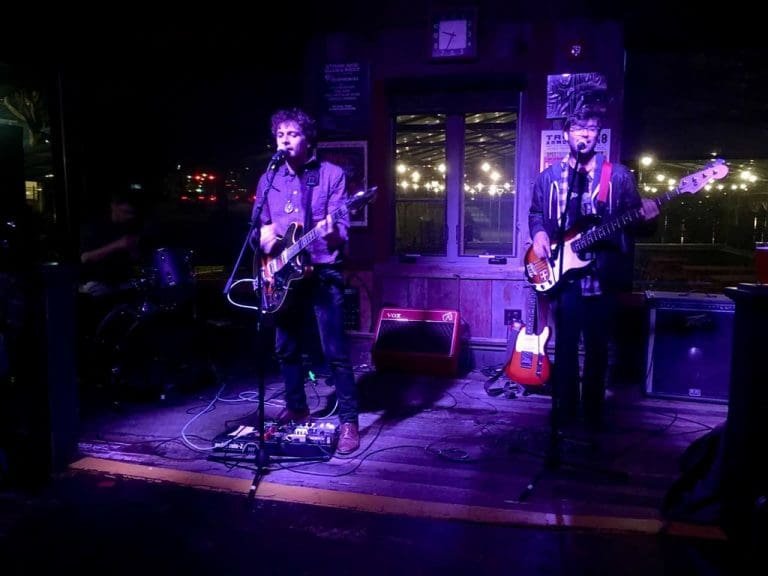
The Ugly Muppets are a Saratoga based trio creating thoughtful and hard-hitting psych/garage-rock. Their recently released album titled Committee of Public Safety is a skillfully crafted blend of old school psych-rock influences and modern indie stylings, and the band is far from finished. In a recent interview, the Muppets (Dan Burt, Josh Clark and Jeremy Katz) discuss their work on the latest album as well as an upcoming song.
RRX: So, at risk of seeming crazy I wanted to show you guys this Ugly Muppets shirt I bought way back when I saw you for the first time.
JC: Wait a second, I ran into you at SPAC and you were one of the first people to wear our shirts! It was the Beck show.
RRX: I do remember that actually (laughs). But anyway, I’ve kind of been calling these interviews my “local COVID catch up” because as much as I’ve tried to avoid the topic, it seems to be a dominating force on local bands. So, the theme of these interviews has sort of shifted to reaching out to my favorite local bands to see how they’ve been holding up. I know It’s been a bit since you released your album, but tell me how you’ve been doing since then.

JK: We’ve been doing a whole lot of nothing recently.
DB: We did drop a rap album recently.
JK: That’s true, we’ve been doing work on side projects but overall just kind of hit the brakes when COVID hit initially.
DB: I personally got laid off two jobs on the same day, giving me a ton of time, so I decided to make a hip-hop project with a friend of mine, Bukket. The album is called Scootch and the artist is Ooschmoo, it’s on Bandcamp.
JK: Ooschmoo is the name of his cat. He really didn’t want people to find it (laughs).
DB: It came out pretty decent but no one is ever gonna know it exists.
JC: But we’ve also been recording some new stuff of our own. Considering this is an Ugly Muppets interview we probably should mention our own stuff.
RRX: I don’t mind hearing about Ooschmoo (laughs). Anyway, I enjoyed your album a lot when it was released, do you guys wanna talk about working on that at all?
JK: Basically, we did it all in-house like the previous one. We got some new stuff and it ended up sounding less rough around the edges, almost accidentally. I like to keep things a little on the grimier side, and I think we’re going that way with the newer stuff.
JC: We were all living together in this house on Lake Luzerne and that’s where we started the record, then halfway through we moved to this place in Greenfield and set up the studio in the living room there. We recorded probably half of the rhythm tracks in one day during a blizzard, which was pretty cool.
JC: There would be months in between us getting a lot of stuff done.
RRX: Does the band name have anything to do with Britain? I feel like ‘muppet’ is such a British insult.
JC: No actually, the band name comes from my college roommate; he would always say, “Josh you’re not getting laid tonight, you look like an Ugly Muppet.” This guy was a comedian from Syracuse.
RRX: Tell me about this space we’re in right now, you guys seem to have all your stuff set up right here in the living room.
DB: Two bands share this space, that’s why there’s two drum setups and two of everything.
RRX: I dig this pedalboard you have too, what’s this toy car pedal you have on here?
JK: It’s a cool little fuzz pedal, I met the guy who made it when I got it actually. We played a show at some brewhouse, all three of us in a different band actually. There was a raffle at the show and I ended up winning that as a package of random guitar stuff.
RRX: I also wanted to talk about your older album because I have a funny story about it; when I saw you a while ago, I had a friend who isn’t super into music with me and he ended up buying your CD just because he saw the song: “Holden Caulfield Thinks You’re a Phony,” and he thought it was great.
JK: That book was definitely an influence on me, I grew up being angsty like that (laughs). It is what it is, but basically the message of that song was supposed to be: be yourself and fuck everything else. It’s kind of cliche, but that’s what I was going for.
RRX: Tell me a bit more about the origin of the band, and what other side projects you guys are in.
JK: Well, Dan and I have a couple of albums under the name Mountain Kids; it’s kind of more lo-fi and psychedelic folk based. Dan takes the lead on that more.
DB: It’s pretty chill. That stuff came out nice. We were all in a band called Paradox Saints, but that ended up falling apart.
JC: This band (Ugly Muppets) kind of started because you (Jeremy) and I worked together at Uncommon Grounds, and then we realized that we lived down the street from each other. I got sick of being in another band where one guy was like: “Nobody else can write songs, only I can!” So, I wanted to start another band, and Jeremy showed me the Muppets song “Modern Vampires,” and I said “Ok I want to play on this.”
RRX: Tell me more about the Saratoga scene, I got a glimpse from Safety Meeting but it’s always nice to get more insight.
JC: What scene?
RRX: I had heard it’s all in a tight spot, as most venues are right now, but if you guys had any memories to share that would also be cool.
JC: For a while it was pretty lit because we had Superdark Collective on Monday and Friday and the Groovy Tuesdays, which meant three nights a week of music in a town that’s usually full of your typical bar bands.
JK: There were open mics everywhere too.
JC: And then those three nights you’d get original, cool music and a lot of it was touring acts. It was kind of flourishing for a town of its size, but those were the before times.
RRX: I wanted to also ask if you guys had any memorable moments touring around here.
DB: We haven’t really had a chance to really tour, we’ve spent a lot of time in the studio making sure everything was ready. We were actually gearing up for a decent tour and then all this happened and now we can’t really do that.
JC: We played the city once but that was kind of a shitshow; it just wasn’t a great show. The Wu-Tang Clan’s bus was parked outside though so that was cool.
RRX: So, you guys have new stuff you’re working on, do you wanna talk about it at all?
JK: Yeah, it’s a few songs we played live a bunch. It’s coming along.
RRX: Lastly, do you guys have any favorite albums of 2020?
JK: Oh yeah, All My Heroes Are Cornballs by JPEGMAFIA.
JC: The Nude Party, I saw them open for Dr. Dog at Upstate Concert Hall. Their new album is great.
DB: I can’t stop listening to older stuff, Television, that sort of stuff.
Ugly Muppets dropped two new songs on January 8th, 2021, and you can find them on Spotify as well as other streaming services.
Facebook.com/uglymuppets
Instagram: @theuglymuppets

A girl from the suburbs has a dream, and through the trials and errors of hard-fought experience, she finds her dream and claims it. And lives it. Artistic expression can be beautifully described in the tools of a writer’s trade, but we can never forget that art, all art, is the telling of the artist’s story.
Amy Rigby is an artist’s artist; singer, songwriter, book writer, artist… and yet above all, storyteller of her own design. She has a few things in the fire, and she’s asking everyone to come get warm.
I sit down with Amy and we talk about the finer rules of highway bingo.
RRX: You have a great story, growing into being a professional musician from an Elton John fan in the Pittsburgh suburbs. Luckily, it’s a story told in your memoir, Girl to City. Memoirs are tough, because writing a good one forces you to write what they want to read, as much as what you need to write. What did you learn from the effort?
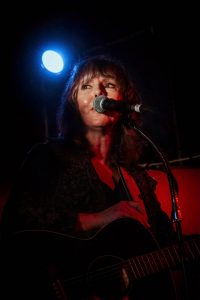
AR: Well I love to read memoirs so I just wrote what I’d want to read if I didn’t know me. I learned that writing a book really is as hard as people say, but worth the effort. It also made me appreciate the quick payoff of songwriting.
RRX: You spent time in a lot of different places, New York, Nashville, England, just to name a few. And now you’re back in New York, a bit north of the city. Based on your travels for the arts, would you consider it easier to move to a new place and have to establish yourself, or move from a place, and have to let go?
AR: I find it easier to move from a place because I never really let them go! I still feel like New York City is my town (though I admit it gets less so), parts of London will always feel weirdly familiar and same with Nashville. The buildings change but the topography remains the same, and a lot of the people do too. Many of my New York friends still live in the same apartments they’ve been in since we were just out of college. Starting over in a new place is something I never worry about until I’m actually in the middle of doing it, but I think because I travel so much for gigs (or did until this past year) I don’t need to rely on the place where I live to provide as much for me as if I stayed put. It is wonderful to get to know the people and place where you live though, I’m appreciating that even more this past year. Even if I only see very occasional glimpses of friends at the takeout coffee line, I’m appreciating community more and more.
RRX: You have a podcast, Looking for the Magic, with Elizabeth Nelson of the Paranoid Style. I’ve only done a blog, and I’m not afraid to admit I suck at it. And I know a lot of writers who did them with good starts, and they run out of gas. How do you and Elizabeth plan on keeping up a schedule and keeping it interesting?
AR: I started a podcast back in March, Girl to City, where I read a chapter of my book each week and worked music into each episode, spending hours editing and getting it up at the same time every week for 20 weeks. I could never have done that if I hadn’t been stuck at home but I had the content already created. It was good to have something to focus on every week. This new podcast Looking for the Magic is a different experience – flying by the seat of our pants, committing to finding a topic related to music/songwriting every week and meeting up live online on YouTube, then uploading as an audio podcast. I’ve written a blog for many years now and just make myself do it. It’s discipline but is always rewarding – I always feel better when I’ve created new work or articulated something I couldn’t get to without an imagined audience in my head. The hardest thing is the energy needed to find readers, listeners etc. Which reminds me, I need to share about tomorrow’s episode on every platform…especially tough to self-promote when there is so much going on in the world, but we can all use a little pleasant distraction.
RRX: Touring is tough, no matter how you do it. But touring while raising a kid, I imagine that’s like being a computer hacker with a warm keyboard and a room full of cats. It must have been difficult from a logistical perspective, but it had to balance out, right? Was there any moment :that cemented, in your mind, the benefit of doing it?
AR: Looking back I honestly don’t know how I did it. I was driven, and maybe one of the beauties of having kids is you feel like whatever you do it’s for the team, like you need to make it count and be worthwhile because there’s someone else relying on you. Not to say I didn’t feel selfish some of the time and I still look back with guilt and regret. I was just remembering taking my daughter out of school, flying to the UK with her, taking a train to Bristol where her dad was playing a gig and putting her on a tour bus with him, carrying on doing my dates by train and then picking her up at the airport in Dublin. Shared parenting insanity. It sounds glamorous but it was scary and hard and I probably spent any money I made! I do think my daughter had fun though, and she knew she was loved. When she was a bit older she and I worked up some punk covers together so she could play on tour with me and that’s a treasured memory. I think whatever you do as a parent, you’re never sure you’re doing the right thing so I guess I didn’t do too bad.
RRX: We like to explore the creative minds of the people out there that use that part for their bread and butter. Seems that people making a life of one craft have their toes (or legs) in the pool of other crafts; art, writing, sculpture… So, you have had your life in music and writing. Are there any other worlds you’re trying to conquer?
AR: I really loved turning my book Girl to City into a podcast and I love doing the podcast with Elizabeth Nelson. Years back, another artist Marti Jones and I created a live show called Cynical Girls where we had a whole little stage set and scripted bits – I guess it’s closer to theater or TV. And I admit there have been a few times I’ve tried to turn a set of songs into a musical, or collaborated with a playwright and I still love the idea. I know that’s what every songwriter ends up doing – yep, why should I be any different?!
I also have always made visual art – studied illustration at Parsons – and I keep coming back to graphics, drawings; laying out books, screen-printing. I just designed and printed a Dancing with Joey Ramone tea towel and selling those over Christmas basically helped me support myself. I get a giddy thrill out of packing them up and sending them to people all over the world!
And then there’s my dream to have a combination cafe/hotel/shop/venue – we stayed at one in Holland years ago and I still have fantasies of doing that.
RRX: When I heard your name, I also heard the name of Wreckless Eric, whose also spent a life of notes and measures. You two are not only married in song, but married in life. If you had to pick, would you say you more complement each other musically, or compete to keep each other on your toes?
AR: I think we definitely complement each other musically – from the first time I ever heard Eric back in the seventies, I thought he was a kindred musical spirit. I think we definitely keep each other on our toes but not through competition, just support and encouragement, and also offering another perspective, shared with love and honesty. If we can aim to be insecure at different times over different things, that’s the best!
I know I said we don’t compete, but I will say I’m inspired by Eric’s work ethic. He keeps moving forward making new work and doesn’t get bogged down and I’ve learned a lot from being around him.
RRX: This is where you answer the question I didn’t ask. Do your instruments have their own luggage tickets? Who’s hiding out in the upstate? Educate, enlighten, emote – the floor is yours.
AR: I hope we’ll all take something away from this pandemic era that is positive – I’ve been unemployed for almost a year but have had freedom to create stuff without constantly coming and going on tour and self-promoting; I’ve lost heroes and friends and my stepmother to COVID and almost lost Eric due to COVID but those experiences have highlighted how it’s people that matter. I’ve hardly seen a soul but feel connected to everyone in a deeper way as it’s put us all in a humbler, more elemental place. Even when I walk around our local Walmart and see everyone doing their best, wearing masks – I feel like we’re all a lot closer to each other than divisive forces would have us believe, if only we could see it.
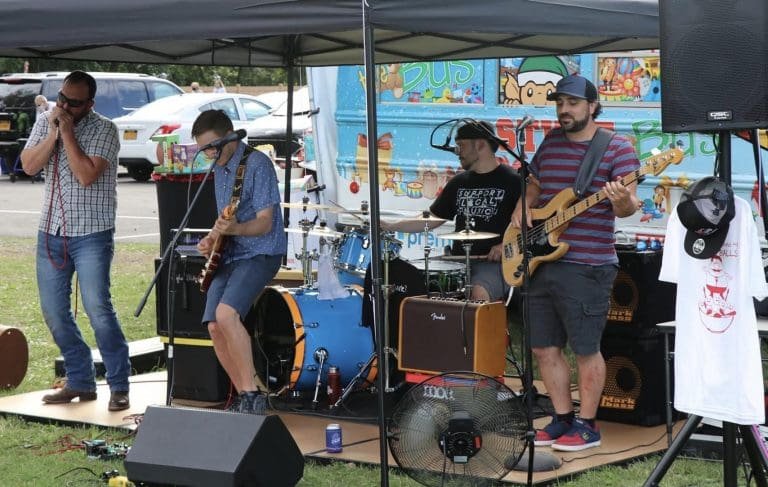
Being a Capital Region publication, we like to expand our horizons once in a while to show you what’s going on beyond our borders. In Central New York, Uncle Charlie and the Meatballs happens to be the haps’. So we sit down with the band and chat about the western front.
RRX: You all are from Central New York, which is the western front for us. But of course, it’s home turf for you. So you get to be our ambassadors. Tell us a little bit about yourself as a band, and give us a “tour with words” of the Central New York region music scene. What are the haps, big and small?

UCMB: We’re just a good time, five piece band from the Utica, NY area that genuinely enjoys hanging out and making music together. Adam Bishton (harmonica/vocals), Matt Grimaldi (guitar/vocals), Frank Grimaldi (bass/vocals), Collen Roller (guitar), Tony Adamo (drums/vocals). We consider ourselves a blues band and have some original material in the works but for now, we play covers and try to inject our own flavor into them. We can get loud and rock and could be considered kind of “jammy”. We come from all different musical backgrounds with diverse influences and have been involved with numerous projects in the CNY music scene, some of us for almost 20 years.
The CNY music scene is incredible! (pre-COVID of course) There is so much talent and musical diversity we have to stay on top of our game just to keep up. There is no shortage of venues to showcase it. You can find live/local music any night of the week. From bigger venues like our historic Stanley Theater, several casino resorts, beach/lake/vacation areas, bars and restaurants, microbreweries and wineries, several local music festivals and maybe the biggest local music showcase of all, Saranac Thursday. It takes place every Thursday from May-September at the FX Matt Brewery. Bands that get the opportunity to play at the brewery for Saranac Thursdays, play to crowds of about 5000 people!
RRX: Every band has a story. Some bands tuck in and play it down, like it was just a notion over a beer that held through, but I’m not talking about that story. I’m talking about the real story; the first jam, the first really good practice, maybe even a funny thing that happened that cemented Uncle Charlie and the Meatballs as a thing?
UCMB: Our origin goes back about 15 years to our local Mohawk Valley Blues Society (MVBS) Jams. It’s where Adam and Tony met and got to know and play with other local musicians. Tony and Adam (along with guitarist Larry Giglio) formed a project from those jams, known as Sour Mash. Frank (who is also Tony’s younger cousin) used to record practice sessions and live shows for Sour Mash. Frank eventually became a bass player and started filling in with Sour Mash. Guitarist Larry Giglio moved away and Sour Mash was no more. Fast forward about 12 years and Frankie met Collen at work and they started another project together (Work Related).
Uncle Charlie & The Meatballs came about when Adam, Tony and Frank started hosting annual “Christmas Party Jams” at Swifty’s (a local bar/restaurant – there’s one out that way in Latham) when Larry would come home for the holidays. This went on for seven years or so and became a holiday staple. A bunch of us local musician friends (including Collen and Frank’s younger brother Matt), would get together and play, unrehearsed, all night long. Every year, we’d change our band name. One year a musician friend (Sean Gaffney) in a conversation about cliche’ blues band names, came up with the name “Uncle Charlie & The Meatballs” for one of the annual jams (a nod to our locally brewed Utica Club Beer – known as “Uncle Charlie” during Prohibition- and our incredible, Italian, culinary scene). Two years and two name changes later at another Swifty’s Christmas Jam, an older, intoxicated woman at the bar went on to tell us (as we were setting up our equipment) how much she enjoyed the band that was here a few years ago… Uncle Charlie & the Meatballs. We figured since she remembered the name, we should stick with it. In March 2018 we decided to keep the name and play out with it more than just once a year with original guitarist Steve Schoen and his wife Kelsey on vocals.
RRX: I saw one of your t-shirts, and it asked, “Who’s Uncle Charlie?” And since nobody in the band is names Charlie, it stands as a good question. Who’s Uncle Charlie, and where did the Meatballs come from?
UCMB: As mentioned above, Uncle Charlie’ was the code word for Utica Club (UC) beer during prohibition and what it’s affectionately called by us locals. Whether we’re hanging out, playing live or rehearsing. there’s always a few Uncle Charlies close by. We decided to put the phrase on our t-shirts because we get asked that question… ALOT!
RRX: Being in Central New York gives you some choices as a band. Obviously, you play locally, but also you’re in the middle, somewhat, between the Capital District and the bigger cities in Western New York, like Rochester and Buffalo. And we all have NYC. When you’re thinking road trip, where do your mind go first, and why?
UCMB: Some of our favorite shows have been road trips to clubs in Oneonta, Cortland and Syracuse. But if we’re looking to get away or even play a show in a cool/different place, we think of the Adirondacks and/or in Finger Lakes region.
RRX: In the Capital Region, we have a lot of diversity in genres in what people are playing. It’s not rare to see a band with three or four genres. Is it like that in CNY? Or is it more country-based? Do venues seek out more originals or more covers? And what genre (or genres) does Uncle Charlie & the Meatballs groove to?
UCMB: There is so much musical diversity here in CNY it’s quite remarkable. Venues obviously want to make their patrons happy and crowds in the CNY region predominantly want covers. Every working band/artist around here has a large catalog that they can pull from at any time, including rock, country, bluegrass, oldies, 80s, top 40 pop, classic rock, and the list goes on… As an example of the diversity CNY musicians have, check out the Sisti Brothers (Mark, Al and Dan) They have three distinctly different bands that frequently play out. An Irish band (Blarney Rebel), an Allman Brothers Tribute Band (Les Brers) and a blues band (King Kool). Same guys… three different bands.
On a personal level, our musical tastes are as diverse as the area we play in. Blues, classic rock/rock, alternative, pop, country, oldies, and hip hop. We listen to it all.
RRX: A lot of times, we’ve asked bands who their influences are, and that’s interesting. But I’m going to twist it. We need to extend the love in CNY, so, can you name three national acts that you all can agree influence you, and three local bands that you can agree influence you?
UCMB: We all have our own individual influences of course (Dave Matthews Band, The Rolling Stones, Led Zeppelin, The Grateful Dead, Huey Lewis & The News, Chris Stapleton, Kenny Wayne Sheppard) but we think that our overall sound can relate back to The Jimi Hendrix Experience, Muddy Waters, and The Paul Butterfield Blues Band to name a few more in a general sense. Locally, we already mentioned the Sisti Brothers but our good friends, Bluestreak, Blueprints, The Crazy Fools, and Last Left (specifically Spencer Morgan) have had a bigger influence on us musically than we’re sure they even realize.
RRX: Here is where you answer the question I didn’t ask. Good meatball recipe? Not who, but where is Uncle Charlie? Educate, enlighten, emote – the floor is yours.
UCMB: Well Tony makes some damn good meatballs (his nonnie’s family recipe) and Frankie and Matt have some top-notch culinary talent on that side of the family (Boulevard Diner). Swifty’s Bar & Restaurant gave us our start and holds a special place in our hearts. It’s a frequent hang-out of ours because of the service and selection. We consider it our home away from home, but we have to give a shout out to “Old School Bar & Grill” here in Utica, NY. They hosted live music on Wednesday nights and have an absolutely incredible menu. Every Wednesday that we’d play there, they would run a “Utica Club and Meatball” special. Their meatballs are as close as you can get to nonnies and their steak sandwich is well worth the drive, no matter where you’re driving from.
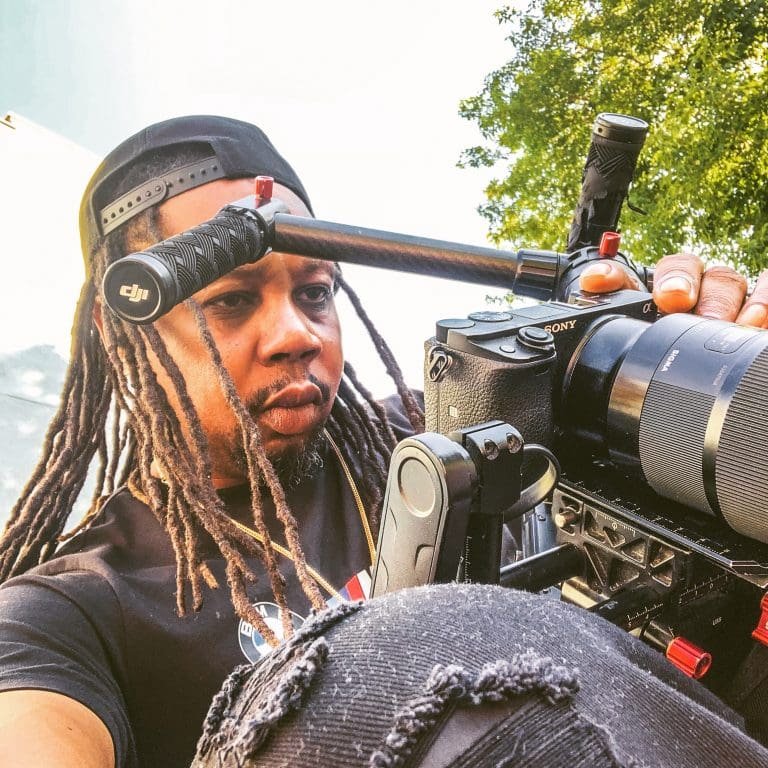
The birthplace of Hip Hop is undeniably the Bronx but all five boroughs have produced legends that could easily be carved into the Mount Rushmore of the genre. With this being the case we have been inundated with music videos set in NYC. No disrespect because it’s well deserved. Then as the music evolved we’ve seen a million videos from the West Coast as well. Other cities undoubtedly followed suit but my point is; when I watch music videos filmed in Albany and the Capital Region from our local artists, it resonates with me. Thanks to Arnold Surgick aka Director DizzyDott via Good Fellaz Films we’ve been blessed with a nearly endless list of music videos filmed in our area. One that stands out to me because it was shot in my old neighborhood and the song mentions my old haunts is “Where I Come From” by: Pook featuring: Keylo. My favorite line is “I’m from the South End, grew up on Broad Street.” This is where my best friend lived, just blocks away from my house. Glad DizzyDott has taken some time to speak with us about his directing career.
RRX: Being an Albanian like me, why is it important to you to showcase our hometown?

DizzyDott: It is very important to me to show the world that the 518 really has some great talent, even though we are a small town the music industry doesn’t really think about. So I show them visually because everyone has a talent that is not showcased the way it should be. I love showing my gifts that God gave me to the world in the hopes of getting recognized more, like on YouTube, Instagram etc.
RRX: So let’s take it back to the beginning. How did you get started? Did you go to school for this or were you self-taught? Also, what was the first video you shot?
DizzyDott: Let’s see… when I was younger attending Mount Olive Baptist Church my grandfather used to always set up the camera and ask me to press record and stop during church services, especially when he sang. That’s when I found my love for the camera and really started operating it more. But… I actually taught myself to shoot different angles and shots, especially using my own editing style. My bro Pnal started calling me ‘Steady Hand Dott’ because my shots were never shaky and my brother Antoine, aka Beatz, started calling my film name “Goodfellaz Filmz” because I used to like watching gangster documentaries. As far as school goes and getting my filming and editing up to par, I attended the New School of Radio and Television for two years and graduated. Now ten years later I’m still at it and still on top of my game.
RRX: Nice, a fellow New School alumnus! If Uptown and Downtown (Albany) had an anthem it could easily be “My City” by: Tiff Gabana ft Eighty Gee, C.E.O., U S Bay, Ready Rah, Bezzolay, Todd O. & Pnal. This video has so many things going on and is one of my favorites. Any background story (stories) you could share about how this masterpiece came together?
DizzyDott: Well that is definitely one of my favorite videos that I shot as well. That track is actually Tiff Gabana’s. She had the original and then she did the remix. When I heard the remix, I was like ‘sis let me shoot that for the love.’ Then I hit up my bro Nells and we wrote a script and made a master piece. I love when a song touches the soul because that’s when I can go all in on the script and editing.
RRX: I’ve been writing music since I was a kid and back then to be lucky enough to get a music video aired on MTV was a dream so far out of reach for most of us but let’s be real MTV lost it’s appeal decades ago. How has the YouTube platform proven to be successful for a director like you?
DizzyDott: Yeah I watched MTV everyday all day and I would have never thought that I would be shooting music videos after watching them my whole life. But… YouTube as well as other broadcasting sites have been great for us video music directors. It lets us show our skills, keeps the world in tune with the music and what the artists have to offer.
RRX: Another notable video/short film you did with a message was “Broken Mirror” by: Peshy Kruger. Anything you could tell us about the production of this project? Also is that Quady Rouse dancing?
DizzyDott: Yes that’s one of my all-time favorite videos. As soon as I heard that track I hit Peshy up and said we’re making this a movie bro. This is really the first time I wrote up a script for a video and mapped out everything how I wanted it to be. All of the actors did their thing, even my father supported me in this project and made an appearance in it. And yes, that was my lil bro Quady Rouse dancing, he is a great actor as well. He made the film come to life. Even though I wish more people would have tuned into this project because it would have went viral. I’m still proud of everything about this video.
RRX: Any career highlights you’d care to share?
DizzyDott: The highlights of my career, let’s see… working with the late great Fred Da Godson, building a dope relationship and working with Grafh and shooting a video with Da Baby when Locx had him for a feature on one of his songs. Also, when I was chilling with the late Chinx Drugz in Connecticut at a radio station and then the club afterward. Last but not least working on a documentary for Albany Medical Center. I have a lot more highlights while working with my camera, I’m just glad GOD BLESSED me with this talent.
RRX: Lastly, what’s on the horizon? Any short-term goals for 2021? Long-term goals or plans for the future?
DizzyDott: What’s on the horizon for DizzyDott? Let’s see… I just want to get better as a person and a videographer, I also really want to take young men and teach them the skill that I have because I’m getting too old for this (laughs). But…I definitely want to build a nice team and have a building where I can work out of. I also dream that one day I’ll be on set or even film a big artist, that would be all she wrote.
Anyway thanks for taking the time to interview me, I definitely appreciate the recognition. If anyone needs to contact me for photo shoots or videos they can reach me at Email: goodfellazfilmz@gmail.com Instagram: dizzydott_dashooter Facebook: Arnold SURGICK
To keep up with Director DizzyDott check out his YouTube channel at youtube.com/c/DOTT518

Now that Paul and I were reunited, we focused even more on our music. We had always written songs together, and I had missed that in addition to missing him. We both had gained a different perspective having had the time to think about our music as individuals for the first time since we had been together. We were each writing more songs than ever now, both together and alone, and were playing with a wide variety of people. We played in most of the local clubs, Bogies, 288 Lark, Pauly’s Hotel, Quintessence, QE2, Putting on the Ritz, and many others. We also still played at coffee houses and cafes as a duo. We played at all of the Rok Against Reganomix concerts, and some of the colleges, Union College, Hudson Valley Community College and RPI. We sometimes played live on WRPI and did the “Readings Against the End of the World” organized by Tom Nattell. We also played many of the local demonstrations and often wrote a song for that particular event. We were riding high. But we couldn’t seem to maintain keeping a band together. Although we had a core group, like many other bands, we went through bass players and drummers pretty frequently.
I had always wanted to have a keyboard player in the band. I studied classical piano for many years and could sight read quite well but wasn’t a jammer on piano. I now owned a Casio keyboard and was learning how to program it to have the sounds I wanted. However, my early piano lessons were very rigid. My teachers believed that there was only one way to play, and that was to play the notes on the page the way they were written. So, the one thing I never learned was how to improvise. Although I tried to teach myself this important skill, I never quite got the improvement I would have liked. I could teach my young students how to do it, but I couldn’t seem to let go of that classical training myself. We liked the keyboard addition but decided that we needed to find a real keyboard player.
One day, as I was working at the school, an interesting looking couple walked in.
I have always believed in putting what I need out to the universe. I recognize there’s a difference between what I want and what I need. I had been successful with this technique in the past, including having found a rehearsal space when we needed one. Having a keyboard player felt like a need, so I stood outside and asked for it out loud. A few days later, as I was working at The Free School in Albany, an interesting looking couple came in with two girls to visit the school. I took one look at the man, walked up and asked, “Are you a musician?” It turned out that he was. Then I asked if he played the keyboard. Again, the answer was yes. Now, once again, we had all of the pieces we needed to be a full band. I invited him to jam with us, and he soon became one of the core members of General Eclectic. We now had a rhythm guitar, lead guitar, keys, bass, drums, percussion and four of us could do vocals.
We soon found out that Bob not only played the keyboard but also played guitar, sang and wrote songs. He also knew the difference between playing and practicing. Before he joined us, I was always the one that kept us on track, insisting that we pay attention to detail, rehearsing certain sections until we got them right rather than just jamming endlessly. Because I had been a classical musician, I knew the value in real practice. I never have any trouble going over just one line or even one measure until it’s up to par. Paul was not interested in practice. To him, it was only about having fun. He felt that practice took the fun out of it. Andy also was looking for fun. I liked having fun, but I also saw that we were sloppy and was trying in vain to tighten us up. Now, I had a comrade who believed in the same thing. Bob and I took turns whipping the band into shape. This was great for me because I was no longer the only bad guy in the band.
Bob and I also tended to click in other ways musically. We had similar ideas about harmonies and arrangements. We also wrote a few songs together. I remember one night when he came up to the trailer and mentioned a piece of music he had been working on. As he played it, I grabbed a pen and paper and started writing. Almost instantly I had the melody and lyrics for “Slow Turn.” His music spoke to me and my contribution came pouring out. It’s always a rare gift when you find another musician who is on the same wavelength musically.
Unfortunately, there was now a growing tension in the band. Paul and Andy were getting more vocal but also being passive aggressive about the direction our rehearsals were going in. There was a growing tension between Bob and Paul and between Bob and Andy, our lead guitar player, and between me and Paul. In addition to Bob being a taskmaster, he also wanted to be playing guitar. He had joined the band as a keyboard player but loved the guitar more. I think Andy felt a little resentful. Paul and I thought there was room for both. They each had a different style of playing. Andy played like Jerry Garcia, which was great for some of what we did, but we played such a wide variety, sometimes the songs called for a different style. With Bob playing guitar in the band, we covered some Frank Zappa and Jimi Hendrix. We also started writing differently to accommodate this additional sound. It was encouraging us to grow which we both always saw as good thing. I think our biggest hurdle to getting gigs was that we couldn’t be pigeon-holed. It was impossible to fit us into a niche, hence the name “General Eclectic.”
We soon started hanging out with Bob, his partner Cindy, her two girls and their group of friends, thus expanding our circle even more. For us, our band was like a family. They had just moved to Albany and eventually moved into a large old mansion in the south end with another couple. Soon more of their friends relocated nearby. We made lots of new friends and thoroughly enjoyed ourselves. There were lots of parties where we played music all night long, often tripping and solidifying those musical and personal bonds. And there were more gigs as well. Life was good, but the tensions in the band never really went away, and Paul and I were back to fighting in earnest.
We got back together because I had given in. He never did agree to counseling and just went back to his old ways of ignoring the kids and blaming me for everything that went wrong. I think he resented staying in one place and really wanted to hit the road. He loved being a gypsy. I did too, but we had made a commitment to the kids that we would stay put for their sake. I didn’t regret it at all and thrived in upstate New York. I never imagined myself as a teacher, but now I had a career that I loved. I also loved being close to many major cities. There were so many opportunities here that hadn’t been available to us before. We were still working with the Rok Against Reganomix committee and a couple of us from that committee took over the People’s Pinxster Festival. This historical festival had been co-opted by the city and turned into the Tulip Festival. It had lost most of the historical significance, and we were tasked with trying to keep it as true to its origins as possible. We were also regulars now at the Half Moon Café. It felt like I was finally home. But Paul was working as a cook, jumping from one lousy job to another, never settling into a routine. He couldn’t seem to figure out where or what his destiny was supposed to be. He kept searching for that dream that leads us to believe that the grass is always greener on the other side.
We played almost every club in Albany, but The Half Moon Café was our home base. It was owned by a man who lived in Ithaca and ran another café there. He had given over the running of the Half Moon to a collective of people who were young and mostly in the punk scene. Unfortunately, none of them understood business and almost ran it into the ground. The rumor was that there were back taxes that hadn’t been paid in years, so Richard came back and threw them out. I had no idea what was going on, so I went in to introduce myself to him during his first week back. Although I can’t seem to hide the fact that I’m a hippie, no matter how I try to disguise myself, I must look pretty responsible because people often confide in me. The first time that I met Richard, he told me about all the troubles he was having with the folks who had been in charge. He told me that he’d also heard some pretty disturbing stories about some of the shows and other events held there. I admitted that some of the shows were pretty wild. “I heard rumors,” he said, “about a couple of acid tests that were held here.” I looked shocked and said in disbelief, “No!” I wasn’t about to tell him that we had organized those shows. Although I felt bad at the time, we had a huge following there now, and I didn’t want to lose that. It wasn’t unusual for us to have a full house plus a crowd out on the sidewalk and in the parking lot next door. Richard soon came to know and like Paul and our kids, and we continued gigging there.
Not long after that, we lost another bass player. We seemed to go through drummers and bass players like changing socks. They were always looking for a better gig. I couldn’t blame them, but it was frustrating. We had a band meeting and the guys decided that, instead of teaching someone new our songs, they would take turns playing the bass. The band bought an electric bass, and we had a whole new sound … again. It was a little odd because they all played the bass differently. Andy played it like a lead guitar, Paul played notes based on a chord, often playing partial chords. Bob played the closest to a real bass sound than each of them and was frustrated with their ignorance of the instrument. Now, we were back to having only one lead instrument again. I felt more comfortable playing percussion and doing my vocals, but sometimes we needed that solid background sound of the keys. So, I went back to playing rudimentary keyboard occasionally. I could always play chords and understood theory, but try as I might, I still couldn’t shake that rigid classical training.
My rocky relationship with Paul was starting to affect the band now. We often bickered at practice, creating a cloud of tension in the air. Richard noticed it at a Half Moon gig one night and offered us free tickets to a Dutch Apple Cruise he had organized for the café. He wanted us to have a romantic evening. That night, we fought all the way into town and upon arriving on the boat, we each went our separate ways. So much for our romantic evening. I stood by the rail watching the river flow past as Paul went to the bar. Pretty soon, he came walking over with a tall man in tow. “Hey Deb,” he said chuckling, “I want you to meet my long-lost brother Dick Kavanaugh.” They had met in the bar, and Paul was intrigued with the similarities in their names. We chatted a bit, then Paul went back to the bar, leaving me and Dick to enjoy the rest of the trip together. I remarked that this was the second time he was pointed out to me. My first friend in the area, Linda, had told me that I should meet Dick Kavanaugh because she thought we would really get along. And we did. We spent that time getting to know each other, and the time flew by. At the end of that cruise, we parted ways, and I didn’t see him again for years. Many years later, Dick confessed to me that he moved out of town after that because he’d always had a crush on me, sitting in the back of the café during our shows, never daring to speak to me because he knew I was married. We had even talked about my marriage on that cruise. I’d admitted that I was unhappy but was committed to trying to make it work. Now that Paul had thrown us together, and he’d actually spent time with me and knew how miserable I was, he couldn’t stand to be around the two of us together, so he chased after a different woman and moved to Massachusetts.
We played at The Half Moon Café at least once a month and attracted as eclectic a crowd as the music we played. They came from all walks of life and were all ages. One teenager loved to sketch while listening to our shows. We always played for tips at the café, so he made us a sign on the back of a Motley Crüe album cover, for our tip jar. I’ve since lost the bottom that read “Donations Requested.” We always thought that we would use it for an album cover, but that album never got made during Paul’s lifetime. Another night, during one of our breaks, a woman came up and introduced herself. She was Caroline Johnston, who later became known as “Mother Judge.” She was a musician and songwriter who had just relocated, being originally from the Pittsburgh, Pennsylvania area. She was also a single mom with two children. Her son Bruce was my son’s age, and they eventually met at The Museum Club, an afterschool program held at the New York State Museum. Justin and Bruce became fast friends and got in plenty of trouble together. Caroline’s daughter was younger than Jessie, and unfortunately, they didn’t hit it off. She later told me that she had just arrived in town when she showed up our gig, and we were among the first three people she met here. We met lots of other great musicians at The Half Moon, too. Some of them also became regulars and became our friends.

RadioRadioX & The Xperience Monthly
© 2018 - 2026 Imperial Broadcasting. Most Rights Reserved.