
(First off, a personal thanks and acknowledgement to the Editors for giving me the chance to write this.)
In fact, I did NOT want to write it.
I knew it was coming, but it completely wiped me out when I found out.
My hope is, everyone reading this has at least one person in their life that is closer to them than anyone else.
More than a spouse, more than a child, more than a parent.
It’s a life-long friend.
A couple of days ago, my life-long friend of over 50 years died.
I want to tell you about him, perhaps your life-long friendship is like ours.
My friend’s name was Mike, sorry, my friend’s name IS Mike (I am of the belief he is still around somehow, and I don’t know want to piss him off, he knows way too many of my secrets.)
Mike is a year younger than me, I graduated from Shaker in 1974, Mike in 1975.
We knew each other originally when his family moved from up north to my neighborhood in the “poor” section of Loudonville (my house was on the dividing line between North and South Colonie.
We were both proud members of Boy Scout Troop 64, based out of Southgate Elementary School (shout out to our Scout Master “Mister D”).
In Troop 64, we were NEVER known by our real names, Mike was Cuke (a variation on his last name), I was Moose (a variation on MY last name). To this day, some of my long-time friends STILL call me Moose (don’t get any wise ideas and start calling me that to be cute, I’m 65 but can still kick your ass from here to the Governor’s Mansion and back.
We had a blast in Scouts, dodgeball at Scout meetings (we both were easy targets due to our size), weekend campouts in all kinds of weather, a week in the summer at Scout Camp in Vermont, we ever hiked Mount Marcy.
In time, other things pulled me away from Scouts. I was actually within reach of being an Eagle Scout, but I was distracted by discovering (in no particular order) the theatre, girls, radio, girls, alcohol, girls, well you get the picture.
Not Mike, he’s like Superman, the Big Blue Boy Scout. He never, and I mean never drank alcohol, smoked tobacco, or took any drugs.
When you think about it, with our lifestyles, one would be surprised we stayed friends for as long as we did, but opposites really do attract.
Mike is the true Sports Guy, a major Yankees fan, and it was Mike who introduced me to the Cleveland Browns, and my life long obsession.
So, what does this Browns Backer do?
Marries a girl from Pittsburgh.
For a while I started calling him Art Modell Junior.
In my yearbook, he wrote “Moose, the time has come, I’m ready to be a jock and you’re ready to be a star.”
This after I got heavily into theatre and was on my way to college to learn about Broadcasting.
Over the years because of and despite of my travels in the business, we never lost track of each other.
Months would go by, sometimes years, but when we reconnected, it was like we just saw each other the day before.
Mike stayed heavy in sports, his proudest moment was not as a player, but a coach.
How many times have I seen his former players come up lovingly and say “Hey Coach.”
You felt the pride a mile away.
Speaking of pride, when I came back to the Capital Region to play Radio Fat Guy for the first time in the mid 80’s, Mike was there.
He would call me on the air and give me crap if I said something stupid.
With my career, that was frequent.
He also would tell everyone we met, “hey, do you know what this guy does for a living?”
Just like a little brother.
Mike and I shared quite a few things in common, some good, some not so good.
We both share the initials MM.
We’re both Diabetic.
We’ve both had issues with weight over the years.
We both have not had the best of luck in previous relationships.
We both married a woman named Nancy.
We both have amazing moms.
And while he was killer on foosball, I was the Shaker High School Pinball Wizard.
Over the last number of years, Mike’s health has been in great decline, he had to be put in a facility for better care.
This last year with COVID, I was unable to visit my friend.
I will regret that for the rest of my life.
Last July, the family asked me to join a “socially distanced” singing to Mike of “Happy Birthday”.
I look at him and yelled “Mike, your family is NUTS!”
I made him laugh again.
When I see you next time, my friend, after I hug you, I will tell you SUCH a dirty joke!
Goodnight my brother
Be hearing you.
Observations and Ramblings from a Cranky Old Guy
Lily: A Man, His Dog, and their Band
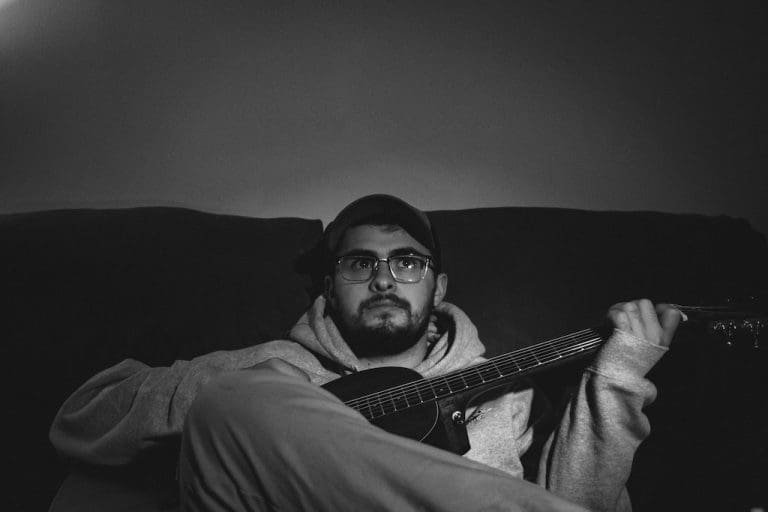
Nick Santos is the talented voice behind his up-and-coming project Lily, with music that’s been given as much love as the dog it shares a name with. Santos writes in to talk about his debut album Honesty Hour, the future of the scene, and what making music means to him.
RRX: Tell me a bit about your project. I understand you also play in Lemon of Choice, however, the focus of this band seems to be more focused on lyrics and a more atmospheric sound (from what I’ve heard, correct me if I’m wrong), is this an accurate interpretation?
NS: You’re definitely right about Lily being more focused on lyrics. I spend a lot of time trying to make sure my lyrics make sense and can convey certain thoughts or feelings. A lot of the lyrics are written from a pretty autobiographical standpoint and many of the songs are related to pretty strong feelings about things I tend to not discuss outside of the music. That being said, the music is pretty close to me and is a lot more serious compared to the Lemon material. Joe and Dan tend to focus more on the music then put some lyrics over them. It’s pretty interesting to hear you describe the music as atmospheric though. I certainly don’t think you’re wrong, especially looking back at how much background noise is featured on the album. I mean the first track off the album ends with like fifteen voice memos and audio pulled from videos from my phone all played at the same time. Plus, like half the songs have some sort of layered feedback tracks. When I wrote the songs though I guess it never was an intentional atmosphere created. Honestly, though, I’m still trying to figure out the sound of Lily. When I first began writing the album the songs were more based around trying to sound like Microwave. There’s also a lot of acoustic singer-songwriter influence on some songs. I’ve even heard some songs being described as twangy alt-country. I think the overall sound will figure itself out over time, and can always be subject to change. I guess the main goal of Lily for me right now is just to write genuine songs that people can relate to. If I don’t believe what I’m singing though I can’t really expect others to either.
RRX: How does it feel working in both contexts? What is the difference to you between working on a LoC song and a Lily song?
NS: Working in both contexts is a blast just because the projects are so different. There’s a lot less responsibility on my part when it comes to LoC. Dan and Joe write all the songs then bring them to Sam and me. Sometimes they write the bass part sometimes they don’t, but my whole job in that band is to just show up and play the bass. I don’t really handle any of the business or back-end of that band so as I said, definitely less responsibility. Lily on the other hand is the complete opposite. I write all the songs and bring them to the other three. I make all the artwork and handle all the back-end work and the other three get to just show up and play. I enjoy a lot of that extra stuff no one really talks about with bands. Even though I fronted groups in high school, I didn’t have a project like that until my third year of college. Having the low stakes part in LoC though made me take for granted a lot of the like social aspect. I remember driving to the first Lily show with Joe and about halfway there I was like “oh shit I have to like… talk to people and do the thing.”
RRX: Is the project name/project itself conceptual at all? I’m assuming Lily is the dog used in art and in a lot of your pictures.
NS: No, it’s not really conceptual. I wish there was more to it, but I just liked the name! Lily is the name of my dog, and she is used in the artwork and can be seen throughout a lot of our social media. I got her about three years ago and she’s just great. I wish I could get her little ear muffs so she could come chill at shows. Also, I just wanted to one-up the people that make Instagrams for their dogs… I made a whole band.
RRX: What are your plans for the future? I see you’ve been working on getting an album out which I’m excited to listen to, is there anything you’d like to share about that?
NS: Yeah! We are releasing our debut album Honesty Hour. It’s a mix of a lot of different sounds from singer-songwriter, to emo alt-rock, to almost alt-country? It was supposed to be released April 30th, but we’re having some distribution issues, and at this point, it’s anyone’s guess when it’ll be actually available on platforms. Best bet right now is to just follow along on social media (@lilybandny) and we’ll keep you updated. I’ve been trying to come up with a way to put a fun twist on the delay but haven’t come with anything yet. I’ve also been working on writing and demoing new material so be on the lookout for some of that in the coming months. Also, fingers crossed we can get back to live shows sometime in the future! I’ve got a lead on our first live audience show late this summer so stay tuned for that.
RRX: So many of the bands I’ve interviewed for this magazine have come to be through the Saint Rose music program, and yet I’ve heard the program is being shut down. Can you explain what is going on with that and what are your thoughts on this; how do you think it will impact the scene/community?
NS: So, this is a bit of a touchy subject I think but I’ll try to stay on track here. First, I’ll say the music industry program at St. Rose is not being shut down. It’s just the music ed and music performance programs. It’s incredibly unfortunate for many reasons. The first is there are incredible professors and mentors losing their jobs and having to relocate their entire families. There are several professors from those programs who made a big difference in my as well as probably every one of their students’ college careers. They gave a shit when others didn’t which is so important especially when you’re trying to learn subjects like music theory and ear training. To see them leaving is pretty upsetting but I know they’ll carry that same impact wherever they go. Also, growing up in a small town in Maine music education was not very prevalent, so watching the education program cut just makes me weary of the direction of young musicians. A lot of people, especially higher-ups in education take music ed for granted so those programs are usually the first to get cut and that sucks. It will be interesting to see how the industry program handles things being the only music program left at St. Rose. I know they have shifted theory and ear training to a more commercial approach which is kinda neat. As far as the scene and community, that’s a tough one. I think as far as the music goes, people are still going to play music. Like the industry program still exists and there’s a ton of great local bands that aren’t made up of music majors. Those two programs did show up and support a lot of the local scene though. Not having that extra group of people interested in music may somewhat affect the turnout at least for a little bit in the college DIY scene.
Check out Lily’s debut Honesty Hour when it drops and follow here:
Instagram: @lilybandny
Jim Murphy: Local Horizons, Local Hopes
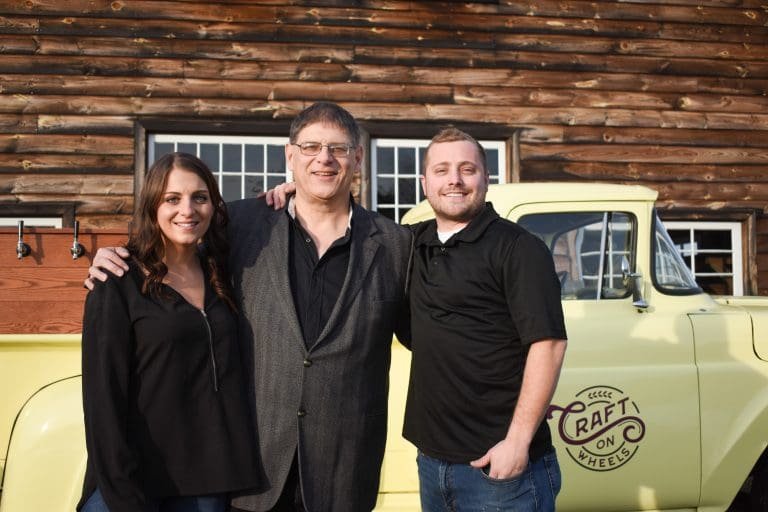
Jim Murphy is the Director of Marketing and Corporate Relations for the Proctors Collaborative. He’s agreed to answer some questions about the arts, the past year and who knows what else. Thanks for joining.
RRX: Today, you are mostly known for your work in the not for profit world. However, you have a career that also includes for profit media. What was it that lead you to move from the commercial world to, now, a Director at a large Arts Organization?
 JM: I was in newspaper journalism most of my career and at some point had decided I wanted to find a path to become publisher at a daily. I worked my way up – newsroom, online operations, advertising sales leadership positions – locally and nationally – and eventually I became a publisher. Murphy’s law: I became a publisher at the very start of last recession. The decline of the newspaper business had been underway for a time but the newspaper companies accelerated the process during a recession: hedge funds bought everything and squeezed revenue to recoup their investments. I managed three different newspaper groups at different times – over 60 publications in 30 communities in New York and Illinois mostly, with a couple small Pennsylvania properties. The jobs were brutal – cutting expenses and reducing workforce constantly. I had several newspapers publishing five to six times a week with newsroom staffs of two or three. I had a daily newspaper in Illinois that reached less than 5 percent of households in their core market and when I looked at why – they had spent literally zero dollars on circulation promotion for several years and before that, very little. So, I briefly took a newspaper job in the Capital Region with the goal of exiting the industry, and then the Proctors opportunity came along. The attitudes and focus of growing an organization versus squeezing blood from stone couldn’t have been different. I’ve been at Proctors Collaborative five and a half years now. I have to add, for decades most community newspapers were locally owned before they started getting sold to chains by second and third generation owners. I am hopeful someday that the tide will turn, and local ownership will return. It may not be in printed form but community journalism is essential to the health of America.
RRX: There is no denying that this past year has been a challenge for everyone. The arts have taken a hit, not only in terms of venues, but also the artists. First let’s delve into the venue side first. What would you consider the three most challenging parts of the last year from the venue side and why?
JM: First, keeping the venue structures viable – it takes a lot of money keep these buildings operating plus investments had to be made to upgrade things like air filtration before reopening. Two, it’s people. It was hard to see so many talented people be let go, and yet we had to find resources to fund salaries – albeit reduced – to have people to maintain the buildings, as well as to retain institutional memory needed to successfully reopen. I could name several other challenges but for a third I will go with maintaining morale for those who kept their jobs … it was very hard to see so many colleagues go, to withstand the months of uncertainty and even today there is trepidation about how we reopen with greatly reduced staffing.
RRX: Let’s turn that one around. What have your conversations been like with other promotors, artists and the like? Is there a theme other than the obvious economic issues?
JM: Safety is paramount … having the right protocols backstage and throughout the house. Next to that is a discussion around reinvention. Now is the time to change the structure of how we create, cast and produce shows. Every show, every theatre is looking at diversity and inclusion from every angle and there are new organizations such as The Theater Leadership Project and Black Theater Coalition who are helping create roadmaps for the industry’s future.
RRX: It is beginning to look like we will be able to have shows, whether it be musicals, plays, rock or small acoustic soon. Mounting a serious touring show of any kind is a major undertaking and will not happen overnight. Some show casts, like the late Jim Steinman’s Bat out of Hell production have been keeping their shops up on the material – how long do you believe it will be before those shows are available and what do you think will arrive first?
JM: Concerts are already back in states that opened early and they will be here before you know it; there are new announcements every day. All signs are that Broadway tours will remount as summer turns to fall. Producers are trying to get NYC theaters open by mid-September and at the same time recast, remount and reschedule road shows. Having all of this start-up activity happen all at once is unprecedented. We’ve already announced Proctors’ first show is SUMMER: The Donna Summer Musical in December. Capital Repertory Theatre will mount productions this year; dates and titles will be announced soon. And we’ll have a busy second half of the year at Universal Preservation Hall; announcements there soon, too.
RRX: On a completely different topic – you are the co-owner Craft on Wheels. You have a ‘57 Ford F-100 customized with six taps and a cooler, pouring craft beverages at events. Anything custom of that vintage is a labor of love. Please tell us about that a bit.
JM: My daughter Erin brought me the idea. Two things appealed to me: For one, I always harbored the interest of going into the restaurant/bar business and this, while hardly the same thing, was way to get into the hospitality world with little risk. Two, I wasn’t going to pass up an opportunity to work with my daughter; she is finishing up grad school now to become a physician’s assistant. No way she is going to ask me to going into the healthcare field with her (laughs) so this was the chance to work with her. We launched early 2020 as the world was shutting down – Murphy’s Law again – so the first year was a bust but things are going nicely now.
RRX: Thanks Jim – finally, as is my habit – are there any final words
you have that you would like to be remembered for – a message, a
thought? Something you believe is important.
JM: Support local music! Support local art! Support local!
Josh Kantor: When Fenway Comes Alive
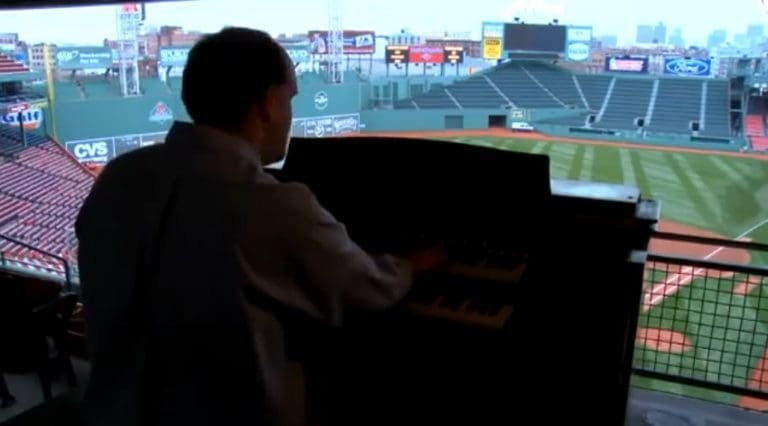
Most of the time, musicians, and music, is very people-centered. You have front people with iconic looks and four chords to their name and they become gods. But music, real music, is everywhere. It narrates our lives better than the most seasoned author. And there’s a whole world of music that we don’t realize is music because we don’t hear it but feel it.
Josh Kantor is in the not-so-silent service of making people feel, and he’s doing it in the biggest way possible; as the organist at Fenway Park in Boston. He also happens to be the keyboardist for the super-group The Split Squad.
I sit down with Josh and we dine on peanuts and crackerjacks.
RRX: You are the organist for Fenway Park. You are a true unsung hero in that regard. In fact, you’re really emblematic of the park in a way that nothing else is. You are Fenway to some people, when the Green Monster opens its mouth, you are its voice. How emotionally attached would you say you are to the stadium?
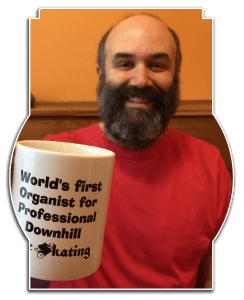 JK: When Fenway Park is alive, I feel extremely attached to it. During 2020, the ballgames were played in an empty stadium; they always felt lifeless, and I realized fully how much I depend (and thrive) on connecting with people. Now that fans are back in the stands, the joy is returning; it feels intimate even when it’s 38,000 people, and I love that. Lots of people come to Fenway only once every few years or only once ever; it’s extraordinarily gratifying to play even just a small role in helping create lasting memories for them.
RRX: Among all the things you do to keep the momentum up in a baseball game, you are known for taking fan requests to play organ versions of popular music. This has to be daunting, since there are a million popular songs, and probably a million requests. What kind of song does a fan have the best shot of getting you to learn it? Any past favorites?
JK: It’s *very* daunting, because every game is a new list of songs to learn and play on the fly, and there’s always some that I’ve never heard before and others that I’m only slightly familiar with. I’ve gotten a lot better at the process of learning and juggling all the requests, so though I’ve made the job much harder than it needs to be, I’ve also made it more fun than it otherwise ever could have been, and I get fantastic insights on what people want to hear, including plenty of stuff I never would’ve thought of. And I love that kind of direct interaction with fans and how I’m playing a song for everyone but also playing it for that one person who asked to hear it. There’re too many favorite requests to name (or even remember). I’ve probably played over 5,000 in the past decade. The songs I’m most drawn to are the ones that have a catchy melody, an interesting structure, and a personal story behind the request from the person submitting it.
RRX: Being the music of the moment, there’s a good bet that you’re called regularly to punctuate great plays, solid at-bats, unbelievable catches. But you have a job to do, and you’re probably too busy helping to make moments to actually experience them. Have you ever watched great games later on ESPN or something to see it like a fan?
JK: No, but when there’s an exceptional play, I make a mental note to watch the highlight later when I can savor it without having to be thinking about what I’m doing next. And when there’s a big win, I check in with my colleagues after the fans have filed out so I can appreciate those moments in a more fan-like capacity.
RRX: I’m willing to bet that very few people know what the organ room looks like. People may have images of Phantom of the Opera, with a little hunchback of Notre Dame mixed in, but they don’t know. For you, it’s a place you spend hours a day in, creating some pretty magical stuff. Can you describe it to us?
JK: It’s very unglamorous. It’s a cramped and somewhat hidden space, and the organ and I are surrounded by necessary wiring, monitors, lights, clocks, notes, a headset, and a laptop, but the sound that reaches the ballpark seating bowl from that little cubby hole is good.
RRX: Just like your working area, the Fenway organ is an instrument that few people have seen in its entirely; maybe no one has seen it in its entirety. It has not only power and history, but a little mysticism. Yet it is an instrument. How is the Fenway organ like other organs, and how is it different? Is it just bigger, or is there something else?
JK: It’s a 1995 Yamaha Electone AR-100. No two organ models are alike, so as with any model, it takes a little time to get comfortable with it, but at this point, I know my way around it and know what I need from it, so I’ve been able to tweak it to where it gives me the most control and the best result I can get. I’ve always liked the model a lot, partly because it’s what I’ve gotten so used to, and partly because it’s well-suited for the gig. I enjoy showing it to people at the ballgames who express an interest in seeing it or who have questions about it. I end up meeting a lot of other organists that way and learning from them about models that they use.
RRX: In addition to Fenway, you also play keyboards for super-group The Split Squad. And it seems that things are looking up as far as everyone being able to go out and take in sweet music. Where are you all trying to play out this year? Do you have your eye on any spots? And what new songs are you packing for the upcoming road trip?
JK: Our new LP will be out soon, and we’re really pleased with how it’s turned out, so we’ll have lots of fresh material there to draw from for live shows. Things are still a little up in the air as far as exactly when it’ll be safe and comfortable to pack clubs again, but we’re tentatively/optimistically eyeing at least a couple dates in the mid-Atlantic US in early October, and as we did for the seven years prior to the pandemic, we’ll be looking for opportunities around the Northeast US (where three of us live and the other two visit regularly) as well as other parts of the US and in Western Europe. We always have a great time when we get a chance to tour, and I feel like I’ve gotten my Rock Ph.D. from my four professor bandmates.
Kristen Capolino: The Stage is the Best Love
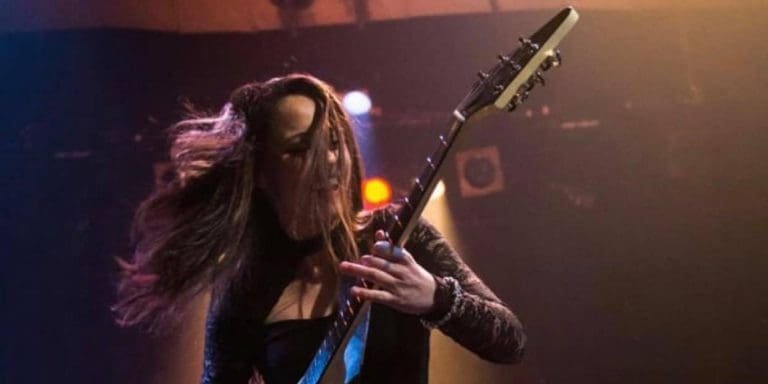
Some musicians have so much energy and stage presence that you don’t mind if they’re not the best. And some musicians are so good that you don’t care if the just stand there on stage. But once in a while you get someone who has boundless energy and stage presence, and the absolute talent on their instrument to back it all up, and you can’t help but be a fan. You’ve found Kristen Capolino.
Kristen Capolino is beyond an up-and-comer. This singer, songwriter, and guitarist brings it with everything she does, and she reflects the pure love of music every time she smiles onstage, which is every time she’s on stage.
I sit with Kristen and we talk about string mishaps.
RRX: You have an explosive amount of energy on stage. It’s really infectious, and that’s from sitting here on the computer watching you play on YouTube. It’s amazing. I imagine it’s something people expect of your shows. Is it, then, tougher, when you’re wiped out physically, but you still have a show to play? Where do you pull the reserves from?
 KC: There have definitely been times when I’ve had to do shows when I was really tired or even sick, but the power of connecting with an audience during a show really is amazing! I remember when I was a kid, I was watching an interview with Albert Collins, and he talked about how performing “gets rid of all that tiredness you had”. He was absolutely right! I just can’t help but have a blast when I perform in front of a crowd and bring joy to people through music. Seeing the smile on people’s faces makes me feel like I can do anything no matter how tired I might be. A few years ago, I got really sick, but I knew the show must go on. I felt so unwell that I loaded up on DayQuil before we started the show, and I started to wonder how I was going to get through the night. I got up there and had so much fun! I didn’t feel sick at all, and we played for at least 2 hours! I was definitely feeling loopy from the DayQuil (laughs), but the energy of the crowd is truly what got me through. Music has the power to heal people, and it will give you energy even if you went a whole night without sleep! Who needs caffeine when you have rock and roll??
RRX: I see you playing a Flying V guitar a lot. Would you consider it your signature guitar? And since you do play other guitars, you probably have the right guitar on hand for whatever occasion strikes. Can you tell us about a few of your guitars, their significance to you, or maybe why you would use one over the other?
KC: I would definitely say that the Flying V is my signature guitar. My dad got me hooked on them at a young age when he had his black left-handed Gibson Flying V rebuilt for a small right-handed guitarist. It’s adorable! When I’m at home writing and recording, I often play my Hamer Tele. I love how it has that single coil tone, but the neck feels so nice, and the scale length works for my small hands. As much as I love my V’s, they’re not very comfortable to play while sitting down. I also enjoy my red Gibson Les Paul Studio. He was the very first “real” guitar that my parents gave me when I was 10 years old so he will always be special. Another special guitar that I own is my PRS Al Di Meola Prism that Paul Reed Smith gave to me at NAMM 11 years ago. Such a gorgeous guitar! When I want to play outside on a beautiful day or work on some song writing, I often play my Taylor Doyle Dykes acoustic. It has such a beautiful tone, and the neck is very comfortable and thin, especially for an acoustic guitar. It’s one the smoothest playing acoustics I have tried so far. I am currently on the hunt for a Hamer Stratocaster for when I need that jingly tone for my songs.
RRX: I heard that you spend your time between Woodstock and Nashville. Those two places are both highly meaningful from the perspective of music. Do you have different mindsets when you’re in Woodstock versus Nashville? Obviously, Woodstock is home base, but is it more than that when you put a guitar in your hand?
KC: I will never forget the wonderful time I had working down in Nashville. I met and worked with such kind and talented people, and I’m thankful for the opportunity. I feel that working down there helped me mature as a songwriter and a singer especially. My producer, Kenny Greenberg, really helped me push the limits of my voice. During that time, I met my vocal coach, Diane Sheets, who has worked with some amazing bands and artists, such as Little Big Town and Natalie Grant. She definitely helped me sing with more confidence and style, and she’s a sweetheart as well! I loved how going down there to work with top notch musicians made me push myself as an artist. As much as I loved working with these awesome people, I soon learned that the music industry wasn’t quite what I thought. I really wanted to remain true to myself and have full control of my music so I started a series of concerts here in NY called Mondial. We often performed at Daryl’s House in Pawling, which is such a beautiful venue. It’s such a pleasure to work with professionals who make the process so easy and fun. For the Mondial Series we have a different special guest for each show, and the full concerts are all available through my website, Kristencapolino.com. We’ve had some amazing guests so far, such as Bernie Marsden of Whitesnake and Billy Sheehan of Talas. I have to say I’m having such a blast doing these Mondial concerts as well as music videos of my new songs. I have Mike Sorrentino on drums, on the bass I have Ted Nugent’s bassist, Greg Smith, and on rhythm guitar I have Desiree Bassett. I’m so thankful to be working with such killer players who are also wonderful people.
RRX: Everybody that has something to say about you says something about how genuine and heartfelt, how positive you are. When I listen to your songs, I hear someone who’s tough, someone with an edge. Do you think it easier or harder to write tough, sharp-edged songs when you’re such a heartfelt and positive person?
KC: Even though I’m usually an upbeat and positive person, I’ve always loved songs that are intense and emotional. When I was young, I would often listen to Empty Rooms by Gary Moore and cry. It’s amazing how musicians like Gary can have such power over one’s emotions through their music. I try to always keep my songs positive, but I enjoy writing songs where I can really dig in and play aggressively. It’s definitely fun to have an alter ego while on stage.
RRX: You’ve gotten tons of accolades for your work. And it isn’t just from the who’s who of opinion makers. You have a lot of accolades from fans, and you’ve put them on your website alongside the professional accolades, which I think is cool. This question may be obvious, but how does it feel to get accolades from fans as opposed to “big names”?
KC: I There is nothing better than bringing joy to people through music. My favorite part of a show is getting to chat with fans and even meet new people afterwards. It makes me feel so good to inspire the younger generation especially. I recently connected with a guitar class from the West Humber C. I. school in Canada. These kids are just so kind and talented! I did a few Zoom calls with the students these last few months, and it was so much fun to answer their questions and connect with them. Each student sent me a beautiful thank you note and even put together a school project about me. I also love performing at the Westchester Allstars Christmas For Wounded Veterans concerts. It’s just such an honor to perform for our veterans and to be able to chat with them after the show. I remember meeting one veteran who was overcoming PTSD and some terrible injuries. He told me how much I inspire him and that he wants to start playing guitar again. It was so exciting to see him improve each year we did the show. He is so much healthier now and has since been playing guitar. I just love meeting and connecting with my fans!
RRX: Speaking of “big names,” Al Di Meola said about you that, “She represents the future of the instrument.” That is a very big name saying a very cool thing. And from what I’ve heard, nothing but the truth. That seems like a lot, to be the future of the instrument. Do you accept that? And if so, where would you like to take the instrument?
KC: It was certainly an honor to receive such an incredible compliment from one of my biggest idols. My dad got me hooked on Al Di Meola when I was little, and I would often fall asleep at night to his beautiful songs. I never would’ve dreamt of getting to meet or even play with Al so I will never forget the wonderful times we had. Regarding where I would like music to go in the future, I think we need to bring back those epic guitar solos and music that is played from the heart. We need more musicians who set a positive example for our younger generation, and I’m doing my best to play this role.
Rich Millz: Making Money N’ Music Goes Hand in Hand

Rich Millz has been a staple in the 518 Hip Hop community for years. Today we have the chance to speak with the man directly. Ladies and gents, I bring you the money maker himself, Mr Millz.
RRX: Rich Millz, I love that you use an actual name. I think of all the ridiculous rap names out there. Do you ever think Ice T, Ice Cube or even Q-Tip wish they chose a better rap name?
 RM: As of right now they’re millionaires so I’m sure they’re probably cool with it. If they didn’t make it I’m pretty sure they would’ve been second guessing.
RRX: How long have you been rapping?
RM: For a while now. I’m thirty plus so, fifteen years at least. I started writing at thirteen. I want to say that I started recording at the age of sixteen. Before I recorded, my first thing was battle rap. Battle rapping is a whole different sport.
RRX: A good friend of mine was a battle rapper and it seemed as though the opponent was stalking his Facebook page for ammunition.
RM: I’ve been there. Watch what you post man! I’ve been on that side and the other side too. Sometimes all you need is a name and a picture that’s all the motivation you need.
RRX: Are you done with the battles?
RM: I feel battle rapping is timeless. I feel like music is timeless too but as far as Hip Hop for some reason they put an age bracket on us, so before the window closes on me I want to get back in tune musically and in the studio but the same time I’m not gonna lie I felt like battle rap stunted my growth music-wise. With battles it was mainly focused on bars, punchlines and things of that nature. You can bring it into the music but it’s different when you want to make something that’s creative and has substance. I dialed down from the battling and focused… the past three to four years I’ve just been in the studio. I wouldn’t say I’m done though.
RRX: You said you’re in your thirties, so you probably grew up listening to mid-nineties rap?
RM: Yeah and unfortunately, one of my favorite rappers who was in my top five- DMX just passed. Rest in peace, he was an inspiration as far as his storytelling and his aggressiveness. “Slippin’” is one of my favorite songs, very relatable, I feel he was very relatable. I listened to people like DMX, The Lox and Jada Kiss. As far as battle rap, I was into punchlines and bars, so rappers like that who were heavy on bars is what I grew up listening to.
RRX: And we just lost Black Rob too.
RM: It’s crazy man, it’s crazy. Just more motivation for me to want to get into the studio and leave it all out there. You never know, you never know man. When you’re gone the music is timeless even though they won’t be here physically, you can listen to the music and it brings you back to good memories of when they were here. Time is flying. 2020 was a crazy year, I feel like 2021 was kind of a part two.
RRX: I hear you there. Now your slogan is “Money and Music”.
RM: Shot out to my boy, Shawn Lite. It started out just as a mixed tape name, he said “Man you should name the company that.” Back in 2010 I came up with MoneyNMusic as far as an entertainment company. And about five years ago I made it official and got my LLC. Anything from music to clothing is all under the MoneyNMusic umbrella.
RRX: What’s more important money or music?
RM: I think they go hand in hand but money pays the bills. When it comes to this music I think it’s worth it to invest in the studio, pay the extra amount of money for quality music, pay the extra for a good quality video. Invest in yourself, you don’t want to look cheesy, you don’t want to look cheap. You want people to take you seriously, that’s where MoneyNMusic comes from they go hand in hand.
RRX: So, you’ve been spending sometime in the studio.
RM: Yes, shot out to J. Green at Capital Mixers. He takes whatever you’ve got and he brings it up to the next level. This whole batch of music I’ve been recording I’m excited to get it to the people and see the reception.
RRX: Well make sure you make a couple radio friendly songs so I can give you some spins.
RM: Already in the process of doing that actually as we speak.
RRX: Well said. So, when are we to expect new music?
RM: I don’t have a date for sure. I just keep recording until I say you know what? I’m ready. I just got to chop it down to like twelve or fifteen songs. Once you see the first visual, the first video then you’ll know I’m ready to go. The new project is called “Therapy” look out for it, it’ll be on all platforms. I have “Committed” and “Pickup or Delivery” on all platforms now, so go out and stream and support that too!
RRX: There’s just so many artists I listen to in my own time that I can never play. I’d get fired!
RM: I know what you mean it can be a little graphic. I tell people there’s a time and place for everything. You might have to do a party at an old folk’s home sometime, you need something for them too, you need something for everybody. You might want to do a kid’s party, you call yourself an artist, you want to have something for everything. Sometimes it takes growth, sometimes people are just stuck in their ways.
RRX: Yes, being a performer you need to adjust to the audience. But I don’t know about you but I’ve never written a song for the audience.
RM: I feel like if you’re a real person you’ve been through things in life and if you’re able to translate that into music, there’s millions of people that have been through the same sort of thing that you’ve been through. I’m going to put my experience and my truth on paper and on music and I know somebody that’s out there can relate to it. That’s usually how it happens. I don’t think it’s good to be faking things, I rather have five genuine people that really like my music that can relate to it than to have a hundred people that think I’m something that I’m not.
RRX: Any other words for the people?
RM: Everybody who’s an artist or a rapper even if you’re not keep grinding, stay true to it, stay sucker free, stay focused, stay positive and stay productive. There’s a lot of distractions out here but you can get it done if that’s what you really want to do.
Sly Fox and the Hustlers: A Band of Frontmen
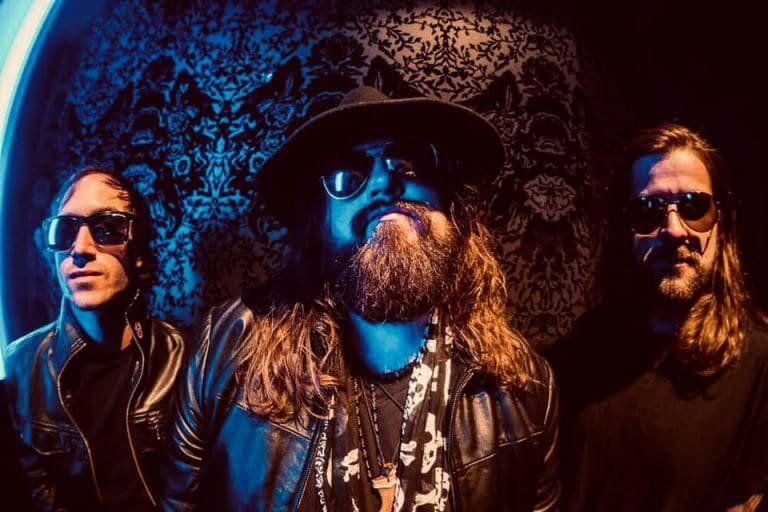
If you’re not a musician, it’s hard to explain just how it feels to find the right people to form a band. It’s not quite like needing a group of workers. Because it’s not just a job to be filled. Every prospective band member brings a talent and a sound that can shape the direction of the band itself. And when you have everybody you want, just how you want them, nothing beats it.
Sly Fox and the Hustlers are a stellar lineup, and their journey in music is an actual journey through the highways and byways. And sometimes they come back home for a little something.
I talk with Sly Fox for a breakfast chat.

RRX: Sly Fox and the Hustlers started with tough times. Namely, your tough times, and your decision to write them out. When you were going through it, when you were writing, were you trying to write songs specifically? And if so, is it any different to write songs now in, presumably, better times?
SF: When I was first inspired to write the songs that became the basis for the band and first CD I was still kind of in the middle of going through some hard times and it pushed me to write down lyrics. The lyrics came with melodies that I turned into songs. Writing now in better times by comparison I find myself inspired on a regular basis to write about things that are important to me. I say it’s still a pretty good mix of storytelling, some based on myself and some based on things I see around me in the world.
RRX: Another step toward the formation of the band was Dylan Storm; namely, his finding the bass. His sound on that instrument is what really backs up the sound. And Dylan wasn’t a bass player to start out. Do you think other bands in history could’ve benefitted from their players X:switching up?
SF: Yes, Dylan is definitely a big part of the sound, we had been friends and jamming together before the band got started. He was in another band playing guitar and singing and when that band split up it freed up Dylan at the same time I needed a bass player. So, it was a natural progression to slide him into the lineup. He’s a great talent, proficient on many instruments and a great voice. I definitely think any band or musician can benefit by switching up instruments the more you understand music overall and how all the parts are related via the different instruments of the band it gives you the big picture over view rather than just coming at it from just one angle. I also think it’s important to sing, even if it’s just a bit to have a full grasp on melody and pitch.
RRX: With drummer Sean Ireland, all the pieces were in place. Sly Fox and the Hustlers were born. Whenever this happens, it’s a thing worthy of celebration. Do you remember what you did to celebrate the moment you realized that you all had it? Did you celebrate at all, or did you tuck your heads down to do the work right away?
SF: Once Sean was on board he really filled out the sound perfectly. He is another multi-instrumentalist he sings great and plays guitar and also a killer drummer. I often say we’re band full of front men. We hit the ground running as soon as Sean came on board because we had shows lined up and some big ones with Kenny Wayne Shephers and Robin Trower so I would say the gigs were the celebration! After those first few shows together we really knew we were cooking and then from that point forward we just wanted to get in the studio and capture the sound.
RRX: Your music has an interesting mix. You got blues and funk and soul with a hard edge to it, something you don’t always hear. It’s a great sound, but is it hard to place yourselves in a category when, say, some streaming service requires it? And did you have a tough time figuring out things like the best venues to shoot for?
SF: Yes, I am not big on categorizing music but I do understand how it comes in handy in people searching for new music… I consider us blues-rock. We are a rock and roll band and therefore we play a mix of roots music funk blues soul even a little bit of a punk edge being here in New York I am sure. My true love musically is the blues. That’s where I always feel at home and I think it comes across in my singing and playing. So even if I were to do a song from a different genre, I feel it would come out a bit bluesy so I do think that the label fits and it allows us to fit well in many clubs, fests and events.
RRX: You all travel a lot, you probably mostly travel, with a few big stops at home. It’s different to play home versus out there, but has it gotten to a point where home starts to feel like another stop? Or will home always be home when you show up and take the stage?
SF: I think a hometown show always has a little something extra to it, something special for sure! At the same time, I love playing new places and meeting new people and traveling in general. We are so excited to be planning a lot of touring to accompany the CD release this Fall with some big hometown shows as well!!
RRX: You play a music that makes people happy to be in the moment. And music can do two things well: make you enjoy the moment, or make you remember the past. And it’s probably no more of an effect when you hear the music than it is when you’re playing the music. When you sing, can you feel past and present, or do you favor one?
SF: Some of the more personal songs may bring up a memory from the past and I’m OK with that but as a general rule thumb went on playing I try to be in the moment as much as possible. I can be feeling the emotions of the words but in general I’m trying to channel some energy and share with the people in front of me and kind of bring us all to that level together that you only get to be at a live show.
RRX: This is where you answer the question I didn’t ask. Road rules for the tour bus? Best greasy spoon? Educate, enlighten, emote – the floor is yours.
SF: Funny story, we’ve been driving forever in this beat up 15-year-old van and we finally upgraded to a beautiful new black E350 Ford Transit 15 passenger van with a high roofline. It’s like our dream Viking or pirate ship lol. We took the seats out the back so we can fit all the gear without a trailer, it’s perfect. Only problem is we got it the last week of February 2020. Two weeks later the whole summer lineup of shows we had planned for disappeared. So, this new van has been sitting in my driveway for over a year. We are planning to release a new CD that we’ve been working on throughout the pandemic and are just wrapping up. And I cannot explain how happy I am to be booking shows all throughout the United States For 2021 and to know that we are finally going to be able to set sail in our beautiful new ship!!
Thank you, Liam and Artie!!
Hybrid Moments
I popped some frozen pizza rolls in the air fryer for my 9-year-old this afternoon after mowing the lawn. I was a little late making his lunch, but it’s pizza rolls – they won’t ruin his appetite for dinner. I also cut up some fresh pineapple and was we both sat there in silence with forks, devouring a delicious snack.
To my surprise, my son speaks up and says “Alexa, play ‘Hybrid Moments’ by The Misfits”
It was one of those interesting dad moments where if I were a hardcore Punk Rock/Post Punk fan it might even be considered a proud dad moment. But, I’ve never seen myself as a punk rock fan, I’m not even 100 percent sure I can tell the difference between Punk and Post Punk.
I mean, when I think of Punk, I think Ramones or The Clash. When I think of Post Punk, I think of The Psychedelic Furs and Joy Division. Considering that Post Punk is everything similar after the 1970s, much of the music my generation calls Punk is probably Post Punk…that whole thing seems a little confusing if I were being honest. But, I’m 46 years old with a 9 year old who just requested a Misfits song on Alexa.
How does this happen? I mean…I AM a Misfits fan, more of a closeted fan, but I am. Same goes for Type O Negative. Guess I have an affinity for the goth metal, horror punk even if you would never guess by looking at me. Nor do I play it in the car if we’re going to Little League or Walmart. It’s something I listen to occasionally while cleaning the house or tackling some project where tempo is my friend. Which is why I don’t listen to it in the car because I’d probably end up with a speeding ticket.
These aren’t things that Punk Rock fans think about, is it? Are we there now? Are we getting old and turning into soccer moms and dads and people who eat freshly cut pineapple with our late in life offspring? I’m not upset over it. But, it did get me thinking about where we are, where I am in life right now. And, how in the hell does my kid know a song that is 36 years old, and has lyrics like ‘rape your face’?
(which I believe is just a nod to the 1979 science fiction horror film, ‘Alien’.)
It was an interesting moment for me, and so I had to ask “Where did you learn about The Misfits? Surely, you haven’t picked that up from me, have you? He replies with “It’s in one of my games, Dad.”
It’s in one of his games.
I think that might be a whole different blog post entirely. Because that is not the first time I’ve heard something like that or realized that artists license music to video game companies, and some release certain singles exclusively for newly released games. Like I said, that seems like content worthy of a whole separate post of its own and might warrant a little research.
I guess I’m glad that happened because we went on to listen to a whole playlist of songs and just hung out at the kitchen table jamming out, eating pineapple and pizza rolls (don’t say it) and just glancing back at each other nodding our heads and with the same enthusiasm and vibe. (Alexa, volume up.)
No other words were necessary.
Rambling Prose
When the idea of being a contributor to this Xperience Blog came up, I had a conversation with myself that went something like “don’t make it weird, don’t make it weird.” And, by weird I mean I have a couple different personas, and they live like Ying and Yang. One persona is a version of me that clings to the philosophy of “Peace, Love, and Go F**k Yourself, while the other is more like “Do No Harm, Take No Sh*t”.
When I really think about it, the two personas are similar even though one is not as well received as the other. I should also add that this whole notion of two personas isn’t a medical diagnosis, but more of an observation, it’s me calling out my own BS…in this case, we will say Belief System.
I don’t believe the Universe really cares about how good of a person you are, or how much profanity you use on your morning commute. In fact, there might actually be a reward on the other side of this life for using expressive language and getting it all out of your system before you arrive to the office in the morning. Remember this when you’re stuck in traffic. Your blurting out of profanities is your way of doing a good deed. You’re saving those with more sensitive ears from being offended. That is, if you even really care. I think we mostly all do, even when we say we don’t.
So we’re two paragraphs in and I’m asking myself if I should delete everything I’ve already written, just in case this is me being weird. I don’t even think this is the direction I was going when I started free writing, but here I am…are we being weird yet? I once had a Creative Writing teacher, (who was pretty damn weird) who told me that some of the best content comes from just writing, and if it does get too weird, you can always edit it. I never liked that idea. I’d rather just be weird.
So, how does this whole rambling prose get your attention? Why on Earth should you even keep reading? Because now you’re wondering where I’m going with this, and if you’re not…well, who am I kidding? You totally are. So, I guess I have to try and deliver something that will make your time spent reading worth it. Hopefully, you’re a faster reader than I am a writer.
This is my way of introducing myself and warming you up to the way I see the world and making it relatable to others. Because, even if I tend to be a little ADHD in my writing style, I always get to the point eventually. Just ask my significant other who has to put up with this stuff on a daily basis. I used to think it was the anxiety that made me that way, or maybe I found myself humorous. But, it was neither.
The conversational way of writing appeals to me, and hopefully the same will be true for some portion of the readership who may stumble upon this post and decide they want to keep reading. Because, if you’re still reading on this 538th word, you’re a person who is committed (or should be). You want to know where in the hell this thing is going, and I can’t say for certain, but I think we will be there soon.
I want you to ask yourself a question. How do you say what you want to say and say it effectively? What is that thing nagging at you? The thing you need to get off your chest and just blurt out? What in the world are you going to say when you just can’t put it off anymore? Have you decided?
Just SAY it.
When we can’t find the most effective way of saying or doing something it doesn’t take away the need for it. It prolongs the agony of NOT saying it, of NOT doing it…and sometimes, it may never be said or done. And that’s not always a good thing, is it? It’s really not. So, if you’re still reading this and feel like you have been flim-flammed into some sort of weird motivational speech to get off your duff and open your pie hole, then congratulations…you have been.
My thought for you today is to just say what needs to be said, do what needs to be done. Get the monkey off your back, the frog out from your throat, just rip the band aid off and take another step towards liberating your headspace from sh*t you need to let go of or that needs to be addressed, you’ll feel better when you do.
And, don’t blow away…it’s windy out there.
Live from your Living Room
100-inch screen tv’s… booming surround sound systems…
Even before the pandemic started, people have been abandoning live concerts and avoiding DWI’S for the comfort of their living rooms or patio decks and the rise of live streaming. Modern technology has really made a difference in the way we can view and listen to our favorite artists now without leaving our homes. Of course, with the popularity of Uber and other ride share companies, it has made things easier for those that did want to go out and have a good time without worrying about getting pulled over etc.
Live events have been taking a hit for a long time now, but with the pandemic seeming to change life as we know it, and live streams making it easier for bands to reach more fans, generate more money and not have to travel, what does this mean for the future of live shows?
The younger crowds will always want to see a live show, interact with the bands, crowd surf or start a pit, BUT if that’s not going to be a part of shows for a long time, will that put a damper on even the young fans showing up? Is live streaming the new way to experience your favorite band or is it just a phase until everything opens up 100 percent?
Only Time will tell, but I do feel, as a musician myself, that certain genres have found a much easier way to keep their fan base while till making a living. Nothing will ever beat a live show but a live show in the comfort of your own home doesn’t sound too bad either…