Home Blog Page 635

Deb’s Saturday Psychedelia – On Becoming a Hippie (#31) – Crossing the Great Plains

As we were leaving Salt Lake City, Paul and I realized that the trip was going to take a lot longer than anticipated unless we could figure out a low to no-cost way to repair the bus. Now, we were really glad that we had made a stop in Reno before hitting Salt Lake. We both knew before we left Oregon that this journey across the country would require more resources. When it was just the two of us, we could go hungry for a day or two, hit grand openings to get a free buffet and jump at opportunities, even if they were a little risky. Now we had two kids to care for and keep safe. We’d planned lots of stops into our itinerary for running around and seeing some sights, had packed what food we could and budgeted money for more supplies and a couple of meals out. When we went through Nevada, we saw billboards advertising an all-you-can-eat buffet for $2.99 (and kids eat free) in Reno. What a great opportunity. There were four of us, and we figured we could take a doggy bag or two or four. We didn’t realize at the time how important that stop would become.

So far, the flywheel was still holding out from it’s first repair with the barn nails and the old leftover brake part. In spite of the stop for that repair in the mountains, we’d made pretty good time. We arrived at “Circus Circus” in Reno, paid our $6.00 and walked into a huge place with flashing lights, lots of noise and various circus performers all around. Both kids were awed, though Justin, at 3-years old was mostly wide-eyed and slightly scared. It turned out that the money was for admission to this extravaganza, not just the buffet. Of course, this was Nevada, and they were counting on everyone gambling. They could afford to give away food and entertainment when you were losing so much money to the games. We dragged the kids away from the acrobats overhead and entered the dining room. I could not believe how long the rows of tables were. They ran the entire length of this huge hall with an amazing assortment of all kinds of food available. Then, there was another smaller room with desserts and beverages. There was food for any type of meal, too. You could eat breakfast, lunch, dinner or a light snack.

After eating, Paul suggested that we hang out for a while and let the kids have some fun. Maybe we could spend enough time to have a second meal. Finally, someone from security told us that we really had to spend money to stay. Paul went over to a slot machine in the gambling room and lost a few times. He grumbled about wasting our time here and suggested we leave. I reminded him that I hadn’t had a turn to try and wanted to have a little fun, too. He shrugged and agreed to hang out with the kids while I hit the slots, and I agreed to only spend two dollars. Justin still didn’t like being away from me, and minors were not allowed in the gambling areas. Paul, who didn’t ever do much of the childcare, carried him off to see the clowns. Justin loved clowns and was fascinated by them. Jessie, however, was frightened of them, well maybe more like terrified. I knew that Paul would have his hands full but thought I’d have my quick turn and we’d resume our trip. Then, I won on my first try and slipped another coin into the machine. Wow, I won again and again and again. I was smart about keeping my winnings in a different pocket but just kept winning again and again. I didn’t lose once. I’d started out playing the cheap machine, but it was starting to add up, and I was afraid to go to a different machine and ruin my streak. I also wanted to keep an ear and eye out for my family, but the bigger winning machines were further in the interior of the beast.

Pretty quickly, Jessie had enough of feeling terrorized by the clowns and wanted to go back to the jugglers and acrobats who were near where I was working. As soon as he spotted me, Justin broke away and came running over, hanging on to my leg and crying. Paul whisked in, with Jessie right at his side, and dragged him off of me taking him back out into the hall. It didn’t last long though. He soon broke away and was back at my side. I was starting to get annoyed. This seemed like a prime chance to fill our coffers for the long saga, and Paul couldn’t seem to keep Justin away. This went on for a little while until the same security guard, who had been watching us the whole time, told us we had to leave. Apparently, the manager had noticed because we were causing such a scene. I realized that it was over. Justin was pretty upset by this time; Jessie was bored; and Paul was frazzled. We figured that we had gotten our money’s worth and it was time to move on, so we did. We had spent $6.00 to get in and left with a little over $50.00. We didn’t realize at the time how much we would need every extra dollar. Now, as we were leaving Salt Lake City, having successfully traded for a motel room, we also realized that we were going to have to stop every night around dusk, making our trip brutally long. This extra money would help, but maybe not enough now to make it all the way to upstate New York. We’d researched what towns allowed busking, but there weren’t very many along the way. We’d have to get creative. At least we didn’t have to worry about high peaks any more.

Many people believe that the mid-west is flat, and I guess it is compared to other parts of the country. They often complain about the tedium of traveling across such flatlands, seeing nothing but fields and farms. If you have ever driven through that part of the country in a VW Bus, you’ll know that it’s not as flat as it looks. We breathed a huge sigh of relief once we passed through all the western mountains until we realized that the bus slowed down slightly on every rise. It didn’t look to us like we were going up or down hill, but the bus certainly always let us know. And, the road just went on and on. Even though we managed to stop at rest areas or truck stops before dark most of the time, it felt as though it took forever to cross the Great Plains.

In general, we really liked driving through Nebraska. For the most part, the people were friendly and helpful, and Nebraska had the best rest stops for children. There were always playgrounds, picnic tables and lots of shaded areas to run around and play. One evening, as it was just starting to be dusk, we decided to try to go a little further and get off at the next exit to find a place to spend the night. Unfortunately, the next exit was closed, and the next one was too many miles away, so we were finally forced to turn on the headlights as the dark settled, slowly coasting to a stop on the shoulder of the highway. We sat on the side of the road, hoping in vain that no state troopers would come by. However, they soon did. As they pulled up behind us, Paul started rummaging around for our registration and hopped out of the car as they were starting to walk towards us. Suddenly, both cops crouched down with their guns drawn and Paul immediately threw his hands up yelling, “There are kids in the car!” The troopers slowly walked forward and patted Paul down, then shone their flashlights into the car. They made both of us get out and yelled at us for what seemed like quite a long time telling us both to never jump out of the car or rummage around again when stopped. To them, it looked like we were up to something. I never forgot that lesson.

Eventually, they asked why we were stopped and if we needed help. We told them about our car issues and started explaining why we were sitting on the shoulder when the volunteer fire department showed up. Now there were four emergency vehicles surrounding our little family. The troopers were insisting on calling a tow truck to get us out of there, and we were protesting vehemently, explaining that we had little money left, certainly not enough to pay for the tow and the rest of this ill-fated journey. We were trying to get to Pennsylvania, where we had the promise of some day-work at an herb farm owned by Paul’s brother-in-law. I had been growing an herb garden and using them medicinally since 1975. I was looking forward to doing some work there.

The police didn’t seem interested in my hobbies and weren’t feeling very sympathetic to our plight, but I’d always taught my children to be friendly with law enforcement. They always waved when we passed them, and Jessie often engaged them in conversation if we were stopped for any reason. My kids helped me get out of a lot of speeding tickets back in my younger days. I know that they helped immensely that night, too. All of the volunteer firemen who had stopped were enjoying hanging out with them, asking them about their trip so far. Luckily, the kids were also street wise by now and knew what not to say to officials. After going round and round with the police, begging and arguing, with the eventual support of the volunteers, and the pleading eyes of our children, they finally agreed to give us a jump and let us drive in the dark without our headlights while Paul and I held flashlights out the windows with the emergency vehicles in front and behind us with their spotlights and flashers on. The flashlights were the cops’ idea, which I thought was more than a little silly, but we did it anyway. The kids loved being in their own parade! Somehow, we were always able to spin difficult events into something fun and exciting.

When we got to the truck stop, the volunteer firefighters handed us money to buy breakfast “for the kids” with enough left over to fill our gas tank. They had taken up a collection. We were so impressed with their kindness. I even cried a little. We ate breakfast at around 3 or 4 am then took the kids out to the playground, swinging on the swings and sliding down the slide until the sun came up. As we headed down the road, Jessie exclaimed that she’d had the most fun ever. She was totally impressed by not only the parade but also with being able to play outside at the playground in the dark. For her, it’s a fond memory. She remembers the big puddles on the ground under the swings and her dad pushing her on the swing while trying to avoid those puddles. It’s always interesting to me how people in the same family, experiencing the same things, remember them so differently.  For me and Paul, the “responsible” adults, it was incredibly stressful.  For the kids, it was fun and exciting, an adventure to be remembered and treasured.

Deb’s Saturday Psychedelia – On Becoming a Hippie (#30) The Start of Another Journey

I almost forgot to write about one last thing that we needed to do before leaving the West Coast. Remember our cat Autumn who’d had her first litter of kittens behind my chair on the night of Justin’s concussion? Before we could get her spayed, she had another litter of kittens. As soon as they were weaned, we took her in for her surgery but still needed to find homes for the kittens. We packed them into a box and headed for Portland’s Saturday Market where we had originally gotten her. We had so many good memories of playing there and wanted a final goodbye. It turned out to be the hottest day of the year, an unusual occurrence for springtime. The poor kittens were getting overheated in the covered box, so we opened the lid to give them air. They started scrambling all over the car. The kids were in the back seat trying to hold them in, but it wasn’t working. We finally pulled off the road to stop at a park for lunch and to let me get into the back seat for damage control. When we opened the doors, as carefully as we could, to get out, so did the kittens. There were five kittens running all over the park. As soon as we captured one and put it back in the car, another one would escape. It was crazy! After chasing them for over an hour, Paul was all for letting them fend for themselves and going back home. Both kids and I were not okay with that, so we continued to chase them around, finally giving up after another hour or so and heading to town with only two of the original five. I felt terrible, but what could we do? We couldn’t even see the other three anymore. We got to Saturday Market just as it was closing down for the day and did manage to give the two kittens away then turned around and went back home. What a fiasco!

Having made the decision to move back east to live in my parents’ basement in upstate New York until we could get a place of our own, I was filled with trepidation. I knew we were making a good to move, but my parents and I had never gotten along, and they hated Paul. I never understood why considering that he literally saved me from eventually overdosing on speed at the beginning of our relationship, giving me an ultimatum – be with him or keep shooting up. Of course, my parents only saw his long hair and radical politics, which actually were less radical than my own. I knew that the living arrangements would not be easy and hoped we could settle quickly into our own home. I didn’t realize at the time how difficult it would turn out to be, or for how long.

We had our VW bus all prepped for travel. I had attached edges to the table in the back that stuck up above the surface to keep any crayons or other toys from rolling off. It was already set up with curtains and beds. I sewed pockets into the curtains to make drinks, snacks and other necessary items for children easily accessible. There were still no seatbelts or car seats at that time, but I knew I didn’t want them running all over the bus. I had also learned by then what kinds of food traveled easily. I remember thinking that I should write a book on safe and reliable traveling with children because I had already done so much of it. We left in late April and planned to travel for a week. We hadn’t considered the fact that we were traveling in a VW bus loaded down with all of our possessions, two children, two adults and a cat over a couple of different sets of mountains.

The first leg of our journey took us southeast toward Reno, Nevada then on to Salt Lake City. We were almost at the top of the highest mountain pass we would need to cross when our bus just stopped. We could see the summit. It was so close, but we just couldn’t get there. We jumped out of the bus around to the back to look at the engine and see if we could figure out the problem. There it was, right in front of our eyes. The two wheels of the fly wheel were shifting back and forth and had widened the slot that held the two pieces together. We looked at it for a while when I remembered the jar of barn nails that Jim had given me as we were leaving. We pounded a few of the largest ones in there, but it still wasn’t quite enough. A year earlier, our left rear wheel had come off our Plymouth Valiant and passed us on the left as we rode over a narrow bridge with a logging truck headed our way. I don’t know how he did it, but Paul managed to steer the car straight as our back end was up in the air and all of us held our breaths. After chasing the tire into a corn field, he put it back on and tightened the lug nuts as tight as he could. Not long after that, Paul repaired the brakes and had one small piece left over on that same wheel. We worked on those brakes together a few more times and still couldn’t figure out where it went, so he finally threw it in the toolbox, hoping for the best. The brakes worked fine after that, and now that old leftover brake part fit perfectly with the nails into the leftover space in the flywheel. That repair took us all the way to Ohio … but not without too many stops along the way.

Paul and I were always aware that any trip has the potential to take a lot longer than anticipated. Now we had this flywheel to consider. We both knew before we left Oregon that this journey across the country would require more resources. When it was just the two of us, we could go hungry for a day or two, hit grand openings to get a free buffet and jump at opportunities, even if they were a little risky. Now we had two kids to care for and keep safe. We’d planned lots of stops into our itinerary for running around and seeing some sights, had packed what food we could and budgeted money for more supplies and a couple of meals out. As we drove through Nevada, we started seeing billboards advertising an all-you-can-eat buffet for $2.99 and kids eat free in Reno. What a great opportunity. There were four of us, and we figured we could take a doggy bag or four. We didn’t realize at the time how important that stop would become.

At that time, the flywheel was still holding out from its first repair with the barn nails and the old leftover brake part. In spite of the stop for that repair in the mountains, we’d made good time. We paid our $6.00 and walked into a huge place with flashing lights, lots of noise and various circus performers all around. Both kids were awed, though Justin, at 3-years old was mostly wide-eyed. It turned out that the money was for admission to this extravaganza, not just the buffet. Of course, this was Nevada, and they were counting on everyone gambling. They could afford to give away food and entertainment when you were losing so much money to the games. We dragged the kids away from the acrobats overhead and entered the dining room. I could not believe how long the rows of tables going the entire length of this huge hall were and the assortment of food available.

After eating, Paul suggested that we hang out for a while and let the kids have some fun. Finally, someone from security told us that we had to spend money to stay. Paul went over to a slot machine in the gambling room and lost a few times. He grumbled about wasting our time here until I reminded him that I hadn’t had a turn to try. He shrugged and agreed to hang out with the kids. I agreed to only spend two dollars. Justin still didn’t like being away from me, and minors were not allowed in the gambling areas. Paul carried him off to see the clowns, who fascinated him. I won on my first try and slipped another coin into the machine. Wow, I won again and again and again. I was smart about keeping my winnings in a different pocket but just kept winning again and again. I started out playing the cheap machine, but it was starting to add up, and I was afraid to go to a different machine and ruin my streak.

Well, Jessie had never liked clowns and wanted to go back to the jugglers and acrobats who were within sight of me. Justin broke away and came running over, hanging on to my leg and crying for me. Paul, with Jessie right behind, dragged him off of me and back out into the hall. It didn’t last long though. He soon broke away and was back at my side. The same security guard, who had been watching us the whole time, told us we had to leave. Apparently, we were causing a scene. I offered to go settle Justin and come back in but was told that we had gotten our six dollars’ worth and should just leave now, so we did. We had spent $6.00 to get in and left with a little over $50.00. We didn’t realize at the time how much we would need every extra dollar.

Although we thought we had fixed it, the car now only ran during the daytime. Once we turned on the headlights, it would totally drain the battery, so we slept the first night in the bus. We also stopped more frequently than anticipated to let the kids run around. And I did make them run – literally. Every stop, we ran circles around each other and all around the rest areas. By the time we stopped running, they were happy to sit back down in the bus. The next day, we drove into Salt Lake City just as night was falling. We turned on the headlights and, as the car died, we coasted into a motel right off the exit and went in to see if we could afford a room. We did have money, but we had a long way to go. We hadn’t budgeted in car repairs and had hoped to only take a week to make the journey. It already looked like it was going to take much longer than anticipated, so we needed to conserve our resources. We thought that, if a room was too expensive, maybe they would take pity on us and let us sleep in our bus in the parking lot.

The attendant took one look at us with our long hair, hippie van with curtains in the window and our kids trailing along behind us and asked if we had any pot. At first, in our paranoia, we denied having any. He kept at it, insisting that we must have something and explaining that Salt Lake was the driest town in the US. He pleaded with us! When he offered to trade us a room for a few joints, we finally took pity on him. We gave him more than he asked for since we had gotten paid for our work harvesting in weed and had more than enough for ourselves. He threw us the master keys, turned on the No Vacancy sign and asked us to keep an eye on the place while he was off partying with his friends. No problem! We got nice soft beds, showers, and the kids even got TV, a rare treat. This wasn’t going so badly after all. The young man came back the next morning looking a little bedraggled but with a big grin. We tipped him well, in weed of course. We even sold him some of our quite large stash and went on our way. We still had a long way to go.

Looking back at it now, we must have been crazy carrying all that weed in our vehicle with our two kids. But things were much different back then, and it never occurred to us that we were taking a big risk having it. Also, we didn’t know anyone where we were landing, were staying in my parents’ basement and knew we’d need our stash to survive my family, who still hated Paul. All in all, it turned out to be a good resource.

Sassy Says: The Science of Human Contact

0

Earlier this year, we were all thrown into a new routine. Every person was given a new normal whether they liked it or not. The introduction of masks, hand sanitizer, grocery pick-ups and altered school schedules are just to name a few. Then there is a six-foot rule. Social distancing is the term they use. To keep things safe, people are asked not to hug, embrace, dance, shake hands or “touch” anyone. Affection or congeniality has been reduced to just a wave or elbow bump. Oh, and a warm smile …. that no one can see behind a masked and fogged glasses.

Since these new rules have gone into effect, there is one thing that is seriously missing from society now: the human touch. Media has made it clear that it is proven close contact with others can pass this virus around lickity-split. So, the farther apart we are, the healthier we can stay. I get that. But what about the physical touch we can no longer exchange? A handshake to show someone you are true to your word. A hug because you haven’t seen a friend in four months. It is missed—terribly—because it is necessary.

Lack of human contact cannot be blamed completely on a foreign-born virus, however. A study done by the Miami Miller School of Medicine two years ago gave us some important information about human contact. First and foremost, there was no pandemic going on during the study. Observances were made at a major airport. So why were the majority of people observed not interacting with each other? People weren’t touching each other because almost everyone was on their phone. Being on your phone creates an immediate social distance without words even being said. So, I am sorry to say, that is on us. Plain and simple. But now, let’s add to that a virus that we are told is spread through close human interaction. We have been instructed to “stay back” a safe distance. At least six feet. This to keep people healthy. But how healthy? We are happy to be helping curve the virus, but the process is actually hurting us in other ways.

The MMS research found that the art of massage increases the strength of front line “killer cells” that handle the viral and bacterial cells. This was also found in participants recovering from more serious diseases such as breast cancer. The massage techniques knock down cortisol levels which is the body’s stress hormone. If doctors can reduce stress and stress hormones, we can save more killer cells. The more antibodies we can save or produce, the less likely we are to get sick.

Other tests have been done in regard to touch deprivation or skin hunger as it is sometimes known as. In the 1940’s a test was conducted to see how newborns in a “sterile” environment compared to those in a regular, interactive environment. No results were stated because the test had to be discontinued, due to horrid and tragic results with subjects in the sterile state. It did however show the vital importance of affection and touch early in life. To raise a healthy (physically and mentally) child, the importance of the human touch is unmeasurable.

The question now becomes this: are you suffering from touch deprivation? Here are seven signs, thanks to the Touch Research Institute, that can indicate you are suffering from skin hunger

Aggressive Behavior – When people can interact with simple touch and affection, their empathy increases, and violent behaviors go down.

Body Image Issues – Many have heard the term “COVID 15” by now. It refers to the extra pounds many put on when shutdown first occurred. Overeating can occur when it is used as a way to fill an inner void that has come about through a lack of affection.

High Stress Levels – When the touch receptors under our skin are stimulated, it can help reduce cortisol levels and blood pressure, which therefore reduces stress. Conversely, when we are experiencing stress and lack touch, it may be difficult to unwind.

Loneliness – We can be in a room full of people and still feel lonely. This can be from not knowing anyone, lack of self-confidence, etc. It can also be from lack of touch. Things that indicate this can be the frequency of taking warm showers, wrapping up tightly in blankets or clinging to a favorite pillow, blanket or pet often.

Depression – Mood fluctuations are a definite indicator of lack of touch. People can also go from a very exhilarating behavior to tears in an instant. (Sometimes this is mistaken as the symptoms associated with being bipolar.)

Often, the longing for the feeling for human touch happens because we associate it with fond memories. Try to replicate this positive feeling by focusing on our other senses. Try focusing on memories that takes you back to a time when you felt hopeful and connected to others. Where were you? Who was with you? What was the scene like—colors, scents, textures? What were you feeling at the time? This is a handy technique because it can be done anytime, anywhere. And do not forget to stay connected with close friends and relatives who live close by. If you follow suggested protocol, hopefully you can discuss a way to safely spend some time with those you love… and if you both agree, cautiously hug the stuffing out of them!

Ramblings and Observations from a Cranky Old Guy

In literature, especially non-fiction, they say write what you know.

This article is definitely what I know, and I hope you NEVER have to know what I know.

But where are my manners?

Hi again, I missed you, whether it’s reciprocal remains to be seen.

You may have noticed my article was not in the last issue, I think there’s a pretty good reason.

Lemme start by asking, what did you do this summer?

Me? I had a heart attack and bypass surgery.

And through it all, music helped save my mortal soul (thanks Don).

Background, as stated by the “Old” part of “Cranky Old Guy,” I’m 64, diabetic for twenty plus years, and also deal with high cholesterol and high blood pressure. I am not as “fluffy” as say, Gabriel Iglesias, but the Macy’s Parade people do keep me on their speed dial during the holidays.

During the last two weeks of July I was feeling like crap, having a very hard time getting a full breath, a problem for one who needs his voice for a living.

In truth I thought I was getting the COVID.

Called the primary doctor, he said probably not COVID, but monitor closely and get back to him if it gets worse.

That was a Thursday, my boss gave me the next day off to chill.

Saturday, I was panting walking from one room to another.

Primary doctor says go to Urgent Care.

After examining me, Urgent Care says they might have noticed a blood clot in a lung.

Oh yeah, I also had a mild heart attack, AND may have had a few leading up to this one.

On to Ellis Hospital I go, after a couple days of tests, they say the bypass is needed, fortunately just a single one, its set for Friday.

When you are stuck in a hospital bed for God knows how long, there’s only so much you can do.

Only so much crap television to watch, and you need a distraction from the hospital food.

Then there’s the endless poking, prodding and examining by the medical staff.

Fortunately, with my phone and ear buds, I could drift away to tunes.

(This is the part where I get in the plug for RadioRadioX and RadioSoulX, with essentially wall-to-wall music, it was the distraction I needed. Additionally, stressed as I was, I was also able to experiment and look for online music I never heard before or haven’t heard in the longest time, with my job and life obligations, I really never had time to do that a lot, since I got out, it is now on my daily to do list.)

While we’re on the subject of “the company line,” let me take a moment to thank Fearless Leader Art Fredette for checking in on me from time to time and giving me inspiration to keep kicking ass, mucho thanks you bald headed teddy bear you…

Let me cut (pun intended) to the chase. On the last day of July, the bone cutter did his thing, took over four and a half hours, a week later I am home.

What I did not know is there is a LONG recovery time, two months, potentially more with health concerns such as I have.

Even if I feel good, doctor rules say one must allow for healing to be completed.

This means I must sit on my ass for two LONG months.

I am a workaholic. I can’t sit for two HOURS let along two months.

But orders are orders. During the down time, it’s a complete makeover, change in diet, change in lifestyle. Bone Cutter says with the bypass, my heart can last another 30-40 more years.

But ONLY if I get the diabetes in line, control the blood pressure, and keep an eye on the kidneys.

Used to be so easy when I was younger, when all I needed was a shot to take care of the occasional social disease I would pick up.

To stay healthy (and drop the extra poundage), I gotta walk, back to the phone, the ear buds and music.

(Another time to mention RadioRadioX and RadioSoulX, both are great for your heart, trust me on this one.)

So, where do we stand?

As of mid-September (when I wrote this), I have dropped 25 plus pounds, with a goal (less than 30 pounds away) of getting to a fighting weight of 185.

With help from the Primary Doctor, blood sugar is almost within acceptable levels.

Still working on blood pressure but in time we will be there.

And if all goes well, I’m back behind the microphone again by mid-October.

Lemme leave you with a cautionary warning, you do NOT want to go through what I did.

Keep an eye on yourself, take care of yourself.

And, you will be amazed at how many friends you really have, and how many truly care for you.

(You will also know how many could give a rat’s patoote about you, so do what I did and delete, delete and delete from the friend list.

Finally, I’m yelling at people again, so the “Cranky” part is back.

Now if I can only do something about that scar on my chest.

Be hearing you.

Vincent Zandri: Adventures Abroad and Words from Home

0

RRX: So we’ve gotten to know each other from the music scene, you’re a phenomenal drummer but today we’re here to talk about your actual career as a writer and author.

VZ: When I got out of writing school, I scored a quarter million-dollar book deal right off the bat! Which is one of the worst things that could happen to any young author because no way you are going to earn out that advance.

RRX: Okay, so it’s just like a record deal.

VZ: It’s like Tom Petty back in the 70’s. They say he didn’t earn out and he says therefore I’m bankrupt, so FU or whatever. So then I started this spiral of trying to write to save my life and it took a few years to get back on track. I became a freelance photo-journalist and started working for some decent outfits like RT and Living Ready. Next thing I know, I’m in Africa or Asia, I started traveling all over the place. Just amazing adventures.
When you go to some places in the world and just the general smell of the air makes you gag and there’s no relief from it, you know you’re in a special place. One thing that sticks out at me, in the bush in West Africa, I’m in a 4×4 with three Christian sisters; we’re checking out this agricultural thing to build or whatever. It’s in the middle of nowhere. Along the road there are deer hanging and bottles of gasoline if you want to buy it. Eventually, there’s no road at all. Then we see one of these guys in a military uniform with an AK, wraparound sunglasses holding up the road. Oh God, here we go!

RRX: Straight out of the movies.

VZ: He starts questioning us. I’m like okay he’s going to tie me up, rape all of them and then shoot me in the head and no one will ever find me. They’ll burn the SUV and they will have no clue. So stories like that. Just incredible experiences you know?

One funny story about RT was… and this was when Patterson was governor and New York State was going bankrupt. I pitched this story to Moscow from Florence, Italy that Patterson said by the end of the month the world’s financial capital is going to be bankrupt. They asked could I get it to them in two hours. I was like you betcha. So I make a few calls, do a little online research, try to triple up on my bona fides and I get the article out. Ironically I’m the lead story in Eastern Europe, written in Florence, Italy but based in Albany, NY. I was super proud of that and payday was awesome. That was the peak of my journalism career.

RRX: Sitting here with you now is the peak of my journalism career.

VZ: Are you kidding me; you have a journalism career? No one has journalism careers now.

RRX: Correct me if I’m wrong but I envision you spin the globe and decide hmmm, I’d like to go there and write about it.

VZ: My claim to fame is I actually go to the places and do the things. I went to Egypt at the tail end of the revolution to write the Shroud Key. It’s crazy, they were walking around with their double magazine AK’s and their black masks, no tourists whatsoever. Everything burning, it was awful.

RRX: And you stick out like a sore thumb.

VZ: Yes. So I’m able to go to the Pyramids, which I just had a guide and a driver that was it and a buddy of mine came with me, I’m like I need a back-up. Two sets of eyes are better than one. My guide says I can get you into the Pyramids there’s no line, probably don’t even have to pay. So I go into the third Pyramid which is the smaller one of the three. I climb down, going down in, I’m all alone with a flashlight. I go over to the sarcophagus and I lay myself out in it and I just stare up at the ceiling. You can’t ever repeat that kind of experience, I thought this is going to change me. I got up and left and almost got panicked, what if they close up?

RRX: Seal your doom, then you will be the actual star of your own novel. I am envious, I’ve seen you do all of this traveling over the years. If you ever need someone to ride shotgun I’ve got a passport.

VZ: I’m in absolutely! You can be my photographer.

RRX: So you’ve got a new book?

VZ: The Girl Who Wasn’t There. Oceanview moved up the e-book to June because of the Covid thing. Everything was supposed to come out October 13th but the audio and the e-book were moved up to take advantage of people being home and needing entertainment. So the hard cover comes out October 13th.

RRX: So anything you can tell us about this book?

VZ: I love Lake Placid and I wanted to write an Adirondack thriller. I just love the concept of one man against it all. He can’t go to the cops; he can’t go to his friends or family. In this one we’ve got a guy who gets out of prison after being accused of a quadruple homicide, which he’s convinced he had no part in, he was just a driver. He gets out after ten years and doesn’t his daughter go missing. He was known for being a bad-ass in prison and gets blamed for her disappearance, so he’s got to try to find her in the middle of the Adirondacks. We’ve already gotten interest from Stallone, we’re hoping to score that deal.

RRX: No way! I mean you’re the most successful author I personally know from our area.

VZ: And I sell more books than William Kennedy, there you go. I’m close to a million sales right now, although somebody’s going to chime in and say BS. I never hear anything from New York Writer’s Institute. I never hear anything from any of those guys. Here I am making a living writing books and a lot of them are about Albany.

RRX: Their loss I guess. Any words of advice for aspiring authors?

VZ: Rob, I’ve had tremendous highs and I’ve had some real deep lows. A lot of people assume A-listers are on easy street, a lot of those guys aren’t earning out their advances. That’s the business. So if you can ride the storm, if you can ride those waves, you have to realize in the end that the great times aren’t so great and the bad times aren’t so bad. If you can accept that mindset and stick to it, you’ll do alright. You just have to keep at it with persistence.

Vincent Zandri will be starring along fellow top mystery authors Tom Schreck and Kate Laity at Albany’s very first Noir at the Bar at Eden Café on November 8th. For more information on the New York Time’s and USA Today best-selling author visit vinzandri.com

Brule County Bad Boys: Country’s Bad Seed

0

I personally love ‘outlaw country.’ I was listening to Merle Haggard when I was five and my dad and his friends would babysit me at their favorite bar. Fun times. I think it’s hard these days to call something ‘outlaw country,’ because it’s either that a band calls itself that, or their groove moves you that way. So I love outlaw country, even if the band I’m listening to might not call themselves that.

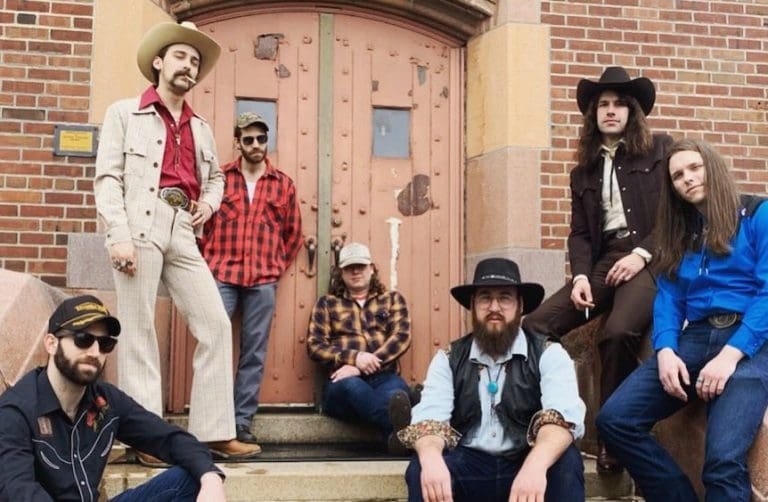
Brule County Bad Boys is a hard band. Listening to them, you might hear the harp and the dobro, or you might hear the clang of the county jail cell doors. With members from bands such as Girls of Porn, Tex Railer’s Doomtown, and Barbed Wire, they’re ready to run you through some abandoned county roads.

We sit with the Buster Sawdust and Tex Railer of the Bad Boys and talk about absurdism.

RRX: Brule County Bad Bays is pretty kickass name for a band. I had to look up Brule County, of course, and there’s one in South Dakota. Was there something about Brule County that made you pick it as part of the band name? Did someone come from there? Or did you all just come across the name and think it was cool?
BS: Brule County is right along the Missouri river, dead center in South Dakota. The land was taken from the Lakota subtribe Brulé, and named henceforth. The county seat, and where I spent my time was in the “city” of Chamberlain. Desolate as all hell in the winter, during the summer the river breathes some life to the little city. My time there unfortunately was spent in the county jail.

RRX: You guys are country. Or maybe a little bit of bluegrass. It’s an expansive sound that encompasses a range of instruments, like a harp, a piano, a dobro/pedal steel. It’s a very ‘open sky’ kind of sound. Is it hard to manage a number of different players, or is it easier to find harmony? Is there one instrument that usually gets the fire going?

BS: I wrote a lot of the songs we currently play during my stay in Chamberlain. As time went on Tex and I worked together to figure who was going to play on the album/arrangements. Playing in bands forever, we could find the players who would understand what we were doing best. Punk and country is the same. All music is the same. We got players with passion and let them do what they do best.

TR: We can play together with our eyes closed, and we’ve played these songs with every arrangement from a four piece to an eight piece. When our core five guys can all be on the same page, it’s easy adding piano, steel guitar or whatever on top of that.

RRX: Brule County Bad Boys is bleak, and I’m really using your words here. And it’s not bleak in that cliched ‘my woman and my dog left me’ country way. It more on the level of some existential bleakness, bleakness about life itself. It’s unique to take the ‘bad’ so directly. How does Brule County Bad Boys bring that to a country audience?

BS: I write about what I know best, depression, sadness, self-doubt, drugs, sex and chili.

Most people, and I mean most people that I would be willing to spend any time with, struggle with some sort of mental illness. I mean, how are you not on the constant brink of breakdown when you look at the world around us? I haven’t thought so much about bringing it to a country audience, but if you just ignore the lyrics you can certainly have a honky tonkin’ good time.

TR: Especially in a post Toby Keith country universe, country songs are meant to be shallow love songs at best, and quasi-patriotic dribble at worst. Country should be an honest representation of the struggle of the working man, and our oppressors from the corporate class and the law.

RRX: And, I guess, tagging onto the previous question, you all sing about the hard life, and the criminal justice system. Now, you can write about tough subjects, or you can write about what you lived. I’m detecting some hard feelings in the music, make me think some things are lived here. How bad are the Brule County Bad Boys?

BS: Certainly most of us have all found ourselves on the wrong side of the law. I can tell you though, no of us have actually done anything wrong. It’s the legal system which is the enemy of the people and breeds criminals out of the poor and hungry.

RRX: Playing out right now is a dog’s breakfast. Maybe you get an outdoor thing, maybe it’s a private party you can’t tell anyone about. Or maybe you tuck in, hit the home studio, and put out the best stuff you ever did. Do you think music is surviving, such as it is? What do you think the music circuit is going to be like this time next year?

BS: Everything we think about music and the music scene is done. Next year? Hopefully the music we hear is the sound of the bourgeoisie being put up against the wall

TR: It’s almost not worth doing until we can do it normally. Packed room, people dancing, drinking and having fun. At least we have a full album ready to go for when we do get to play out!

RRX: Brule County Bad Boys is a “band of bands.” It maybe even a mega band.

We’ve interviewed a lot of “mega bands” before, and of course, everybody takes the high road and says that putting all that talent together is always all good. But I’ll ask you, are there challenges to having so many top performers in the corral?

BS: I feel all of the players we work with are true musicians in the deepest sense. Having so many different instruments, everyone knows to lay low when they gotta, and when to shred.

TR: Especially when we have killers like Kevin Maul, Graham Tichy, Zack Cohen, Mike Robbins (Chief) and Alex Patrick (dangerbyrd) on call, it really is that easy.

RRX: Here is where you answer the question we didn’t ask. Best kind of engine to have in a getaway? Most common tell in five-card stud? Educate, enlighten, emote – the floor is yours.

TR: The blues-mobile, learn to count cards and check out brulecountybadboys.bandcamp.com

BS: Just wanna leave you from some lyrics from our tune “Badlands.”

“Machine guns around the corner

Ensure law and order

If they’re armed then arm yourself

The bourgeoisie they should be frightened

They are aware their time has come

God damn right they’ve used you plenty

The time has come for someone else”

Greg Mania: The Dream in the City that Never Sleeps

0

Some people are just interesting. It isn’t their clothes or their hair, but those things are interesting because why wouldn’t they be? These people are just interesting. Their presence at a thing is what makes it a “thing.” And if you get a chance to see what makes them tick, you might want to wind your watch to it.

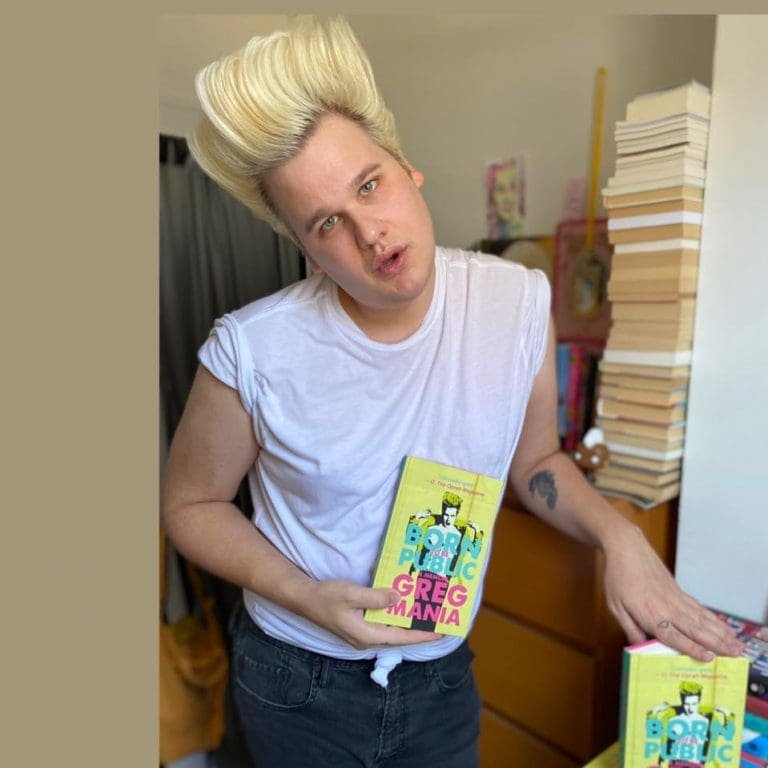
Greg Mania is interesting. Writer, comedian, denizen of the city that never sleeps… with a new book out, he’s been making the rounds to share some words. And he’s made his way here.

I sit with Greg and we talk about superhero action figures.

Photo provided.

RRX: One of the things I’ve always loved about New York City is that you can be anyone. It’s odd in the way that the attitude of “you do you” that some find uncaring about New Yorkers can allow people the freedom to find their niche. How would you guide someone through the rough New York exterior to find their way?

GM: It’s just that: a rough exterior. Yes, we huff and puff when our train is delayed, deploy life-ending glares in a flash, and, above all else, tell it like it is. But that’s just the surface. What’s really rough is how fucking expensive everything is; you leave your apartment to just go on a walk and somehow get an alert on your phone saying your account balance has dipped below $25 and you’re like, but how? Like am I renting the air I breathe, too? Ugh. But the people, man do I love them.

I think just by virtue of being in a place that has a niche for everyone—or invites you to create your own—you will eventually find a spot that’s yours. That’s why so many people come here. There’s always a way to find.

RRX: You came into the New York scene as an openly gay man, not only just experiencing that aspect of city life, but blogging so that others could vibe off of what was going on. But your parents didn’t know at all. This is a really tough thing for kids that don’t feel they can come out. What was the fear of accidental discovery like?

GM: Terrifying! I was on edge all the time. The more I came out to my close circle, the city around me, and the public in general—I was basically treating the Internet like a diary—the more anxious I became about the people back at home finding out the truth. I think, no matter what we come out as, we just want the people closest us to keep loving us. And if there’s a chance of that changing, it scares us. Change is scary, period, but revealing a part of yourself to someone who has known you for all of your life is shifting the bedrock of everything you’ve ever known. But that shift—no matter the outcome—is, ultimately, important. You deserve a life of authenticity.

RRX: You are really known for being bigger than life in a really cool way. And, in my experience, there’s usually one story, or even a snippet of a story, that is emblematic of a “day-to-day.” Let us be you for a day, or an hour, or fifteen minutes if they were dynamite. A kickass story… what have you got?

GM: Oh, no, this is my worst nightmare. Listen, as a retired extrovert, I am BORING. If these walls could talk, they’d be like, “um, how many episodes of Top Chef can this loser watch in a row?” Or, you’d find me locked in the bathroom, scrolling for blackout curtains on my phone. Embarrassing! I would never put anyone through that experience.

RRX: So you have a book out, Born to Be Public, from our friends at CLASH Books. I’m assuming at least some of it is autobiographical. But I imagine there’s more to it than just an event ticker of your life. There’s always high-concept, there’s always a theme. So when you were writing did you have the high-concept, or did you find it in the words?

GM: I didn’t even set out to write a memoir. I woke up one day and was like, oh, this is a snapshot of an era in my life that incorporates specific elements of my childhood that usher the narrative along? GUESS WE HAVE A MEMOIR NOW. My initial intention was just to compile a collection of funny stories and humor pieces, but then I started writing about mental illness, trauma, toxic relationships—all the things I hold near and dear to my heart!—and realized that my job was just to be as honest as possible, because if I care about this story, someone else will. I don’t know if this book is high-concept as much as it is just the most accurate representation of me. I’m a blubbering idiot in real life, and this book conveys the things I can’t in any other medium.

RRX: I want to ask about New York City. Albany and New York City have a relationship, sometimes a rocky one. But we have a large number of transplants, so going to New York for us isn’t like going to a foreign country. Have you ever been Upstate? Or does New York insulate that well? And if so, any cool Upstate stories?

GM: One of the things I like to teach in my writing workshops is trusting your instinct, to not discard the first idea that pops into our minds for fear of it being reductive, stupid, or just not worth pursuing because there are bigger and better ideas out there —so let me follow my own advice and tell you about the time I went to Tarrytown. I don’t actually think Tarrytown is technically Upstate like a place like Buffalo or Albany is; I think it’s “upstate” in the same way a place like New Rochelle is, as in you can take the Metro North and it’s really just north of New York City.

ANYWAY, my brother was invited to an old friend’s wedding in Tarrytown a few years ago and brought me as his date. I got drunk in a castle. Granted, it was a castle-turned-spa, but there were still turrets and everything. Anyway, I threw up behind a gargoyle and then we went to a 24-hour diner across the street from our hotel.

RRX: We’re hurting. New York is hurting. Entertainment; when it exists, half of it is underground, or it’s heavily controlled. Aside from any reasoning behind any of it, it’s a wound we are all licking in the arts and entertainment industry. Screw the money mags; from you, on the ground, how does New York survive this?

GM: It’s painful to watch. And it’s not just the arts and entertainment industry, it’s small businesses whose gravitas isn’t sustained by social media clout. It’s neighborhood staples that aren’t receiving proper government aid or support, which trickles down to employees and anyone else whose income is linked to the local ecosystem. I have friends: bartenders, tattoo artists, nightlife workers, etc. who are just trying to stay afloat. But New York is nothing if not resilient. Everyone is saying it’s “dead,” and that everyone is, more times than not, other rich transplants taking note of other rich transplants leaving. And honestly, BYE! Let our local communities thrive again, without the threat of co-opt. And I think it will; New York is like a weed, in a good way. It’ll always grow back.

RRX: This is where you answer the question I didn’t ask. Best hair product? The real seven words you can’t say on television? Educate, enlighten, emote – the floor is yours.

GM: This is dangerous, because I will just go off about the final season of Charmed. But, for the sake of decorum and respect, I will thank you for granting me the opportunity to hawk my very gay book in your publication. Also, Arrojo fierce firm hold hairspray.

Caribbean Crisis: The Best to Come from Crisis

0

Caribbean Crisis are an extremely unique group based in Albany who play a heavy blend of Russian folk and American punk rock. With three quarters of the band being comprised of international students, Caribbean Crisis is a shining example of how a diverse group of people can come together to make something interesting. I sat down with Victor (vocals/guitar), Tia (drums), Ana (bass) and Dani (flute, who is currently residing in her home of Costa Rica and called in via Facetime). The band discusses new material, the deeper meaning behind their name, and their unique instrumentation.

RRX: How have you guys been?

AP: We definitely had our biggest gig, Rose Rock, coming up in April and it just got cancelled. And there was this amazing battle of the bands that we wanted to win, and we never got to play.

VD: It sucks that everything got cancelled, just before we graduated too so we’re not really playing together right now. On the upside, we just released a new single.

Photo provided.

RRX: I was going to mention that, I heard it recently, do you guys wanna talk about that?

AP: Sure, it was a long process.

TM: And it’s about a lady (laughs).

VD: What do you have to say about the song, Dani?

DC: It’s also about August, the title is “August 9”.

TM: But was it released on August 9th?

VD: It wasn’t and that’s the bit we’re all bummed about.

DC: I just personally loved how involved people got with it, we have a video of our last show at the Byrdhouse and people were actually singing the lyrics of the song and I think that’s just amazing.

RRX: Where do you see yourselves in the upcoming years, best case scenario?

VD: Hopefully, we’ll reunite soon, but I was thinking to take the band more in a digital form with social media and stuff. We’re just gonna keep releasing music, and gain more of a following and then just eventually play a tour or something similar.

RRX: So now I wanted to talk about how three of you are now graduates of Saint Rose, could you tell me a little bit of what it was like meeting and working on music there?

TM: I love Saint Rose, the community there is always down to help each other out and do a bunch of cool projects together.

AP: It’s a very tight community in terms of music students.

DC: Also, all of us excluding Tia, are international students and somehow being at Saint Rose we found a little family (of international students).

VD: Yeah, coincidentally, three out of four of us are international. Ana is from Brazil, I’m from Russia and Dani is from Costa Rica. It’s been cool because we just kind of found each other.

AP: You (Victor) had an idea the first day that I was at Saint Rose; he just passed me in the hall with his guitar and said “Are you an international student?” He asked what instrument I play and I said bass and that was it.

VD: Yeah, it’s a weird band because it’s like, American punk and folk, and Russian and yet our band members are from such different places, it’s kind of crazy.

RRX: Definitely, I’d say your style is incredibly unique for a band out of Albany, New York. Was it your plan from the beginning to blend punk and Russian folk?

VD: Yeah, so I came to America and I wanted to do music but I wanted to find a way to way to do something different. I said “Well I’m Russian, so what’s unique about Russia?” so basically, it just popped in my head blend those ideas. It was crazy to see how many people were supportive of the idea. It’s been really encouraging, people in America are fortunately very open to explore things that aren’t natively present.

DC: And keep in mind, Victor is that Russian weirdo who on the first day of orientation just came up to me and said: “Hi! I’m Victor, I’m from Russia!” and we started talking music and he said, “Wow, you play flute, do you want to be in my band?”

AP: That’s how every Victor interaction goes (laughs).

DC: Most of my life I’ve only played flute classically, but yeah, a crazy Russian just asked me to play in his band at orientation and four years later, here we are!

VD: At first I wanted to have a Russian flute, so I went to Russia and bought a flute there and gave it to Dani but it didn’t sound good; it wasn’t because of Dani but it was just due to the nature of the flute that it didn’t sound good in every key.

TM: It had a very small range.

DC: My flute is tuned in C and has a range of two octaves, and the Russian flute was tuned in B flat so the fingerings were a nightmare (laughs).

VD: It started with Russian flute, then we decided to just take a regular flute and play Russian melodies.

RRX: Yeah, that’s something else I wanted to ask; is flute a big part of Russian music, or did you just meet Dani and decide to incorporate with Russian styles?

VD: It’s a difficult question. Russian folk music is similar to other culture’s folk music in instrumentation, with the difference often being the melodies. Flute is as much a part of Russian folk music as it is a part of folk music for other countries. What defines Russian music is the melodies.

RRX: Right, not just the instruments then?

VD: Right, and the flute can define folk music, so when you have a flute playing Russian melodies, the combination becomes Russian folk.

RRX: So do you guys have other people who help you record?

VD: Yeah our guy is an alumni from Saint Rose who is really good. He’s in a really big pop-punk band called Young Culture.

RRX: Another really big thing to talk about locally is the closing of the Low Beat, which was a fantastic venue for small bands to get their start. I wanted to see if you guys had any stories about playing there.

TM: The Low Beat was our first gig! Back with JJ and JP, but we went through so many guitarists (laughs).

VD: We had so many fond memories from the Low Beat, we played at least eight gigs there.

TM: I remember, the first song of the very first show we played, a guitar string broke.

VD: Yeah, it’s actually funny; literally the very first note of the very first song, and it was our first gig ever as a band. We rehearsed for three months and everything was fine, and then our guitarist at the time broke that string and then there was just no guitar for the whole first song (laughs). He just improvised.

TM: Eventually we borrowed a guitar, but we had a whole improv session in the meantime and Victor was singing into the mic about “fix the strings!”

VD: It was really cool that they let local bands play (at the Low Beat), you could always just get a gig.

RRX: I also wanted to ask, are you guys planning on putting out a full-length or an EP soon?

AP: Yeah, an EP; two brand new songs together with “August 9.”

VD: All three songs will be of very different nature, should be released within a month or so.

Jillian Davis: The Way of Whirls

0

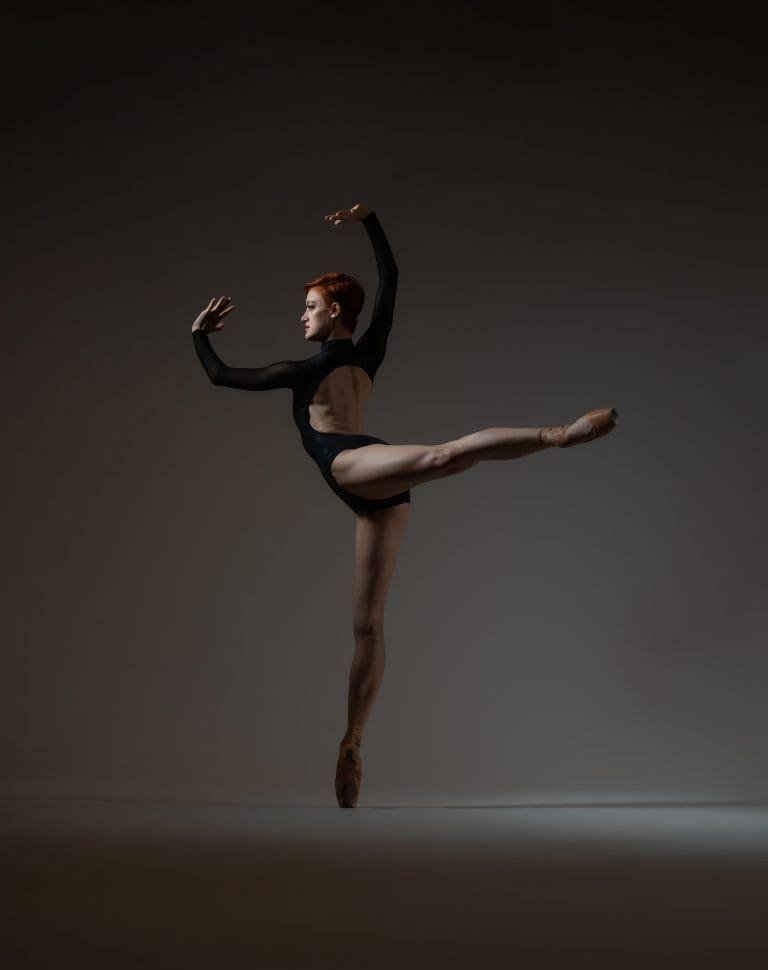
Music is movement. That’s not a metaphor; it’s the movement of air particles, and changes in the pressure that drives them. We use our instruments to change the air, and in turn, it changes us, in some cases, to get up and move our bodies in syncopation to the air. It’s the closest thing to magic we have – the music and the dance.

Jillian Davis is a prestigious dancer and a choreographer in New York. She’s been a spirit of the air, so-to-speak, since she was a child. Now she is taking acolytes under her wing and showing them how to control the air themselves.

I sit with Jillian to discuss various sorceries.

RRX: Dance lies in a border area between sport and art. There is practice, and training, probably far more than a lot of other sports. Yet the greatest dance performances look effortless. Are there physical, or mental exercises that you do when you’re dancing to bring the audience’s attention away from all the effort of it?

Photo by Theik Smith.

JD: I think all dancers can agree that yoga and Pilates are the go-to cross training options we have, along with swimming. Even though our work is so physical, cross training helps us strengthen muscles or even muscle groups that we may not utilize on a regular basis. Keeping the entire body as strong as we can helps with creating the effortless look, our endurance on the studio and the stage, as well as, and probably most importantly, helps us avoid injuries.  I personally enjoy yoga more, mostly because it focuses on both stretch and strengthening at the same time while also incorporating the mental aspect.

Which brings me to the next point. It’s obvious we are a physical art form, but so much of the work happens in our head – how we approach the movement, push through a ballet, and sometimes (well, a lot) push through injuries of varying severity. I know a lot of dancers who meditate on a regular basis to keep themselves centered and focused. Whenever I feel overwhelmed, I (again) turn to yoga, usually just incorporating a simple stretching series, but sometimes just going through a class and pushing through it. Especially during this pandemic, I need to keep my body moving in order to keep my mind in a good place.

All of this goes to say, the audience doesn’t see all of the behind the scenes work. They usually come to see a performance to take them to “another place” and that is what artists will continue to push for.

RRX: When I started playing guitar, I imitated the masters, got okay enough at that to feel I had foundation, and built my own sound from that. Is dance like that? Or is there an added expectation to “perform the masters” even well into you having your own foundation, similar to the prevalence of classical recitals?

JD: In ballet, there are three main classical ballet techniques: Vagonova (Russian), Checetti (Italian/European), and Balanchine (American). Some other techniques or “teaching curriculums” have popped up over the generations of dance – the most prolific I can think of being American Ballet Theater’s National Training Curriculums. The contemporary ballet company I dance for, Complexions Contemporary Ballet, has a technique, ‘Nique, that has been developing over the years and would be one of the first coined curriculums in contemporary ballet training (that I am aware of). Modern also has a wide range of techniques (Martha Graham, Horton, Paul Taylor, Merce Cunningham, etc.). There are so many “masters” to learn from.

From a dancer’s standpoint, we train our whole teenage life to be as versatile and diverse as possible because it is the new normal to be able to do any style at any time without hesitation. My training focused on classical ballet in those three major techniques mentioned earlier and then I switched to contemporary ballet in my late teens. (Contemporary ballet keeps the classical ballet base, but then incorporates different dance styles at the same time.) It was an adjustment for me to get “funk” in my body (you don’t want to see me in a hip-hop class), but I was able to develop my artistry (or how I speak to the audience/viewers in this style) because of my knowledge of multiple dance forms even though it’s possible I haven’t mastered them, so to speak.

There are still prolific choreographers that will have special programs or whole festivals dedicated to their legacy, but for the dancers, we are expected to know basically every style and to be able to do it.

RRX: You are not just a dancer; you are also a choreographer. So you direct people who come to you into complex and coordinated movement. And I can only imagine that people come to you with all skill sets. Would you say it’s more of a challenge to work around the skill set that is, or use your experience to boost the skill set to fit a need?

JD: I have been fortunate enough to work with a range of abilities and experience over the years and I can say I have learned a lot from the dancers. While I hope to be challenging them in some sort of way, I also strive to push myself – by trying to get out of my comfort zone and also making myself use words to describe my movement. My whole career, I just kind of “did” what was asked of me, but when I had to describe to someone “how” to do a certain movement, I wanted to be able to find a way to describe it the dancers. Working with the directors of Complexions Contemporary Ballet (Dwight Rhoden and Desmond Richardson) over these past six years has helped me find ways to explain movement or the emotion they are trying to see from us through different parts of a ballet.

It is a challenge to “boost the skill set to fit a need” (as you said), but when it works, it is the most rewarding for both parties. I continue to strive to push both dancers and myself to learn something during the creation process and the journey is going to be different for every situation.

RRX: The Jillian Davis Dance Project. This is something you started as a finalist at Rider University’s Emerging Choreographer’s Competition. It sounds like a way you, and for others, to explore the space in choreography and dance. Can you tell us all about it?

JD: When I decided to start JDDP, I was freelancing in New York City just trying to find any dance-related gig at the time, but was not having much luck with auditions. It was mostly a hustle to make my own network of dancers, choreographers, or small companies. I already knew that I eventually wanted to be a choreographer, but I thought, “If I can’t dance for anyone, then I might as well make my own work.” To this day, I haven’t been able to choreograph for myself, but I have been able to dance works that I set on other people first.

The Emerging Choreographer’s Showcase was one of my first big group works and it consisted of all the friends I had met at the time. I was submitting the program notes for Tiel (the ballet I presented) and realized I needed to make a company name because, well, we were a small but mighty company. I still think of Jillian Davis Dance Project as a placeholder name, but if/when I get to spend more time on it, I would like to get more creative with the name.

RRX: You are known for working with the music that is, if I’m saying this right. You find the dance routine in the music by listening to it, feeling it, which may run counter to some peoples’ concepts of professional dance, which people may think is more musically rigid. What musical genre is the most fun? The most challenging?

JD: Everyone has different ways of hearing music, but if there is a definite beat or counts in the music I’m using, I will be a stickler on hitting it at a certain time. If the dancer needs to count it in a certain way to achieve what I want, I am totally for it. My go-to style is usually with heavy percussion of varying intensities. Going back to Tiel for the Emerging Choreographer’s Showcase, there were a lot of syncopations and not very clear counts, but it was all bells and, eventually, heavy drums layered in. I don’t usually work with strict classical works like Bach or Beethoven, but I do like what I consider contemporary classical, if that is a thing.

Eventually I would love to tackle a vocal or choral work. I have several songs I am interested in, but I get distracted or preoccupied with the message the singers are trying to sing about and it pulls me out of my creative space. I will definitely want a group of collaborative minds when I finally tackle a project like that.

RRX: Every stage is soaked in stories, whether it’s the saw-dusted floor of a honky-tonk, or the stage at a midwestern middle-school auditorium. You’ve been on a great many stages, grand and otherwise, and with dance, it’s only you. You can’t even hide behind a microphone. Do you have one stage story that will never leave you?

JD: So many!!! There have been many times when a dancer got injured during a show and we had to cover on the spot. I have, unfortunately, gotten injured as least twice on the stage and have had to continue performing (that was fun).

Most recently, during Complexions’ 2020 New York Season, my partner was injured and we had rehearsal to try to lessen his load or take him out of what we could. It got to be too much and the director made the decision at our 30 minute call that my partner would not be performing. Although terrifying, it turned out to be one of the best shows we had because all dancers were at full focus – being aware of each other, looking at each other to make sure we were in the right spots, and just supporting each other. This was show 14 out 15 in our two-week run, we were exhausted (we’d had a matinee show earlier that day), and it seemed like we just whipped up that show out of nothing. It was quite the adventure.  And it was my first time turning a duet into a solo on the stage!

RRX: This is where you answer the question I didn’t ask. Do ballet slippers ever last long enough to be your favorite? Pain reliever of choice? Educate, enlighten, emote – the floor is yours.

JD: Ironically, I’m going through a little pointe shoe switch now. There are so many brands and styles, that it is tempting for me to keep trying something and seeing if it works better. I have been consistent with a brand (Bloch) with a variety of styles, but I am adding another brand (Freed) to the mix for my classwork. During rehearsals, I can easily go through a pair of pointe shoes a day, but I make them last longer by using HotStuff, which people use to put together airplane models or small delicate crafts like that. Very lightweight, but super strong, which helps my pointe shoes last a few days longer.

For pain killers, I try to go the more natural route because it is so easy to turn to pain killers and it just eats at your stomach. An acupuncturist I visited recommended Black Seed Oil pills (cold-pressed cumin seeds) for inflammation relief and it has been life changing. I turned a few colleagues onto it and it works wonders for everyone. I also look at sour cherry tea, which helps with inflammation, magnesium pills or a powder for muscle recovery, and, when I’m in full rehearsal mode, I incorporate a multitude of supplements to help keep my body working as best as possible. After suffering two mild concussions (yes two, within a year and a half of each other), I turn to acetaminophen pain killers like Aleve or Tylenol for more heavy-duty relief. Also, compression socks are life-saving, or should I say leg-saving?


Deb’s Saturday Psychedelia – On Becoming a Hippie (#29) Moving to a Mobile Home then Moving On

We found a rental at a trailer park in Beaver, Oregon and had to downsize quite a bit. We were always flexible and quickly figured out how to make do with a much smaller residence and a tiny fenced in yard. We were still in the same area with the same community, and we had a reliable babysitter right next door. However, Jessie did have to change schools. This was a little bigger school than the one in Hebo and less personal. The first big change was that they didn’t believe in letting the kids move up a grade for certain subjects that they excelled in. The second one was asking me to sign a waiver giving them permission to spank my child if necessary. What?! No! It amazed me how hard they tried to convince me of this necessity. I was ready to pull her out and homeschool her when they finally (reluctantly) relented.

Then, one day Jessie brought a permission slip home from school for me to sign. It was permission to join the “Good News Club” which would be meeting during school hours. Good news sounded okay to me. Paul and I talked it over and couldn’t see any harm in it. Of course, there was no description sent with the slip, so we had no idea that it was a religious club. Jessie would come home talking about how much fun she had and never mentioned any religion until one day when she brought home another permission slip. This one was asking our permission to let her sign her soul to God. That was the end of the Good News Club. She was unhappy about it, but Paul and I had both been raised Catholic, were not religious now and had agreed long before this to teach her about all religions and let her choose for herself when she was older.

Although Paul and I didn’t practice any organized religion, we were very spiritual and believed in the connection of all things in the universe. We also believed in the power of our minds to change the course of things. One example of this was when we had taken our VW bus to a remote beach that was only accessible during low tide. We lost track of the time and suddenly noticed that the tide was coming in. We hauled the kids back into the car quickly but realized we were running out of room for a running start up the steep hill. After trying three or four times to make it up the hill only to have the tires spin out in the sand and the bus roll back down onto the beach, Paul decided that we should try something different. He very solemnly explained that we were all going to hold hands and concentrate very hard on getting the bus up the hill. The water was almost up to the back wheels by this time. We’d run out of room for a running start and certainly were running out of time. We knew this was our last chance. He counted to three, and we all concentrated on moving the bus. I could even hear us humming. We very slowly and smoothly rode up to the road with no spinning at all. Even Paul, the biggest believer of all, was astonished. We were sure that was the end of our vehicle.

In spite of the changes we were undergoing, we still loved the area and our friends. There was always something to do, lots of potlucks and music jamming with many alternatives around as well. One day, a friend told us about an event happening that afternoon in a big open field nearby. It was a traveling Chautauqua. Paul was at work that day, so I packed up the kids and went. A Chautauqua is a traveling show that combined education with entertainment. The very first one was held in Chautauqua, NY in 1874. The tradition was revived by Patch Adams and The Flying Karamazov Brothers in 1981. They arrived in a hippie school bus and entertained the crowds while teaching self-health. At this one, The Flying Karamazov Brothers entertained the crowd with their band and unbelievable juggling tricks. In between acts, Patch Adams talked about how to take care of your teeth by demonstrating flossing technique with two large dancing teeth and a big piece of rope. He did other things, but that’s what I remember most about him, this big goofy clown dancing around and tripping over his big clown feet while flossing between these two people dressed up as teeth.

Ken Kesey was there and, I found out within the last 10 or so years, so was a current friend of mine who was traveling with those folks in his youth. Kesey was not the friendliest guy, but everyone else was very cool and welcoming. The high point for Jessie was Lancelot, the unicorn. A couple of hippies had bred goats until they finally got one with a horn in the middle of its forehead and the silkiest curly mane and tail that I’d ever felt. They bred a few more later, but Lancelot was the first. It was a real live unicorn, and Jessie was awed! Unfortunately, like so much from those crazy days, I don’t remember many of the details, but that was an amazing day. Many years later, when I was living in Albany and part of Cavanaugh & Kavanaugh, we got to open for Patch Adams at an alternative education conference. I also ran into one of the original Karamazov Brothers at The Oregon Country Fair in 2014, after living in upstate New York since 1982. We enjoyed a waffle breakfast together, then I went to see him juggle again at one of the entertainment sites. It amazes me, in writing these memoirs, how much living we packed into a relatively short amount of time and how the same people keep popping up no matter where I go.

However, as much as we loved the area, our stay there was not as long lasting as we’d hoped. Paul lost another job, the unemployment rate in Oregon was skyrocketing and we had just gotten a large tax return. It was time to think about a new plan. The trailer park was okay, but not ideal. We missed having a large yard and a little more privacy. A few other things came into play right around that same time. One was that our son Justin had developed a recurring rash on his back that just wouldn’t quit. Every doctor I spoke to told me the same thing. It was a fungus, similar to athlete’s foot that was caused by the wet environment. I could keep treating it with an antifungal cream, but the best solution was to move to a drier place. Our babysitter’s mother had been encouraging us to move to upstate New York for our music. She told us about Caffe Lena in Saratoga Springs, New York and said that our music would fit right in there. We also met a new friend, Carlos, whose parents lived out there and were part of a group called the PSG (Pickin’, Singing, and Gathering). He encouraged us to go look them up. Coincidentally, my parents had recently moved to East Greenbush, New York for my dad’s new job at The Troy Record, the local newspaper and were also pushing us to relocate there. We could stay in their basement as long as we needed.

Paul and I always lived our lives listening to and watching for signs that come along to show us the way. It sure looked like the signs were pointing us to the Albany area. Growing up in Southwestern Connecticut, we always thought of New York as the metropolitan area of New York City. I had gone camping once in the Adirondacks as a teenager but otherwise only knew the Big Apple and bits of Long Island. But it was time for a move and going there would be a new adventure with a place to land until we could find work and our own place. We already had our VW bus and knew how to pack well, so we started that process. We threw a farewell Open Mic, which was standing room only, packed up our VW and went to say goodbye to our good friends, Jim and Patty. Jim came by to see us off the next day, walked up and handed me a jar of old barn nails of varying sizes. Jim is an eccentric and a kind of gypsy. He’s an amazing artist and writer. He has always lived an unusual life as did we, and I greatly admired him. He was older than us and had been around, taking his bumps along the way. As I took them, he said, “You never know what you’ll need on the road.” I agreed and put them in our toolbox, knowing that somehow, at some time, they would come in handy. I had tears in my eyes as we left our beautiful Shangri-La. This was the hardest leave taking so far, but we were headed for new adventures which always cheered me up.